Margins
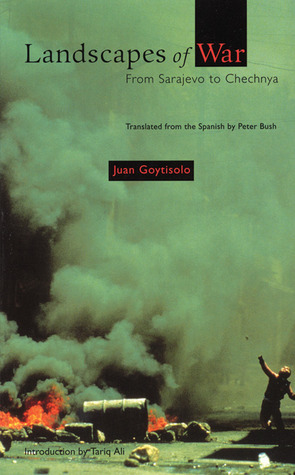
Landscapes of War book cover
Landscapes of War
From Sarajevo to Chechnya
1996
First Published
4.03
Average Rating
126
Number of Pages
Landscapes of From Sarajevo to Chechnya is an incisive examination of the tensions that exist between the West and Islamic societies of Europe, North Africa and the Middle East. These essays, originating in Goytisolo's travels in the late 1990s, provide rich historical analysis and moving first-person reportage of life in four explosive Sarajevo, Algeria, the West Bank and Gaza, and Chechnya. From the 17th century to the Gulf War, the West has regarded Islam as the enemy on the doorstep, and this book elucidates how relations between Islam and the West continue to be shaped in a climate of ideological, political and cultural confrontation. Goytisolo examines the fratricidal frenzy in Algeria and the war waged by French police against North African migrants in France, and he describes a besieged Sarajevo transformed into a concentration camp surrounded by barbed wire. He contemplates the despair and poverty of Palestinian youth living in the Occupied Territories and details the brutality of the Russian war in the Caucasus. Whether reporting on the fate of the Bosnians after the break up of the former Yugoslavia or analyzing the growing appeal of fundamentalisms—Islamic, Jewish and Russian Orthodox—Goytisolo displays the same blend of intelligence, vision, and warm fellow-feeling that has made him one the most imposing literary figures of our time. Many of these succinct and eloquent essays first appeared in Spain's leading newspaper El Pais, and English translations were published in the Times Literary Supplement (London). Juan Goytisolo was born in Barcelona in 1931. In 1993 he was awarded the Nelly Sachs Prize for his literary achievement and contribution to world culture. His translated works include a two volume autobiography, Forbidden Territory and Realms of Strife ; the trilogy Marks of Identity, Count Julian and Juan the Landless; and the essays, Saracen Chronicles . Other works by him and published by City Lights Publishers include The Marx Family Saga, published in 1999, and A Cock-Eyed Comedy, published in 2005. Peter Bush is Director of the British Center for Literary Translation and translated Juan Goytisolo's The Marx Family Saga, which was awarded the Premio Valle-Inclan.

Avg Rating
4.03
Number of Ratings
58
5 STARS
24%
4 STARS
60%
3 STARS
10%
2 STARS
5%
1 STARS
0%
goodreads

Author

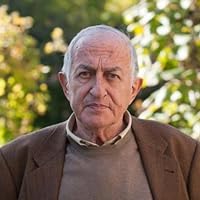
Juan Goytisolo
Juan Goytisolo
Author · 30 books

Desde la trilogía formada por Señas de identidad, Don Julián y Juan sin tierra, que le situó entre los mejores autores de la literatura española contemporánea, la obra narrativa de Juan Goytisolo (Barcelona, 1931) ha derivado en cada nueva singladura hacia territorios inexplorados que cuestionan siempre el género de la ficción. Esta voluntad de ir a contracorriente ha propiciado la gestación de textos tan singulares como Makbara (1980), Las virtudes del pájaro solitario (1988), La cuarentena (1991), La saga de los Marx (1993), El sitio de los sitios (1995), Las semanas del jardín (1997), Carajicomedia (2000), Telón de boca (2003) o El exiliado de aquí y allá (2008). No obstante, Juan Goytisolo no destaca sólo como autor de ficción, sino que también cultiva con maestría el género del ensayo, con obras como Contra las sagradas formas (2007) o Genet en el Raval (2009). En 2014 se le ha otorgado el Premio Cervantes de las Letras. ==== Juan Goytisolo Gay was born in Barcelona at 1931. A vocal opponent of Franco, he left Spain for France in 1956. In Paris, he worked as a consultant for the publisher Gallimard while he was also working on his own oeuvre. There he met his future wife, Monique Langue, and Jean Genet, who influenced his vision of literature. While living in Paris, he started the most experimental side of his books. Mixing poetry with painting and fiction with non-fiction, he explored the possibilities of language, leaving behind the social commentary of his first novels. "Marks of Identity" was the start, but then he turned even more radical with "Count Julian" and "Juan the Landless", where he rejected definitely, because of a lack of identification, his Spanish identity in favor of adopting a "cervantina" nationality. In the 1970s he visited Marrakech often. In 1981 he bought a house there. In 1996, after the death of his wife, he moved there and adopted Morocco as his main residence. He is widely considered one of the most important Spanish authors of his time. His brothers, José Agustín Goytisolo and Luis Goytisolo, are also writers. In 2008 he won Spain's Premio Nacional de las Letras and in 2014 the Cervantes Prize. See also http://en.wikipedia.org/wiki/Juan\_Goy...

548 Market St PMB 65688, San Francisco California 94104-5401 USA
© 2026 Paratext Inc. All rights reserved