Authors

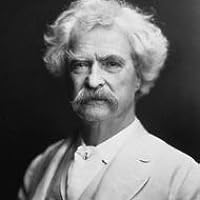
Librarian Note: There is more than one author by this name in the Goodreads database. Samuel Langhorne Clemens, better known by his pen name Mark Twain, was an American author and humorist. He is noted for his novels Adventures of Huckleberry Finn (1885), called "the Great American Novel", and The Adventures of Tom Sawyer (1876). Twain grew up in Hannibal, Missouri, which would later provide the setting for Huckleberry Finn and Tom Sawyer. He apprenticed with a printer. He also worked as a typesetter and contributed articles to his older brother Orion's newspaper. After toiling as a printer in various cities, he became a master riverboat pilot on the Mississippi River, before heading west to join Orion. He was a failure at gold mining, so he next turned to journalism. While a reporter, he wrote a humorous story, "The Celebrated Jumping Frog of Calaveras County," which proved to be very popular and brought him nationwide attention. His travelogues were also well-received. Twain had found his calling. He achieved great success as a writer and public speaker. His wit and satire earned praise from critics and peers, and he was a friend to presidents, artists, industrialists, and European royalty. However, he lacked financial acumen. Though he made a great deal of money from his writings and lectures, he squandered it on various ventures, in particular the Paige Compositor, and was forced to declare bankruptcy. With the help of Henry Huttleston Rogers, however, he eventually overcame his financial troubles. Twain worked hard to ensure that all of his creditors were paid in full, even though his bankruptcy had relieved him of the legal responsibility. Born during a visit by Halley's Comet, he died on its return. He was lauded as the "greatest American humorist of his age", and William Faulkner called Twain "the father of American literature". Excerpted from Wikipedia. AKA: Μαρκ Τουαίν (Greek)

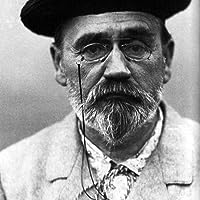
Émile François Zola was an influential French novelist, the most important example of the literary school of naturalism, and a major figure in the political liberalization of France. More than half of Zola's novels were part of a set of 20 books collectively known as Les Rougon-Macquart. Unlike Balzac who in the midst of his literary career resynthesized his work into La Comédie Humaine, Zola from the start at the age of 28 had thought of the complete layout of the series. Set in France's Second Empire, the series traces the "environmental" influences of violence, alcohol and prostitution which became more prevalent during the second wave of the Industrial Revolution. The series examines two branches of a family: the respectable (that is, legitimate) Rougons and the disreputable (illegitimate) Macquarts for five generations. As he described his plans for the series, "I want to portray, at the outset of a century of liberty and truth, a family that cannot restrain itself in its rush to possess all the good things that progress is making available and is derailed by its own momentum, the fatal convulsions that accompany the birth of a new world." Although Zola and Cézanne were friends from childhood, they broke in later life over Zola's fictionalized depiction of Cézanne and the Bohemian life of painters in his novel L'Œuvre (The Masterpiece, 1886). From 1877 with the publication of L'Assommoir, Émile Zola became wealthy, he was better paid than Victor Hugo, for example. He became a figurehead among the literary bourgeoisie and organized cultural dinners with Guy de Maupassant, Joris-Karl Huysmans and other writers at his luxurious villa in Medan near Paris after 1880. Germinal in 1885, then the three 'cities', Lourdes in 1894, Rome in 1896 and Paris in 1897, established Zola as a successful author. The self-proclaimed leader of French naturalism, Zola's works inspired operas such as those of Gustave Charpentier, notably Louise in the 1890s. His works, inspired by the concepts of heredity (Claude Bernard), social manichaeism and idealistic socialism, resonate with those of Nadar, Manet and subsequently Flaubert.

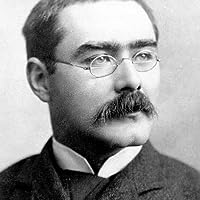
Joseph Rudyard Kipling was a journalist, short-story writer, poet, and novelist. Kipling's works of fiction include The Jungle Book (1894), Kim (1901), and many short stories, including The Man Who Would Be King (1888). His poems include Mandalay (1890), Gunga Din (1890), The Gods of the Copybook Headings (1919), The White Man's Burden (1899), and If— (1910). He is regarded as a major innovator in the art of the short story; his children's books are classics of children's literature; and one critic described his work as exhibiting "a versatile and luminous narrative gift". Kipling was one of the most popular writers in the United Kingdom, in both prose and verse, in the late 19th and early 20th centuries. Henry James said: "Kipling strikes me personally as the most complete man of genius (as distinct from fine intelligence) that I have ever known." In 1907, at the age of 41, he was awarded the Nobel Prize in Literature, making him the first English-language writer to receive the prize, and its youngest recipient to date. He was also sounded out for the British Poet Laureateship and on several occasions for a knighthood, both of which he declined. Awarded the Nobel Prize in Literature in 1907 "in consideration of the power of observation, originality of imagination, virility of ideas and remarkable talent for narration which characterize the creations of this world-famous author." Kipling kept writing until the early 1930s, but at a slower pace and with much less success than before. On the night of 12 January 1936, Kipling suffered a haemorrhage in his small intestine. He underwent surgery, but died less than a week later on 18 January 1936 at the age of 70 of a perforated duodenal ulcer. Kipling's death had in fact previously been incorrectly announced in a magazine, to which he wrote, "I've just read that I am dead. Don't forget to delete me from your list of subscribers."

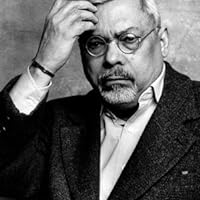
Escritor de origem cubana, Guillermo Cabrera Infante nasceu a 22 de Abril de 1929, em Gibara, Cuba, e faleceu a 22 de Fevereiro de 2005, em Londres, Inglaterra. Filho de pais directamente ligados à política - fundadores, em Gibera, do Partido Comunista - desde cedo se viu confrontado com um forte ambiente de consciência política. Motivado pela profissão dos pais, Cabrera Infante viu-se forçado a mudar para Havana em 1941. Em 1959 Cabrera Infante era já bastante conhecido pelas fantásticas críticas de cinema que publicava na revista Carteles e por alguns textos e contos que publicava em revistas como Ciclón. Mas foi, indubitavelmente, em 1964 que ganhou notoriedade ao publicar a sua "obra-prima" Tres Tristes Tigres, publicada depois em Espanha, pela Editora Seix Barral, em 1967 (sendo esta a edição mais conhecida e mais referida). Cabrera Infante exerceu diversos cargos, dentre os quais se destacam os de Presidente do Conselho Nacional de Cultura, Director de Lunes de la Revolución - suplemento cultural do jornal com o mesmo nome, Director Executivo do Instituto do Filme e Adido Cultural da Embaixada da Bélgica, cargo que exerceu de 1962 a 1965 - data em que abandonou o posto por severas críticas ao regime de Fidel Castro, exilando-se, então, em Inglaterra, país que, a partir daí, adoptou como pátria. Mesmo exilado, Cuba sempre esteve presente na vida de Cabrera Infante: a partir de 1966 (data de exílio em Londres), começou um ataque cerrado ao regime de Fidel Castro; no âmbito da sua produção literária, Havana, cidade de eleição, por ser a capital onde tudo de mais importante se passava, marcou indubitavelmente o mundo anedótico de toda a sua obra. Revelando um espírito extremamente combativo e de feroz consciência crítica, Cabrera Infante jamais desistiu de denunciar as realidades cubanas que pretendia combater. Na maioria das suas produções é fácil reconhecer uma contínua preocupação e um interesse fervoroso por recriar, espelhar a linguagem de Havana: os seus sons, as suas músicas, os barulhos das suas ruas, as conversas do seu povo, sempre num realismo acutilante que revelava ao mundo uma dura realidade que muitos pretendiam esconder. O preço que pagou por tal postura foi ter visto, continuamente, as suas obras serem proibidas em terras cubanas, embora disponíveis em toda a Europa e até mesmo nos Estados Unidos da América - em especial em Miami, onde reside uma vasta colónia de cubanos admiradores deste pensador que, sem medos, denuncia a realidade de Cuba castrista. A comprovar este elevado interesse da obra de Cabreara Infante nestas partes americanas é o facto de ter sido condecorado Doutor Honoris Causa pela Universidade da Flórida (EUA). Denunciava o regime político da sua primeira pátria mas demonstrava um profundo amor pela terra que o vira nascer: Cuba está marcadamente presente em toda a sua prosa - seja ela em novela, em conto ou em simples ensaios; a paixão desmedida por Havana é facilmente reconhecida na fantástica recriação que faz na linguagem, através de jogos sucessivos que nos levam a "adivinhar" esse objectivo de demonstrar tal sentimento. O aparecimento em Espanha de Tres Tristes Tigres foi um forte e significativo sinal do que iria ser, e já era, de facto, toda uma linha de produção literária deste autor cubano. A obra referida teve de tal modo impacto no cenário literário, que viu, tempos depois, surgir um convite para adaptação a filme do realizador chileno Patricio Guzman. Conversação, erotismo, música, humor, cinema, escrita lúdica, fizeram da obra de Cabrera Infante uma autêntica "obra em progresso". Todos os seus títulos, os seus livros, podem e devem ser lidos como um só livro, como uma autêntica ilha, à volta da qual gravitam todos os temas. A essa "ilha" estão ligadas as suas nostalgias, os seus amores, a sua memória, enfim, a sua escrita. É difícil esta sua tendência para o exílio (em diversos sentidos), para

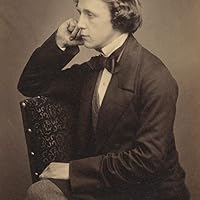
The Reverend Charles Lutwidge Dodgson, better known by the pen name Lewis Carroll, was an English author, mathematician, logician, Anglican clergyman and photographer. His most famous writings are Alice's Adventures in Wonderland and its sequel Through the Looking-Glass as well as the poems "The Hunting of the Snark" and "Jabberwocky", all considered to be within the genre of literary nonsense. Oxford scholar, Church of England Deacon, University Lecturer in Mathematics and Logic, academic author of learned theses, gifted pioneer of portrait photography, colourful writer of imaginative genius and yet a shy and pedantic man, Lewis Carroll stands pre-eminent in the pantheon of inventive literary geniuses. He also has works published under his real name.

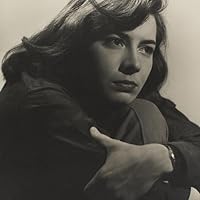
Patricia Highsmith was an American novelist who is known mainly for her psychological crime thrillers which have led to more than two dozen film adaptations over the years. She lived with her grandmother, mother and later step-father (her mother divorced her natural father six months before 'Patsy' was born and married Stanley Highsmith) in Fort Worth before moving with her parents to New York in 1927 but returned to live with her grandmother for a year in 1933. Returning to her parents in New York, she attended public schools in New York City and later graduated from Barnard College in 1942. Shortly after graduation her short story 'The Heroine' was published in the Harper's Bazaar magazine and it was selected as one of the 22 best stories that appeared in American magazines in 1945 and it won the O Henry award for short stories in 1946. She continued to write short stories, many of them comic book stories, and regularly earned herself a weekly $55 pay-check. During this period of her life she lived variously in New York and Mexico. Her first suspense novel 'Strangers on a Train' published in 1950 was an immediate success with public and critics alike. The novel has been adapted for the screen three times, most notably by Alfred Hitchcock in 1951. In 1955 her anti-hero Tom Ripley appeared in the splendid 'The Talented Mr Ripley', a book that was awarded the Grand Prix de Litterature Policiere as the best foreign mystery novel translated into French in 1957. This book, too, has been the subject of a number of film versions. Ripley appeared again in 'Ripley Under Ground' in 1970, in 'Ripley's Game' in 1974, 'The boy who Followed Ripley' in 1980 and in 'Ripley Under Water' in 1991. Along with her acclaimed series about Ripley, she wrote 22 novels and eight short story collections plus many other short stories, often macabre, satirical or tinged with black humour. She also wrote one novel, non-mystery, under the name Claire Morgan , plus a work of non-fiction 'Plotting and Writing Suspense Fiction' and a co-written book of children's verse, 'Miranda the Panda Is on the Veranda'. She latterly lived in England and France and was more popular in England than in her native United States. Her novel 'Deep Water', 1957, was called by the Sunday Times one of the "most brilliant analyses of psychosis in America" and Julian Symons once wrote of her "Miss Highsmith is the writer who fuses character and plot most successfully ... the most important crime novelist at present in practice." In addition, Michael Dirda observed "Europeans honoured her as a psychological novelist, part of an existentialist tradition represented by her own favorite writers, in particular Dostoevsky, Conrad, Kafka, Gide, and Camus." She died of leukemia in Locarno, Switzerland on 4 February 1995 and her last novel, 'Small g: a Summer Idyll', was published posthumously a month later. Gerry Wolstenholme July 2010