Margins




548 Market St PMB 65688, San Francisco California 94104-5401 USA
© 2026 Paratext Inc. All rights reserved
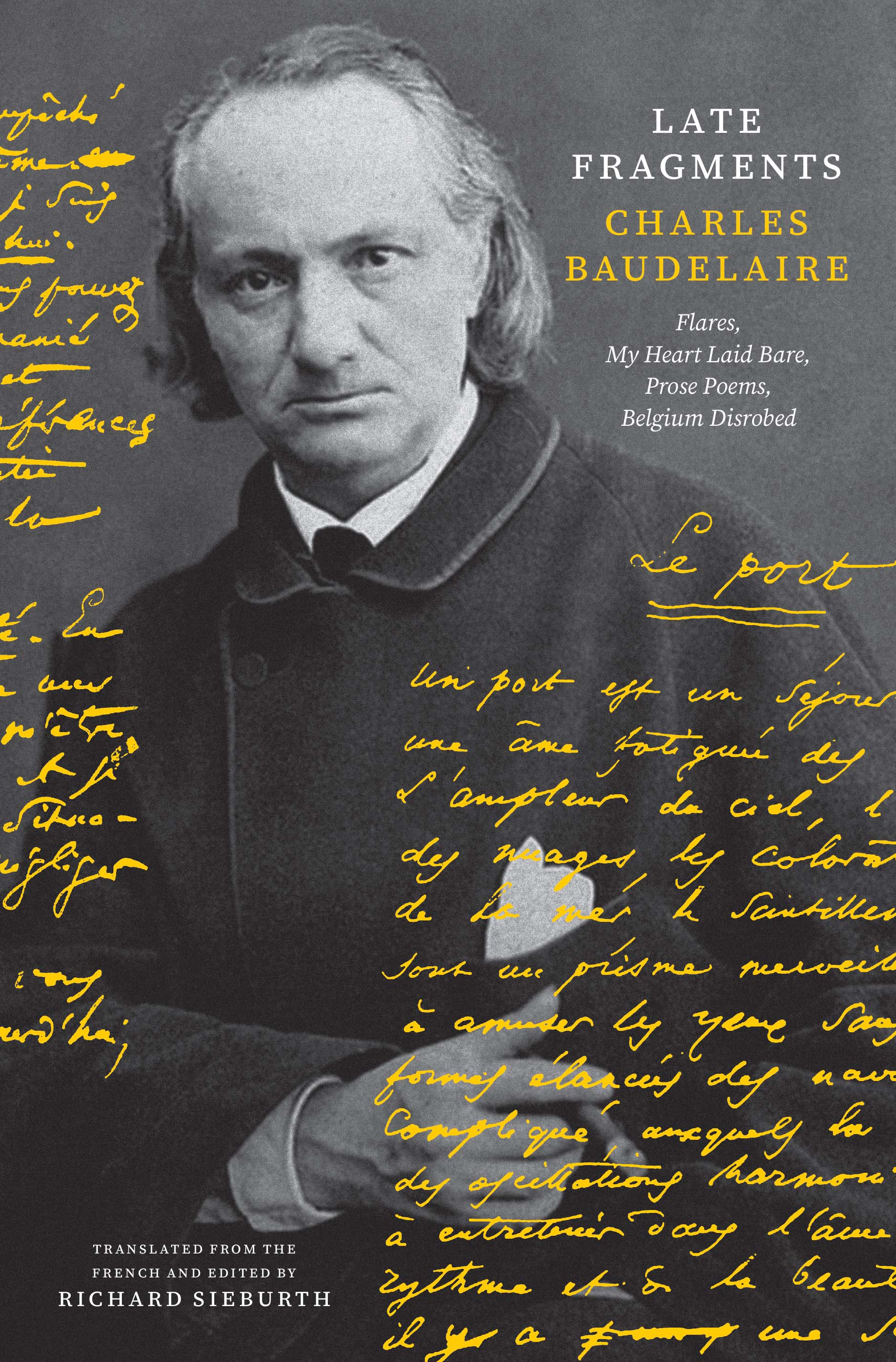
The first English collection of the late poetry and prose fragments of literary icon Charles Baudelaire “[A] handsome new book . . . all this inchoate material is given context by Sieburth’s learned, elegantly written commentary. He is the perfect guide.”—Michael Dirda, Washington Post “[These] unfinished works written after 1861 . . . deliver what their titles seem to a soul stripped of guises and illusions.”—Ange Mlinko, New York Review of Books While not as well known as his other works, Charles Baudelaire’s late poems, drafts of poems, and prose fragments are texts indispensable to the history of modern poetics. This volume brings together Baudelaire’s late fragmentary writings, aphoristic in form and radical in thought, into one edited collection for the first time. Substantial introductions to each work by Richard Sieburth combine the literary context with formal analysis and reception history to give readers a comprehensive picture of the genesis of these works and their subsequent fate. Baudelaire’s turn toward fragmentary writing involved not only a conscious renunciation of his aesthetics of perfection and unity, but a desertion of the harmonies of the traditional lyric in favor of the disjunctions of prose. These are daring works, often painful to read in their misanthropy and unconventional beauty.