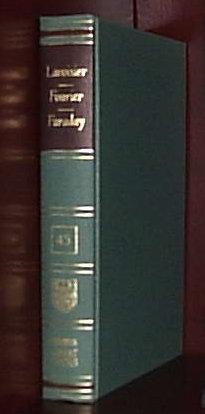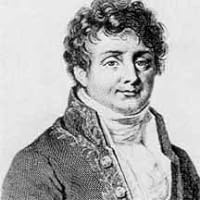



Great Books of the Western World is a series of books originally published in the USA in 1952, by Encyclopædia Britannica Inc., to present the Great Books in a 54-volume set. A 2nd edition of the series comprises 60 volumes. Antoine Laurent Lavoisier, Elements of Chemistry Jean Baptiste Joseph Fourier, Analytical Theory of Heat Michael Faraday Experimental, Researches in Electricity
Authors

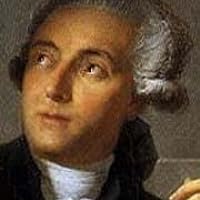
French chemist Antoine Laurent Lavoisier isolated the major components of air, determined the role of oxygen in combustion to disprove the phlogiston theory, and devised a system of chemical nomenclature; during the Reign of Terror, the period from 1793 to 1794 of the French revolution, the hands of a small group temporarily suspended the republican government, concentrated power, and executed him and thousands of other suspected counterrevolutionaries. This central nobleman to the 18th century largely influenced on the history of biology. People widely consider him the "father of modern chemistry." People most note Lavoisier for his discovery. He also first established sulfur as an element in 1777 rather than a compound. He recognized and named oxygen in 1778 and hydrogen in 1783 and opposed the theory. Lavoisier helped to construct the metric system, wrote the first extensive list of elements, and helped to reform. He predicted the existence of silicon in 1787. He discovered always the same mass of matter, which nevertheless may change its form or shape. Lavoisier, an administrator of the Ferme Générale, served as a powerful member of a number of other aristocratic councils. All of these political and economic activities enabled him to fund his scientific research. At the height of the French revolution, Jean-Paul Marat accused him of selling adulterated tobacco and other crimes, and a year fater death of Marat, people eventually guillotined Lavoisier. Joseph-Louis Lagrange expressed importance of Lavoisier to science and, lamenting the beheading, said: "Il ne leur a fallu qu’un moment pour faire tomber cette tête, et cent années peut-être ne suffiront pas pour en reproduire une semblable." ("It took them only an instant to cut off this head, and one hundred years might not suffice to reproduce its like.") Lavoisier also early researched in physical chemistry and thermodynamics in joint experiments with Pierre-Simon Laplace. Lavoisier also contributed to early ideas on composition and chemical changes by stating the radical theory, believing that radicals, which function as a single group in a chemical process, combine with oxygen in reactions. He also introduced the possibility of allotropy in chemical elements when he discovered that diamond is a crystalline form of carbon. Overall, his contributions are considered the most important in advancing chemistry to the level reached in physics and mathematics during the 18th century. Lavoisier's work was recognized as an International Historic Chemical Landmark by the American Chemical Society, Académie des sciences de L'institut de France and the Société Chimique de France in 1999.

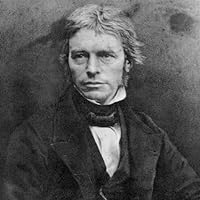
Michael Faraday, FRS (22 September 1791 – 25 August 1867) was an English scientist who contributed to the fields of electromagnetism and electrochemistry. His main discoveries include those of electromagnetic induction, diamagnetism and electrolysis. Although Faraday received little formal education, he was one of the most influential scientists in history. It was by his research on the magnetic field around a conductor carrying a direct current that Faraday established the basis for the concept of the electromagnetic field in physics. Faraday also established that magnetism could affect rays of light and that there was an underlying relationship between the two phenomena. He similarly discovered the principle of electromagnetic induction, diamagnetism, and the laws of electrolysis. His inventions of electromagnetic rotary devices formed the foundation of electric motor technology, and it was largely due to his efforts that electricity became practical for use in technology. As a chemist, Faraday discovered benzene, investigated the clathrate hydrate of chlorine, invented an early form of the Bunsen burner and the system of oxidation numbers, and popularised terminology such as anode, cathode, electrode, and ion. Faraday ultimately became the first and foremost Fullerian Professor of Chemistry at the Royal Institution of Great Britain, a lifetime position. Faraday was an excellent experimentalist who conveyed his ideas in clear and simple language; his mathematical abilities, however, did not extend as far as trigonometry or any but the simplest algebra. James Clerk Maxwell took the work of Faraday and others, and summarized it in a set of equations that is accepted as the basis of all modern theories of electromagnetic phenomena. On Faraday's uses of the lines of force, Maxwell wrote that they show Faraday "to have been in reality a mathematician of a very high order – one from whom the mathematicians of the future may derive valuable and fertile methods." The SI unit of capacitance, the farad, is named in his honour. Albert Einstein kept a picture of Faraday on his study wall, alongside pictures of Isaac Newton and James Clerk Maxwell. Physicist Ernest Rutherford stated; "When we consider the magnitude and extent of his discoveries and their influence on the progress of science and of industry, there is no honour too great to pay to the memory of Faraday, one of the greatest scientific discoverers of all time".