Margins
Margins
Sign in
Margins
Subscribe to our newsletter
548 Market St PMB 65688, San Francisco California 94104-5401 USA
hello@margins.app
·
+1 (650) 223-5283
Privacy Policy
·
Terms of Use
© 2026 Paratext Inc. All rights reserved
📚
Lektury
Wesele
1901
Stanislaw Wyspianski
The Wedding is a Polish classic, continually in production in Poland since Stanislaw Wyspianski wrote it nearly a hundred years ago. A witty but ultimately tragic satire about Polish society, this remarkable play is set around the celebrations of a wedding between a poet from the city of Krakov and a peasant girl from a rural village.
Zbrodnia i kara
2024
Fiodor Dostojewski
Najsłynniejszy "kryminał" w dziejach literatury! Trzynaście dni z życia studenta Rodiona Raskolnikowa. Historia dokonanego przezeń mordu, psychologicznego pojedynku z sędzią śledczym Porfirym, miłości do prostytutki Soni, przyznania się do winy i - w epilogu - kary, skruchy i duchowego odrodzenia. Jednocześnie powieść w dramatyczny sposób stawiająca fundamentalne pytania o najważniejsze sprawy ludzkiej o granice wolności człowieka, o jego prawo do buntu, o naturę zła, o miejsce wiary i miłości. Wszystko w dusznej, przejmująco ukazanej atmosferze plebejskich dzielnic Petersburga. Książka wiecznie żywa, stale odczytywana na nowo, niedająca spokoju kolejnym pokoleniom czytelników.
Lalka
1890
Boleslaw Prus
Warsaw under Russian rule in the late 1870s is the setting for Prus’s grand panorama of social conflict, political tension, and personal suffering. The middle-aged hero, Wokulski, successful in business, is being destroyed by his obsessive love for a frigid society doll, Izabela. Embattled aristocrats, the new men of finance, Dickensian tradesmen, and the urban poor all come vividly to life on the vast, superbly detailed canvas against which Wokulski’s personal tragedy is played out. Unlike his Western European counterparts, Prus had to work under official censorship. In this edition, most of the smaller cuts made by the Tsarist censor have been restored, and one longer fragment is included as an appendix.
1984
1949
George Orwell
The year 1984 has come and gone, but George Orwell's prophetic, nightmarish vision in 1949 of the world we were becoming is timelier than ever. 1984 is still the great modern classic of "negative utopia"—a startlingly original and haunting novel that creates an imaginary world that is completely convincing, from the first sentence to the last four words. No one can deny the novel's hold on the imaginations of whole generations, or the power of its admonitions—a power that seems to grow, not lessen, with the passage of time.
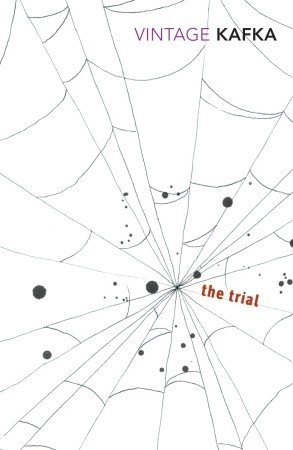
The Trial
1925
Franz Kafka
Written in 1914 but not published until 1925, a year after Kafka’s death, The Trial is the terrifying tale of Josef K., a respectable bank officer who is suddenly and inexplicably arrested and must defend himself against a charge about which he can get no information. Whether read as an existential tale, a parable, or a prophecy of the excesses of modern bureaucracy wedded to the madness of totalitarianism, The Trial has resonated with chilling truth for generations of readers.
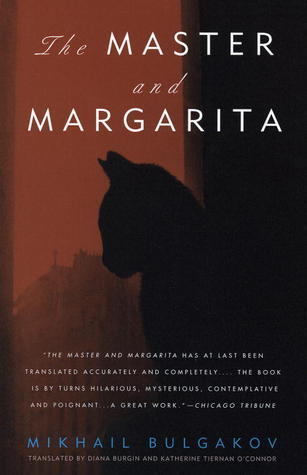
The Master and Margarita
1967
Mikhail Bulgakov
The first complete, annotated English Translation of Mikhail Bulgakov's comic masterpiece. An audacious revision of the stories of Faust and Pontius Pilate, The Master and Margarita is recognized as one of the essential classics of modern Russian literature. The novel's vision of Soviet life in the 1930s is so ferociously accurate that it could not be published during its author's lifetime and appeared only in a censored edition in the 1960s. Its truths are so enduring that its language has become part of the common Russian speech. One hot spring, the devil arrives in Moscow, accompanied by a retinue that includes a beautiful naked witch and an immense talking black cat with a fondness for chess and vodka. The visitors quickly wreak havoc in a city that refuses to believe in either God or Satan. But they also bring peace to two unhappy Muscovites: one is the Master, a writer pilloried for daring to write a novel about Christ and Pontius Pilate; the other is Margarita, who loves the Master so deeply that she is willing literally to go to hell for him. What ensues is a novel of inexhaustible energy, humor, and philosophical depth, a work whose nuances emerge for the first time in Diana Burgin's and Katherine Tiernan O'Connor's splendid English version.
Noc listopadowa
1904
Stanislaw Wyspianski
Trzeci z kolei utwór Stanisława Wyspiańskiego, po „Warszawiance” i „Lelewelu”, poruszający tematykę powstania listopadowego. Utwór przedstawia obraz pierwszych godzin powstania listopadowego (wydarzenia nocy z 29 na 30 listopada 1830 roku), wspaniałego zrywu podchorążych i jego przebieg
📚 Lektury