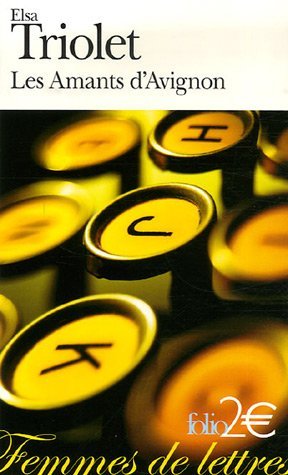



« Et voilà Juliette Noël, dactylo, à nouveau dans un train. Un train bondé, comme tous les trains. Elle est assise sur sa petite valise, dans le couloir encombré de valises et de gens, et pourtant quatre compartiments de ce wagon sont vides et fermés à clef. À chaque arrêt, les nouveaux venus secouent ces portes, sur lesquelles on peut lire : Nur für die Wehrmacht. » D’origine russe, Elsa Triolet (1896-1970) est l’auteur de nombreux romans et de traductions. Résistante pendant la Seconde Guerre mondiale, fidèle compagne de route du Parti communiste, elle a inspiré une part importante de l’œuvre poétique et romanesque de Louis Aragon.
Authors

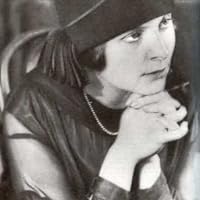
Elsa Yur'evna Triolet (September 24 1896 - June 16, 1970) was a French writer. Born Ella Kagan (Russian: Элла Каган) into a Jewish family of a lawyer and a music teacher in Moscow, she and her sister, Lilya Brik received excellent educations; they were able to speak fluent German and French and play the piano. Elsa graduated from the Moscow Institute of Architecture. Elsa enjoyed poetry and in 1915 befriended the aspiring futurist poet and graphic artist Vladimir Mayakovsky. When she invited him home, the poet fell madly in love with her older sister Lilya, who was married to Osip Brik. Elsa was the first to translate Mayakovsky's poetry (as well as volumes of other Russian-language poetry) to French. In 1918, at the outset of Russian Civil War, Elsa married the French cavalry officer André Triolet and emigrated to France, but for years in her letters to Lilya Elsa admitted to being heartbroken. Later she divorced Triolet. In the early 1920s, Elsa described her visit to Tahiti in her letters to Victor Shklovsky, who subsequently showed them to Maxim Gorky. Gorky suggested that the author should consider a literary career. The 1925 book In Tahiti, written in Russian, was based on these letters. In 1928 Elsa met French writer Louis Aragon. They married and stayed together for 42 years. She influenced Aragon to join the French Communist Party. Triolet and Aragon fought in the French Resistance. In 1944 Triolet was the first woman to be awarded the Prix Goncourt. She died, aged 73, in Moulin de Villeneuve, Saint-Arnoult-en-Yvelines, France of a heart attack. In 2010, La Poste, the French post office, issued three stamps honoring Triolet.