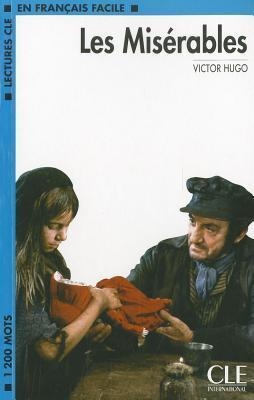
(Book Jacket Jacketed) It has been said that Victor Hugo has a street named after him in virtually every town in France. A major reason for the singular celebrity of this most popular and versatile of the great French writers is Les MisÃrables (1862). In this story of the trials of the peasant Jean Valjeanâ��a man unjustly imprisoned, baffled by destiny, and hounded by his nemesis, the magnificently realized, ambiguously malevolent police detective Javertâ��Hugo achieves the sort of rare imaginative resonance that allows a work of art to transcend its genre. Les MisÃrables is at once a tense thriller that contains one of the most compelling chase scenes in all literature, an epic portrayal of the nineteenth-century French citizenry, and a vital dramaâ��highly particularized and poetic in its rendition but universal in its implicationsâ��of the redemption of one human being.
Author

After Napoleon III seized power in 1851, French writer Victor Marie Hugo went into exile and in 1870 returned to France; his novels include The Hunchback of Notre Dame (1831) and Les Misérables (1862). This poet, playwright, novelist, dramatist, essayist, visual artist, statesman, and perhaps the most influential, important exponent of the Romantic movement in France, campaigned for human rights. People in France regard him as one of greatest poets of that country and know him better abroad.