Margins
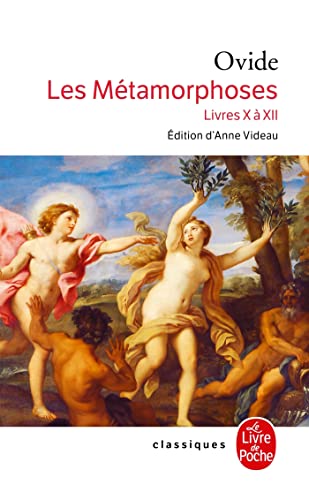
Les Métamorphoses Livres X a XII book cover
Les Métamorphoses Livres X a XII
Ovid
2013
First Published
3.74
Average Rating
192
Number of Pages
Entreprise par Ovide dès l’an 2 après Jésus-Christ, l’épopée des Métamorphoses nous conduit tout au long de ses quinze livres des origines jusqu’au temps présent. C’est une histoire du monde qui nous est offerte, revêtue d’une dimension mythique et constamment ouverte à ces métamorphoses que dicte la volonté des dieux : Pygmalion qui épouse la statue qu’il a façonnée et dont il s’est épris ; Adonis dont le sang, lorsqu’un sanglier l’aura tué, fait naître l’anémone ; Midas affublé d’oreilles d’âne par Apollon qui le punit ; Iphigénie sacrifiée par son père et transformée en biche. Ces histoires vont pour toujours marquer la culture héritée de l’Antiquité et sont bien encore les nôtres.

Avg Rating
3.74
Number of Ratings
31
5 STARS
23%
4 STARS
42%
3 STARS
23%
2 STARS
13%
1 STARS
0%
goodreads

Author

Ovid
Ovid
Author · 45 books

Publius Ovidius Naso (20 March 43 BCE – CE 17/18), known as Ovid (/ˈɒvɪd/) in the English-speaking world, was a Roman poet best known for the Metamorphoses, a 15-book continuous mythological narrative written in the meter of epic, and for collections of love poetry in elegiac couplets, especially the Amores ("Love Affairs") and Ars Amatoria ("Art of Love"). His poetry was much imitated during Late Antiquity and the Middle Ages, and greatly influenced Western art and literature. The Metamorphoses remains one of the most important sources of classical mythology. Ovid is traditionally ranked alongside Virgil and Horace, his older contemporaries, as one of the three canonic poets of Latin literature. He was the first major Roman poet to begin his career during the reign of Augustus, and the Imperial scholar Quintilian considered him the last of the Latin love elegists. He enjoyed enormous popularity, but in one of the mysteries of literary history he was sent by Augustus into exile in a remote province on the Black Sea, where he remained until his death. Ovid himself attributes his exile to carmen et error, "a poem and a mistake", but his discretion in discussing the causes has resulted in much speculation among scholars. Ovid's prolific poetry includes the Heroides, a collection of verse epistles written as by mythological heroines to the lovers who abandoned them; the Fasti, an incomplete six-book exploration of Roman religion with a calendar structure; and the Tristia and Epistulae ex Ponto, two collections of elegies in the form of complaining letters from his exile. His shorter works include the Remedia Amoris ("Cure for Love"), the curse-poem Ibis, and an advice poem on women's cosmetics. He wrote a lost tragedy, Medea, and mentions that some of his other works were adapted for staged performance. See also Ovide.

548 Market St PMB 65688, San Francisco California 94104-5401 USA
© 2026 Paratext Inc. All rights reserved