


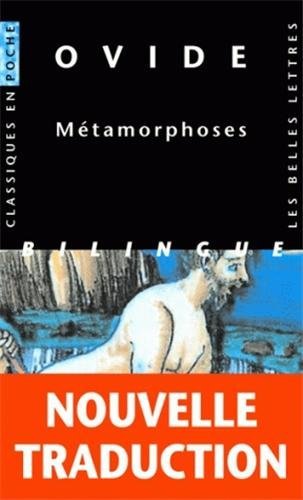
Les Métamorphoses d'Ovide (43 av. J.- C.-17 ap.) sont pour la poésie latine une sorte de livre des records, de longueur (11995 vers évoquant ou narrant 250 métamorphoses en quelque 150 épisodes), mais aussi de variété des genres, des styles et des procédés narratifs. Couvrant toute l'histoire du monde, du chaos originel au temps d'Auguste où écrit le poète, sorte d'œuvre-univers dont la structure labyrinthique fait un véritable et fascinant palais des mirages, « Légende dorée » ou « Vatican du paganisme », « Mille et une nuits de l'Antiquité » elles s'ouvrent sur un récit de la Genèse et s'achèvent, après un long et passionnant prêche philosophique prononcé par Pythagore (569-475 av. J.- C.), sur la promesse de divinisation de l'empereur régnant et d'immortalité du poète, après avoir offert au lecteur, sans jamais l'ennuyer, une profusion de récits épiques et de contes burlesques, édifiants, émouvants ou galants dont la postérité n'a cessé de recycler les inépuisables joyaux. Olivier Sers a traduit Ovide, entreprise sans précédent, vers pour vers, en 11995 alexandrins classiques restituant fidèlement le phrasé et la frappe poétique des hexamètres latins. Pour la première fois le lecteur moderne des Métamorphoses est placé dans la situation même du lecteur antique.
Authors

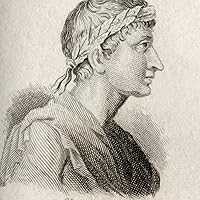
Publius Ovidius Naso (20 March 43 BCE – CE 17/18), known as Ovid (/ˈɒvɪd/) in the English-speaking world, was a Roman poet best known for the Metamorphoses, a 15-book continuous mythological narrative written in the meter of epic, and for collections of love poetry in elegiac couplets, especially the Amores ("Love Affairs") and Ars Amatoria ("Art of Love"). His poetry was much imitated during Late Antiquity and the Middle Ages, and greatly influenced Western art and literature. The Metamorphoses remains one of the most important sources of classical mythology. Ovid is traditionally ranked alongside Virgil and Horace, his older contemporaries, as one of the three canonic poets of Latin literature. He was the first major Roman poet to begin his career during the reign of Augustus, and the Imperial scholar Quintilian considered him the last of the Latin love elegists. He enjoyed enormous popularity, but in one of the mysteries of literary history he was sent by Augustus into exile in a remote province on the Black Sea, where he remained until his death. Ovid himself attributes his exile to carmen et error, "a poem and a mistake", but his discretion in discussing the causes has resulted in much speculation among scholars. Ovid's prolific poetry includes the Heroides, a collection of verse epistles written as by mythological heroines to the lovers who abandoned them; the Fasti, an incomplete six-book exploration of Roman religion with a calendar structure; and the Tristia and Epistulae ex Ponto, two collections of elegies in the form of complaining letters from his exile. His shorter works include the Remedia Amoris ("Cure for Love"), the curse-poem Ibis, and an advice poem on women's cosmetics. He wrote a lost tragedy, Medea, and mentions that some of his other works were adapted for staged performance. See also Ovide.