


Margins
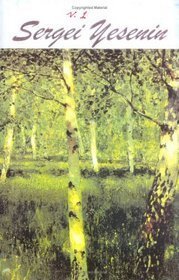
Letter to My Mother book cover
Letter to My Mother
1970
First Published
4.35
Average Rating
98
Number of Pages

Do you live yet, my poor old mother? I, too, live, sending you my love. May the twilight climb up like a ladder your poor cottage and hover above. I`ve heard say you conceal fear, that you miss me, that your life is hard, and along that path, my dear, that you walk, funny-clad, gazing far. But when evening showers down its gloom, you are seeing, you are seeing close, murky inns… bloody killers loom… my heart… pierced… and your fear grows. That`s a trifle, mother! Please stay calm. You see nightmares dance and play. I could never cause you such a harm as to die, without you, far away. I still miss your gentle, fondling hands, and I dream every night that I could leave this anguish, leave these foreign lands, and return to our home made of wood. I`ll come back when the day is born and our orchard whitens in its glow. Only never wake me at the dawn as you used to, as you did years ago. Please don`t rouse what I`ve dreamt away, let it sleep, let it sleep for ever. Life too early had managed to slay all my dreams, all my hopes, all my lovers. Please don`t teach me how to say my prayer; what has gone is erased, erased. You`re my grace, you alone are fair, you`re my only light in the haze. So give up, abandon your fear, stop that longing, soothe your sorry heart, and along that path, my dear, walk no more, funny-clad, gazing far.
Avg Rating
4.35
Number of Ratings
34
5 STARS
56%
4 STARS
32%
3 STARS
6%
2 STARS
3%
1 STARS
3%
goodreads

Author

Sergei Yesenin
Sergei Yesenin
Author · 14 books

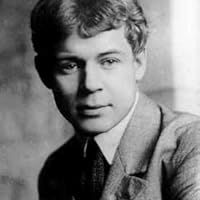
Sergei Alexandrovich Yesenin [Сергей Александрович Есенин], 1895-1925, sometimes spelled as Esenin, was a Russian lyric poet. He is one of the most popular and well-known Russian poets of the 20th century, known for "his lyrical evocations of and nostalgia for the village life of his childhood - no idyll, presented in all its rawness, with an implied curse on urbanisation and industrialisation." Born of peasant parents, he received very little formal education, and although he later traveled quite extensively it was the pre-revolution countryside of his youth that served as inspiration for most of his poetry. Yesenin initially supported the Bolshevik revolution, thinking that it would prove beneficial to the peasant class, but he became disenchanted when he saw that it would lead only to the industrialization of Russia. A longing for a return to the simplicity of the peasant lifestyle characterizes his work, as does his innovative use of images drawn from village lore. He is credited with helping to establish the Imaginist movement in Russian literature. Yesenin led an erratic, unconventional life that was punctuated by bouts of drunkenness and insanity. Before hanging himself in a Leningrad hotel, Yesenin slit his wrists, and, using his own blood, wrote a farewell poem.

548 Market St PMB 65688, San Francisco California 94104-5401 USA
© 2026 Paratext Inc. All rights reserved