


Margins
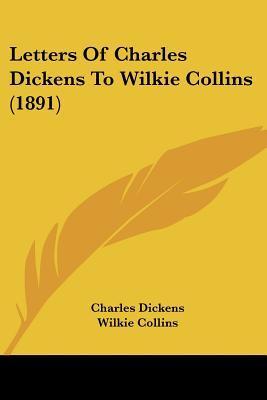
Letters Of Charles Dickens To Wilkie Collins book cover
Letters Of Charles Dickens To Wilkie Collins
1892
First Published
3.85
Average Rating
194
Number of Pages

This is an OCR edition without illustrations or index. It may have numerous typos or missing text. However, purchasers can download a free scanned copy of the original rare book from GeneralBooksClub.com. You can also preview excerpts from the book there. Purchasers are also entitled to a free trial membership in the General Books Club where they can select from more than a million books without charge. Original Published by: Harper & brothers in 1892 in 200 pages; Description: Letters of the novelist to his friend & confidante & famous mystery-writer. Subjects: Authors; Novelists, English; English letters; Biography & Autobiography / Literary; Biography & Autobiography / Literary; Literary Collections / Letters; Literary Criticism / General; Literary Criticism / European / English, Irish, Scottish, Welsh;
Avg Rating
3.85
Number of Ratings
34
5 STARS
53%
4 STARS
15%
3 STARS
9%
2 STARS
12%
1 STARS
12%
goodreads

Authors

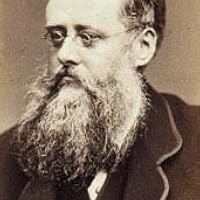
Wilkie Collins
Wilkie Collins
Author · 97 books

A close friend of Charles Dickens from their meeting in March 1851 until Dickens' death in June 1870, William Wilkie Collins was one of the best known, best loved, and, for a time, best paid of Victorian fiction writers. But after his death, his reputation declined as Dickens' bloomed. Now, Collins is being given more critical and popular attention than he has received for 50 years. Most of his books are in print, and all are now in e-text. He is studied widely; new film, television, and radio versions of some of his books have been made; and all of his letters have been published. However, there is still much to be discovered about this superstar of Victorian fiction. Born in Marylebone, London in 1824, Collins' family enrolled him at the Maida Hill Academy in 1835, but then took him to France and Italy with them between 1836 and 1838. Returning to England, Collins attended Cole's boarding school, and completed his education in 1841, after which he was apprenticed to the tea merchants Antrobus & Co. in the Strand. In 1846, Collins became a law student at Lincoln's Inn, and was called to the bar in 1851, although he never practised. It was in 1848, a year after the death of his father, that he published his first book, 'The Memoirs of the Life of William Collins, Esq., R.A'., to good reviews. The 1860s saw Collins' creative high-point, and it was during this decade that he achieved fame and critical acclaim, with his four major novels, 'The Woman in White' (1860), 'No Name' (1862), 'Armadale' (1866) and 'The Moonstone' (1868). 'The Moonstone', is seen by many as the first true detective novel T. S. Eliot called it "the first, the longest, and the best of modern English detective novels ..." in a genre invented by Collins and not by Poe.

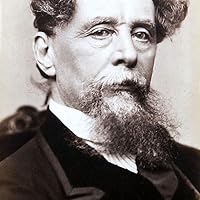
Charles Dickens
Charles Dickens
Author · 429 books

Charles John Huffam Dickens (1812-1870) was a writer and social critic who created some of the world's best-known fictional characters and is regarded as the greatest novelist of the Victorian era. His works enjoyed unprecedented popularity during his lifetime, and by the twentieth century critics and scholars had recognised him as a literary genius. His novels and short stories enjoy lasting popularity. Dickens left school to work in a factory when his father was incarcerated in a debtors' prison. Despite his lack of formal education, he edited a weekly journal for 20 years, wrote 15 novels, five novellas, hundreds of short stories and non-fiction articles, lectured and performed extensively, was an indefatigable letter writer, and campaigned vigorously for children's rights, education, and other social reforms. Dickens was regarded as the literary colossus of his age. His 1843 novella, A Christmas Carol, remains popular and continues to inspire adaptations in every artistic genre. Oliver Twist and Great Expectations are also frequently adapted, and, like many of his novels, evoke images of early Victorian London. His 1859 novel, A Tale of Two Cities, set in London and Paris, is his best-known work of historical fiction. Dickens' creative genius has been praised by fellow writers—from Leo Tolstoy to George Orwell and G. K. Chesterton—for its realism, comedy, prose style, unique characterisations, and social criticism. On the other hand, Oscar Wilde, Henry James, and Virginia Woolf complained of a lack of psychological depth, loose writing, and a vein of saccharine sentimentalism. The term Dickensian is used to describe something that is reminiscent of Dickens and his writings, such as poor social conditions or comically repulsive characters. On 8 June 1870, Dickens suffered another stroke at his home after a full day's work on Edwin Drood. He never regained consciousness, and the next day he died at Gad's Hill Place. Contrary to his wish to be buried at Rochester Cathedral "in an inexpensive, unostentatious, and strictly private manner," he was laid to rest in the Poets' Corner of Westminster Abbey. A printed epitaph circulated at the time of the funeral reads: "To the Memory of Charles Dickens (England's most popular author) who died at his residence, Higham, near Rochester, Kent, 9 June 1870, aged 58 years. He was a sympathiser with the poor, the suffering, and the oppressed; and by his death, one of England's greatest writers is lost to the world." His last words were: "On the ground", in response to his sister-in-law Georgina's request that he lie down. (from Wikipedia)

548 Market St PMB 65688, San Francisco California 94104-5401 USA
© 2026 Paratext Inc. All rights reserved