



Margins
Lettre à mon barbier [Letter to My Barber] book cover
Lettre à mon barbier [Letter to My Barber]
2017
First Published
4.23
Average Rating
48
Number of Pages

Un livre classique sur la prière. Écrit par le célèbre prédicateur et théologien Martin Luther, il enseigne une manière toute simple de prier. Son livre est réédité depuis 500 ans dans de nombreuses langues. Allemagne, 1535. Un barbier du nom de Peter Beskendorf interroge son vieil ami Martin «Comment dois-je prier?». C’est une question essentielle et même vitale, puisque c’est précisément par la prière que le chrétien peut s’adresser au Créateur de l’Univers. En toute humilité, Martin Luther lui répond par une lettre ouverte et lui propose une manière simple de il s’appuie sur des textes fondamentaux de la foi chrétienne – les Dix commandements et le Notre Père – pour aider son ami à parler à Dieu. Si, comme ce barbier, vous vous posez la même question, laissez-vous inspirer par les conseils de Martin Luther. Please This audiobook is in French.
Avg Rating
4.23
Number of Ratings
13
5 STARS
31%
4 STARS
62%
3 STARS
8%
2 STARS
0%
1 STARS
0%
goodreads

Author

Martin Luther
Martin Luther
Author · 93 books

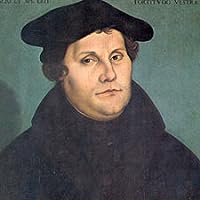
Martin Luther (1483-1546) was a German monk, theologian, university professor and church reformer whose ideas inspired the Protestant Reformation and changed the course of Western civilization. Luther's theology challenged the authority of the papacy by holding that the Bible is the only infallible source of religious authority and that all baptized Christians under Jesus are a spiritual priesthood. According to Luther, salvation was a free gift of God, received only by true repentance and faith in Jesus as the Messiah, a faith given by God and unmediated by the church. Luther's confrontation with Charles V at the Diet of Worms over freedom of conscience in 1521 and his refusal to submit to the authority of the Emperor resulted in his being declared an outlaw of the state as he had been excommunicated from the Roman Catholic Church. Because of the perceived unity of the medieval Church with the secular rulers of western Europe, the widespread acceptance of Luther's doctrines and popular vindication of his thinking on individual liberties were both phenomenal and unprecedented. His translation of the Bible into the vernacular, making it more accessible to ordinary people, had a tremendous political impact on the church and on German culture. It furthered the development of a standard version of the German language, added several principles to the art of translation, and influenced the translation of the English King James Bible. His hymns inspired the development of congregational singing within Christianity. His marriage to Katharina von Bora set a model for the practice of clerical marriage within Protestantism. Much scholarly debate has concentrated on Luther's writings about the Jews. His statements that Jews' homes should be destroyed, their synagogues burned, money confiscated and liberty curtailed were revived and used in propaganda by the Nazis in 1933–45. As a result of this and his revolutionary theological views, his legacy remains controversial.

548 Market St PMB 65688, San Francisco California 94104-5401 USA
© 2025 Paratext Inc. All rights reserved