Margins
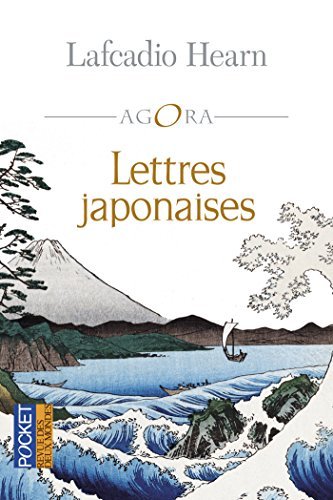
Lettres japonaises (AGORA t. 375) book cover
Lettres japonaises (AGORA t. 375)
1974
First Published
3.60
Average Rating
192
Number of Pages

Lafcadio Hearn, né en 1850 en Grèce, ayant vécu seize ans aux États-Unis, reste un nomade jusqu'au jour où il découvre dans le Japon la patrie de son esprit au point de s'y fixer en 1890. De cette date jusqu'à sa mort en 1904, il produit une suite de livres – romans et contes – sur ce pays, seulement tourmenté par le regret de ne jamais suffisamment en pénétrer l'âme. C'est dans ses Lettres japonaises qu'il est assurément le témoin, à la fois le plus intelligent et sensible, de la vie et de la culture du Japon traditionnel avec son héroïsme, sa courtoisie, ses raffinements, un pays encore indemne de toute occidentalisation. Outre les Lettres déjà publiées par la Revue des Deux mondes en 1924, cet ouvrage offre des lettres inconnues, ainsi que deux textes, inédits en français, sur l'auteur signés Hugo von Hofmannsthal et Stefan Zweig. " Lafcadio Hearn, écrit Marguerite Yourcenar, adopte le Japon comme on entre dans les ordres, l'épouse comme il prit authentiquement pour femme la fille d'un samouraï. " Marguerite Yourcenar
Avg Rating
3.60
Number of Ratings
5
5 STARS
20%
4 STARS
20%
3 STARS
60%
2 STARS
0%
1 STARS
0%
goodreads

Authors

Lafcadio Hearn
Lafcadio Hearn
Author · 59 books

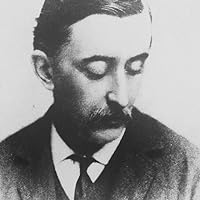
Greek-born American writer Lafcadio Hearn spent 15 years in Japan; people note his collections of stories and essays, including Kokoro (1896), under pen name Koizumi Yakumo. Rosa Cassimati (Ρόζα Αντωνίου Κασιμάτη in Greek), a Greek woman, bore Patrick Lafcadio Hearn (Πατρίκιος Λευκάδιος Χερν in Greek or 小泉八雲 in Japanese), a son, to Charles Hearn, an army doctor from Ireland. After making remarkable works in America as a journalist, he went to Japan in 1890 as a journey report writer of a magazine. He arrived in Yokohama, but because of a dissatisfaction with the contract, he quickly quit the job. He afterward moved to Matsué as an English teacher of Shimané prefectural middle school. In Matsué, he got acquainted with Nishida Sentarô, a colleague teacher and his lifelong friend, and married Koizumi Setsu, a daughter of a samurai. In 1891, he moved to Kumamoto and taught at the fifth high school for three years. Kanô Jigorô, the president of the school of that time, spread judo to the world. Hearn worked as a journalist in Kôbé and afterward in 1896 got Japanese citizenship and a new name, Koizumi Yakumo. He took this name from "Kojiki," a Japanese ancient myth, which roughly translates as "the place where the clouds are born". On that year, he moved to Tôkyô and began to teach at the Imperial University of Tôkyô. He got respect of students, many of whom made a remarkable literary career. In addition, he wrote much reports of Japan and published in America. So many people read his works as an introduction of Japan. He quit the Imperial University in 1903 and began to teach at Waseda University on the year next. Nevertheless, after only a half year, he died of angina pectoris.

548 Market St PMB 65688, San Francisco California 94104-5401 USA
© 2026 Paratext Inc. All rights reserved