Margins
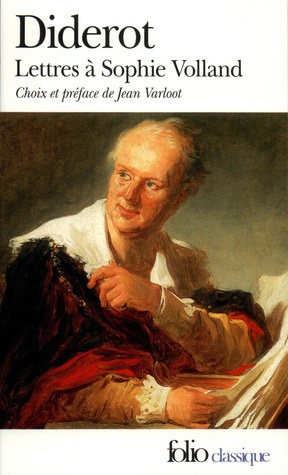
Lettres à Sophie Volland book cover
Lettres à Sophie Volland
1656
First Published
3.69
Average Rating
535
Number of Pages

The Letters to Sophie Volland are a documentary record of Diderot's relationship with Louise-Henriette Volland (1716–84), whom the philosophe decides to call ‘Sophie’, a name evoking wisdom. As Sophie's own letters have disappeared without trace, this correspondence can seem like a long monologue on Diderot's part, a drawn-out plaint from the man of letters who has fallen in love, an extended apostrophe. Jacques Chouillet uses the striking phrase ‘un dialogue à une voix’ (‘a one-voice dialogue’) to describe the collection. To add to this effect, history records almost nothing about Louise-Henriette. Trousson is only able to furnish the sparsest of details. He notes: ‘[elle] était fille d'un avocat au Parlement de Paris, ensuite directeur des gabelles – l'impôt sur le sel’ (‘she was daughter of a lawyer at the Paris parlement, who went on to become director of gabelles – the salt tax’), adding that Diderot remembers her mother's maiden name (Carlière) when he writes one of his short stories. So we have no choice but to follow the example of Odile Richard-Pauchet and reconstruct ‘Sophie’ from the image which Diderot has bequeathed in his correspondence. His object of love is also his ideal addressee: ‘Épistolière esthète et philosophe à ses heures, lectrice enthousiaste d'une œuvre qui n'a pas donné toute sa mesure, sensible et indépendante, telle est Sophie.’ (‘A letter-writer capable of being an aesthete and a philosopher; the enthusiastic reader of a work that has not yet fully blossomed; sensitive and independent: such is Sophie.’)
Avg Rating
3.69
Number of Ratings
35
5 STARS
26%
4 STARS
31%
3 STARS
31%
2 STARS
9%
1 STARS
3%
goodreads

Author

Denis Diderot
Denis Diderot
Author · 45 books

Work on the Encyclopédie (1751-1772), supreme accomplishment of French philosopher and writer Denis Diderot, epitomized the spirit of thought of Enlightenment; he also wrote novels, plays, critical essays, and brilliant letters to a wide circle of friends and colleagues. Jean le Rond d'Alembert contributed. This artistic prominent persona served as best known co-founder, chief editor, and contributor. He also contributed notably to literature with Jacques le fataliste et son maître (Jacques the Fatalist and his Master), which emulated Laurence Sterne in challenging conventions regarding structure and content, while also examining ideas about free will. Diderot also authored of the known dialogue, Le Neveu de Rameau (Rameau's Nephew), basis of many articles and sermons about consumer desire. His articles included many topics. Diderot speculated on free will, held a completely materialistic view of the universe, and suggested that heredity determines all human behavior. He therefore warned his fellows against an overemphasis on mathematics and against the blind optimism that sees in the growth of physical knowledge an automatic social and human progress. He rejected the idea of progress. His opinion doomed the aim of progressing through technology to fail. He founded on experiment and the study of probabilities. He wrote several articles and supplements concerning gambling, mortality rates, and inoculation against smallpox. He discreetly but firmly refuted technical errors and personal positions of d'Alembert on probability.

548 Market St PMB 65688, San Francisco California 94104-5401 USA
© 2026 Paratext Inc. All rights reserved