Margins
Licantropie - Maledizioni dal plenilunio book cover
Licantropie - Maledizioni dal plenilunio
2025
First Published
4.33
Average Rating
312
Number of Pages
Al calar della notte, quando spunta la luna piena o, talvolta, in pieno giorno, il licantropo emerge come una creatura permeata di mistero e simbolismo, sospesa tra essere umano e bestia. L’uomo lupo – o la donna lupo – è al contempo vittima e carnefice, predatore e preda. Se il più delle volte è all’oscuro della propria metamorfosi e delle sue terribili conseguenze, altre invece abbraccia e rivendica la propria natura. È la personificazione del conflitto tra razionalità e istinto, del lato selvatico e indomabile che si nasconde in ognuno di noi. Quel lato che, quando sfugge al controllo della ragione, sconvolge e lacera le nostre più solide convinzioni. Questa raccolta racchiude racconti, leggende tradizionali e documenti storici che descrivono la licantropia da luoghi, culture e prospettive molto diverse tra loro: autori e autrici tra Otto e Novecento provenienti dall’Europa, dall’Asia, dall’Africa e dal Sudamerica narrano – o testimoniano – i crimini e misfatti dell’inquietante bestia umana, troppo umana.
Avg Rating
4.33
Number of Ratings
9
5 STARS
33%
4 STARS
67%
3 STARS
0%
2 STARS
0%
1 STARS
0%
goodreads

Authors

Paul Sébillot
Paul Sébillot
Author · 1 book

Paul Sébillot était un ethnologue, écrivain et peintre français. Un grand nombre de ses travaux sont consacrés à sa province d’origine, la Bretagne. Paul Sébillot was a French folklorist, painter, and writer. Many of his works are about his native province, Brittany.

Saki
Saki
Author · 128 books

Known British writer Hector Hugh Munro under pen name Saki published his witty and sometimes bitter short stories in collections, such as The Chronicles of Clovis (1911). His sometimes macabre satirized Edwardian society and culture. People consider him a master and often compare him to William Sydney Porter and Dorothy Rothschild Parker. His tales feature delicately drawn characters and finely judged narratives. "The Open Window," perhaps his most famous, closes with the line, "Romance at short notice was her specialty," which thus entered the lexicon. Newspapers first and then several volumes published him as the custom of the time. His works include * a full-length play, The Watched Pot , in collaboration with Charles Maude; * two one-act plays; * a historical study, The Rise of the Russian Empire , the only book under his own name; * a short novel, The Unbearable Bassington ; * the episodic The Westminster Alice , a parliamentary parody of Alice in Wonderland ; * and When William Came: A Story of London under the Hohenzollerns , an early alternate history. Oscar Fingal O'Flahertie Wills Wilde, Charles Lutwidge Dodgson, and Joseph Rudyard Kipling, influenced Munro, who in turn influenced Alan Alexander Milne, Sir Noel Pierce Coward, and Pelham Grenville Wodehouse.

Ludwig Bechstein
Ludwig Bechstein
Author · 4 books
Ludwig Bechstein was a German writer and collector of folk fairy tales.
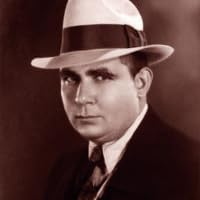
Robert E. Howard
Robert E. Howard
Author · 242 books

Robert Ervin Howard was an American pulp writer of fantasy, horror, historical adventure, boxing, western, and detective fiction. Howard wrote "over three-hundred stories and seven-hundred poems of raw power and unbridled emotion" and is especially noted for his memorable depictions of "a sombre universe of swashbuckling adventure and darkling horror." He is well known for having created—in the pages of the legendary Depression-era pulp magazine Weird Tales—the character Conan the Cimmerian, a.k.a. Conan the Barbarian, a literary icon whose pop-culture imprint can only be compared to such icons as Tarzan of the Apes, Count Dracula, Sherlock Holmes, and James Bond. —Wikipedia Librarian Note: There is more than one author in the Goodreads database with this name.

Wenceslas-Eugène Dick
Author · 1 book
Wenceslas-Eugène Dick, Canadian writer.
José Leite de Vasconcelos
Author · 1 book
José Leite de Vasconcellos Pereira de Melo (1858-1941) nasceu em Ucanha, Tarouca, a 7 de julho de 1858, e faleceu em Lisboa a 17 de maio de 1941. Embora descendentes da Casa Nobre de Resende, os pais tinham dificuldades económicas que o impediram de prosseguir estudos após o ensino primário. Frequenta, no entanto, a biblioteca de um seu tio, adquirindo conhecimentos que lhe servirão para o seu posterior trabalho de etnólogo. O tio arranja-lhe entretanto emprego no Porto como amanuense. É lá que completa o curso do liceu, formando-se depois em Medicina na Escola do Porto com a tese A Evolução da Linguagem (1886). Dedica-se aos estudos etnográficos, tornando-se nacional e internacionalmente conhecido. Funda a Revista Lusitana (1887), a revista O Arqueólogo Português (1895) e o Museu Etnológico Português (1893), catalogando pessoalmente os 20 mil objetos que constituíam o espólio do museu. Com 40 anos de idade, fixa-se em Paris onde prepara o doutoramento em Filologia Românica que tem por título Esquisse d'une Dialectologie Portugaise, aprovada «avec la mention très honorable». Regressa a Portugal e é convidado, aos 53 anos de idade, para leccionar na Faculdade de Letras de Lisboa.
George MacDonald
George MacDonald
Author · 114 books

George MacDonald was a Scottish author, poet, and Christian minister. He was educated at Aberdeen University and after a short and stormy career as a minister at Arundel, where his unorthodox views led to his dismissal, he turned to fiction as a means of earning a living. He wrote over 50 books. Known particularly for his poignant fairy tales and fantasy novels, MacDonald inspired many authors, such as G.K. Chesterton, W. H. Auden, J.R.R. Tolkien, C. S. Lewis, and Madeleine L'Engle. Lewis wrote that he regarded MacDonald as his "master": "Picking up a copy of Phantastes one day at a train-station bookstall, I began to read. A few hours later," said Lewis, "I knew that I had crossed a great frontier." G. K. Chesterton cited The Princess and the Goblin as a book that had "made a difference to my whole existence." Elizabeth Yates wrote of Sir Gibbie, "It moved me the way books did when, as a child, the great gates of literature began to open and first encounters with noble thoughts and utterances were unspeakably thrilling." Even Mark Twain, who initially disliked MacDonald, became friends with him, and there is some evidence that Twain was influenced by MacDonald. For more information, please see http://en.wikipedia.org/wiki/George\_M...

548 Market St PMB 65688, San Francisco California 94104-5401 USA
© 2026 Paratext Inc. All rights reserved