Margins
Sign in
Margins
548 Market St PMB 65688, San Francisco California 94104-5401 USA
hello@margins.app
·
+1 (650) 223-5283
Privacy Policy
·
Terms of Use
© 2026 Paratext Inc. All rights reserved
Life & Times
Life & Times
Series · 7 books · 2004-2011
By
Brian Morton
,
Angus Mitchell
,
Sean Sheehan
, and more
Books in series
#13
Edgar Allan Poe
2008
Edgar Allen Poe stands at the very beginning of American literature, an orphaned, rootless, haunted man who gave short story writing its modern cast and pioneered detective fiction. Brian Morton puts the Poe legend into context, revealing one of the most influential writers of modern times.
#21
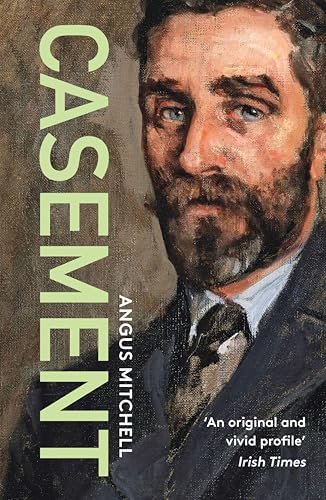
Casement
2005
An illumination of the life of diplomat Roger Casement.
At the time of his execution for treason in 1916, few were aware who Roger Casement was or what he represented. Since then, he has been lauded for his investigations into Belgian brutality in the Congo Free State and human rights abuses in the Peruvian rubber industry, but much else about him has remained obscured behind speculation about his sexuality and secret Irish revolutionary activity while in service of the British Empire. As such, his place in history has been ill-defined and his involvement in the waging of war followed by the delicate negotiation of peace; his republicanism perceived variously as an eccentric enthusiasm and as a threat to the British Empire; his contemporary legacy overshadowed by the Black Diaries of disputed legitimacy, detailing alleged liaisons with young men. In
Casement
, Angus Mitchell illuminates a life shrouded in mystery, which operated in the conflicting spheres of British foreign diplomacy and Irish revolutionary activity. Considering Casement’s rebellious nature, Mitchell asks if it was motivated as much by his “incorrigible” Irishness as by his exposure of the appalling crimes against humanity that he witnessed in Africa and South America. Most significantly,
Casement
demonstrates that his legacy cannot be ascribed to just one cause, whether as a critic of global colonialism or as a founding father of the modern Irish nation-state. Casement’s true commitment was to a universal understanding based on humanity, tolerance, and justice.
#24
Lenin
2009
Views of Lenin are currently set in a tone of highly judgemental opinion: he was inflexible, doctrinaire and a cold-blooded revolutionary. A man whose indifference to culture led to political extremes, paving the way for his successor Stalin’s totalitarianism and some of the most heinous and gruesome ideological crimes committed during the 20th century. Enshrined as an icon of Soviet ideology and power, the statues of Lenin that were once a common sight across Eastern Europe and Russia have been toppled and his reputation crumbled into the dust of historical memory. This short Life & Times biography of Lenin sets out to examine his legacy in the light of the complete and total collapse of the ideology he espoused. Sheehan seeks to separate the myth from the fact, and let the real Lenin emerge from behind the opposing shrouds of deification and condemnation, revealing the creator of the 20th century’s most influential yet bloodthirsty beliefs.
#26
F Scott Fitzgerald
2011
The success of his first novel This Side of Paradise gave F. Scott Fitzgerald both celebrity and financial independence, enabling him to marry his "golden girl," Zelda Sayre. They became the quintessential couple of the Jazz Age, the heady and exciting years of the twenties before the Wall Street crash. Tragically the glamor and decadence of their early years would dissolve into Zelda's alcohol-induced schizophrenia and, for Fitzgerald, a precarious life in Hollywood that would end in early death. This introductory biography, part of the Life&Times series, is a comprehensive account of Fitzgerald's literary triumphs and personal misfortune.
#37
Keynes
2007
A biography of the man behind the greatest economic theory of the 20th century
#45
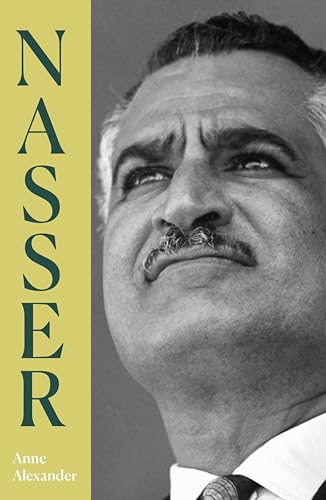
Nasser
2004
A nuanced portrait of one of the most complex figures of the Middle East, Gamal Abd al-Nasser. More than fifty years after his death, Gamal Abd al-Nasser remains a towering figure in the Arab world. As one of the young officers who overthrew British-backed King Farouk in Egypt in 1952, Nasser rose to prominence as a charismatic visionary who challenged foreign dominance. At just thirty-six years old, he became the undisputed leader of Egypt in a presidency that would run from 1956 to 1970. This insightful biography, in its second edition and featuring a new introduction from the author, delves into the life of Nasser, charting his rise to power, his nationalization of the Suez Canal, and his turbulent years as president. Many in the Arab World celebrate Nasser for his defiancé of colonial rule and his dream of Arab unity. However, his legacy is not without its contradictions. Critics have alluded, for instance, to his autocratic rule and unfulfilled promises. In Nasser, Anne Alexander explores this tension between Nasser’s revolutionary ideas and the reality of his governance.
#46
Patrice Lumumba
2008
Accessible and affordable illustrated biography about a topical historical figure - no competing title
Authors
Brian Morton
Author · 1 book
Angus Mitchell
Author · 3 books
Sean Sheehan
Author · 21 books
Sheila Schwartz
Author · 4 books
Robert Cord
Author · 1 book
Anne Alexander
Author · 7 books
Leo Zeilig
Author · 11 books