Margins




548 Market St PMB 65688, San Francisco California 94104-5401 USA
© 2026 Paratext Inc. All rights reserved
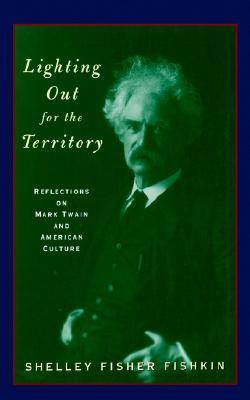
Mark Twain has been called the American Cervantes, our Homer, our Tolstoy, our Shakespeare. Ernest Hemingway maintained that "all modern American literature comes from one book by Mark Twain called Huckleberry Finn ." President Franklin Delano Roosevelt took the phrase "New Deal" from A Connecticut Yankee in King Arthur's Court . Twain's Gilded Age gave an entire era its name. Twain is everywhere—in ads for Bass Ale, in episodes of "Star Trek," as a greeter in Nevada's Silver Legacy casino. Clearly, the reports of his death have been greatly exaggerated. In Lighting Out for the Territory, Twain scholar Shelley Fisher Fishkin blends personal narrative with reflections on history, literature, and popular culture to provide a lively and provocative look at who Mark Twain really was, how he got to be that way, and what we do with his legacy today. Fishkin illuminates the many ways that America has embraced Mark Twain—from the scenes and plots of his novels, to his famous quips, to his bushy-haired, white-suited persona. She reveals that we have constructed a Twain often far removed from the actual writer. For instance, we travel to Hannibal, Missouri, Mark Twain's home town, a locale that in his work is both the embodiment of the innocence of childhood and also an emblem of hypocrisy, barbarity, and moral rot. The author spotlights the fact that Hannibal today attracts hundreds of thousands of tourists and takes in millions yearly, by focusing on Tom Sawyer's boyhood exploits—marble-shoots and white-washed fences—and ignoring Twain's portraits of the darker side of the slave South. The narrative moves back and forth from modern Hannibal to antebellum Hannibal and to Mark Twain's childhood experiences with brutality and slavery. Her exploration of those subjects in his work shows that Tom Sawyer's fence isn't the only thing being white-washed in Hannibal. Fishkin's research yields fresh insights into the remarkable story of how this child of slaveholders became the author of the most powerful anti-racist novel by an American. Whether lending his name to a pizza parlor in Louisiana, a diner in Jackson Heights, New York, or an asteroid in outer space, whether making cameo appearances on "Cheers" and "Bonanza," or turning up in novels as a detective or a love interest, Mark Twain's presence in contemporary culture is pervasive and intriguing. Fishkin's wide-ranging examination of that presence demonstrates how Twain and his work echo, ripple, and reverberate throughout our society. We learn that Walt Disney was a great fan of Twain's fiction (in fact, "Tom Sawyer's Island" in Disneyland is the only part of the park that Disney himself designed) as is Chuck Jones, who credits the genesis of cartoon character Wile E. Coyote to the comic description of a coyote in Roughing It . We learn of Mark Twain impersonators (Hal Holbrook, for instance, has played Twain in some 1,500 performances) and recent movie versions of Twain books, such as A Million to Juan . And we discover how Twain's image can be seen in claymation, in animatronics and robotics, in virtual reality, and on any number of home-pages on the Internet. Lighting Out for the Territory offers an engrossing look at how Mark Twain's life and work have been cherished, memorialized, exploited, and misunderstood. It offers a wealth of insight into Twain, into his work, and into our nation, both past and present.