Margins
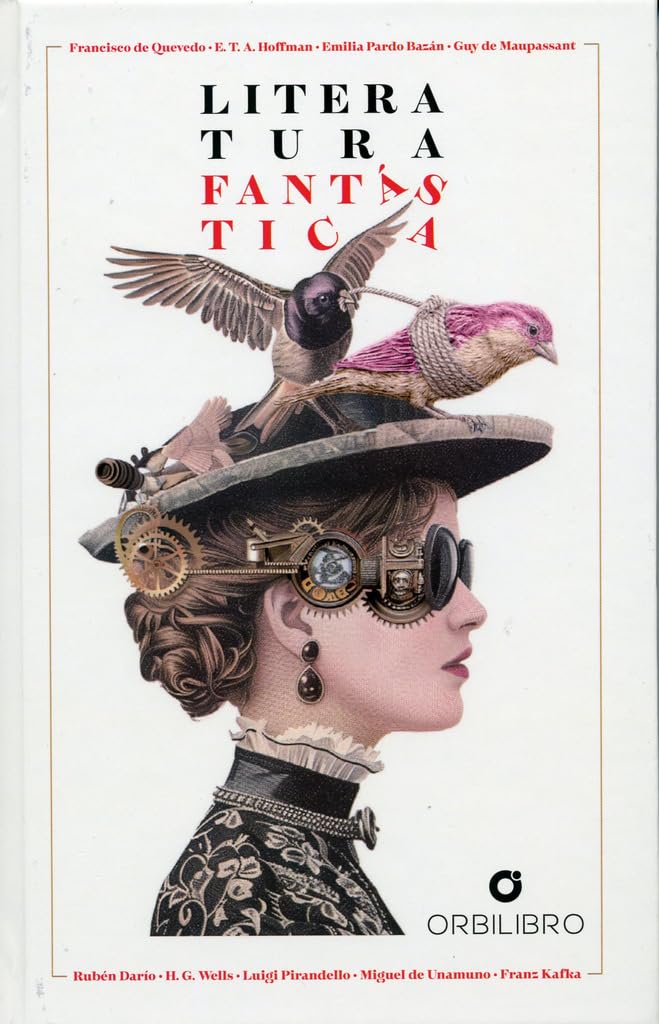
Literatura Fantástica book cover
Literatura Fantástica
2024
First Published
2.00
Average Rating
232
Number of Pages
Si alguna vez te has sentido cautivado por la magia de un mundo imposible o has explorado con tu mente los rincones más oscuros de lo inexplicable, la literatura está hecha fantástica para ti. Los relatos fantásticos, que suponen un atentado a la realidad, no solo entretienen, también invitan a reflexionar sobre la naturaleza del bien y el mal, la identidad humana y los límites de la realidad.

Avg Rating
2.00
Number of Ratings
1
5 STARS
0%
4 STARS
0%
3 STARS
0%
2 STARS
100%
1 STARS
0%
goodreads

Authors

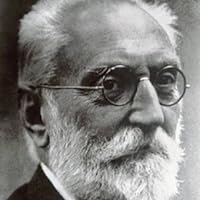
Miguel de Unamuno
Miguel de Unamuno
Author · 51 books

Miguel de Unamuno y Jugo was born in the medieval centre of Bilbao, Basque Country, the son of Félix de Unamuno and Salomé Jugo. As a young man, he was interested in the Basque language, and competed for a teaching position in the Instituto de Bilbao, against Sabino Arana. The contest was finally won by the Basque scholar Resurrección María de Azcue. Unamuno worked in all major genres: the essay, the novel, poetry and theatre, and, as a modernist, contributed greatly to dissolving the boundaries between genres. There is some debate as to whether Unamuno was in fact a member of the Generation of '98 (an ex post facto literary group of Spanish intellectuals and philosophers that was the creation of José Martínez Ruiz—a group that includes Antonio Machado, Azorín, Pío Baroja, Ramón del Valle-Inclán, Ramiro de Maeztu and Ángel Ganivet, among others). In addition to his writing, Unamuno played an important role in the intellectual life of Spain. He served as rector of the University of Salamanca for two periods: from 1900 to 1924 and 1930 to 1936, during a time of great social and political upheaval. Unamuno was removed from his post by the government in 1924, to the protest of other Spanish intellectuals. He lived in exile until 1930, first banned to Fuerteventura (Canary Islands), from where he escaped to France. Unamuno returned after the fall of General Primo de Rivera's dictatorship and took up his rectorship again. It is said in Salamanca that the day he returned to the University, Unamuno began his lecture by saying "As we were saying yesterday, ...", as Fray Luis de León had done in the same place four centuries before, as though he had not been absent at all. After the fall of Rivera's dictatorship, Spain embarked on its second Republic, a short-lived attempt by the people of Spain to take democratic control of their own country. He was a candidate for the small intellectual party Al Servicio de la República. The burgeoning Republic was eventually squashed when a military coup headed by General Francisco Franco caused the outbreak of the Spanish Civil War. Having begun his literary career as an internationalist, Unamuno gradually became a convinced Spanish nationalist, feeling that Spain's essential qualities would be destroyed if influenced too much by outside forces. Thus for a brief period he actually welcomed Franco's revolt as necessary to rescue Spain from radical influence. However, the harsh tactics employed by the Francoists in the struggle against their republican opponents caused him to oppose both the Republic and Franco. As a result of his opposition to Franco, Unamuno was effectively removed for a second time from his University post. Also, in 1936 Unamuno had a brief public quarrel with the Nationalist general Millán Astray at the University in which he denounced both Astray and elements of the Francoist movement. He called the battle cry of the rightist Falange movement—"Long live death!"—repellent and suggested Astray wanted to see Spain crippled. One historian notes that his address was a "remarkable act of moral courage" and that he risked being lynched on the spot. Shortly afterwards, he was placed under house arrest, where he remained, broken-hearted, until his death ten weeks later.[1]

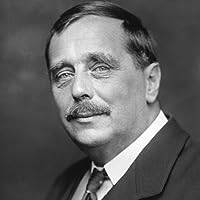
H.G. Wells
H.G. Wells
Author · 325 books

Herbert George Wells was born to a working class family in Kent, England. Young Wells received a spotty education, interrupted by several illnesses and family difficulties, and became a draper's apprentice as a teenager. The headmaster of Midhurst Grammar School, where he had spent a year, arranged for him to return as an "usher," or student teacher. Wells earned a government scholarship in 1884, to study biology under Thomas Henry Huxley at the Normal School of Science. Wells earned his bachelor of science and doctor of science degrees at the University of London. After marrying his cousin, Isabel, Wells began to supplement his teaching salary with short stories and freelance articles, then books, including The Time Machine (1895), The Island of Dr. Moreau (1896), The Invisible Man (1897), and The War of the Worlds (1898). Wells created a mild scandal when he divorced his cousin to marry one of his best students, Amy Catherine Robbins. Although his second marriage was lasting and produced two sons, Wells was an unabashed advocate of free (as opposed to "indiscriminate") love. He continued to openly have extra-marital liaisons, most famously with Margaret Sanger, and a ten-year relationship with the author Rebecca West, who had one of his two out-of-wedlock children. A one-time member of the Fabian Society, Wells sought active change. His 100 books included many novels, as well as nonfiction, such as A Modern Utopia (1905), The Outline of History (1920), A Short History of the World (1922), The Shape of Things to Come (1933), and The Work, Wealth and Happiness of Mankind (1932). One of his booklets was Crux Ansata, An Indictment of the Roman Catholic Church. Although Wells toyed briefly with the idea of a "divine will" in his book, God the Invisible King (1917), it was a temporary aberration. Wells used his international fame to promote his favorite causes, including the prevention of war, and was received by government officials around the world. He is best-remembered as an early writer of science fiction and futurism. He was also an outspoken socialist. Wells and Jules Verne are each sometimes referred to as "The Fathers of Science Fiction". D. 1946. More: http://philosopedia.org/index.php/H.\_... http://www.online-literature.com/well... http://www.hgwellsusa.50megs.com/ http://www.britannica.com/EBchecked/t... http://en.wikipedia.org/wiki/H.\_G.\_Wells

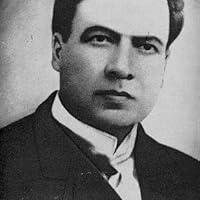
Ruben Dario
Ruben Dario
Author · 47 books
Nicaraguan poet Félix Rubén García Sarmiento initiated and epitomizes Spanish literary modernism. Dario is in all possibility the poet who has had the greatest and most lasting influence in twentieth century Spanish literature. He has been praised as the prince of Castilian letters.
Guy de Maupassant
Guy de Maupassant
Author · 333 books
Henri René Albert Guy de Maupassant was a popular 19th-century French writer. He is one of the fathers of the modern short story. A protege of Flaubert, Maupassant's short stories are characterized by their economy of style and their efficient effortless dénouement. He also wrote six short novels. A number of his stories often denote the futility of war and the innocent civilians who get crushed in it - many are set during the Franco-Prussian War of the 1870s.
Emilia Pardo Bazán
Emilia Pardo Bazán
Author · 64 books

Emilia Pardo Bazán was a Galician author and scholar from Galicia. She is known for bringing naturalism to Spanish literature, for her detailed descriptions of reality, and for her role in feminist literature of her era. Her first novel, Pascual López (1879), is a simple exercise in fantasy of no remarkable promise, though it contains good descriptive passages of romance. It was followed by a more striking story, Un viaje de novios (1881), in which a discreet attempt was made to introduce into Spain the methods of French realism. The book caused a sensation among the literary cliques, and this sensation was increased by the appearance of another naturalistic tale, La tribuna (1885), wherein the influence of Émile Zola is unmistakable. Meanwhile, the writer's reply to her critics was issued under the title of La cuestion palpitante (1883), a clever piece of rhetoric, but of no special value as regards criticism or dialectics. The best of Emilia Pardo Bazán's work is embodied in Los pazos de Ulloa (1886), the painfully exact history of a decadent aristocratic family. A sequel, with the significant title of La madre naturaleza (1887), marks a further advance in the path of naturalism. She was also a journalist, essayist and critic. She died in Madrid.

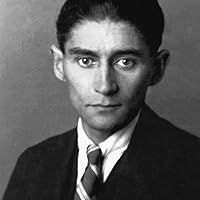
Franz Kafka
Franz Kafka
Author · 373 books

Prague-born writer Franz Kafka wrote in German, and his stories, such as " The Metamorphosis " (1916), and posthumously published novels, including The Trial (1925), concern troubled individuals in a nightmarishly impersonal world. Jewish middle-class family of this major fiction writer of the 20th century spoke German. People consider his unique body of much incomplete writing, mainly published posthumously, among the most influential in European literature. His stories include "The Metamorphosis" (1912) and " In the Penal Colony " (1914), whereas his posthumous novels include The Trial (1925), The Castle (1926) and Amerika (1927). Despite first language, Kafka also spoke fluent Czech. Later, Kafka acquired some knowledge of the French language and culture from Flaubert, one of his favorite authors. Kafka first studied chemistry at the Charles-Ferdinand University of Prague but after two weeks switched to law. This study offered a range of career possibilities, which pleased his father, and required a longer course of study that gave Kafka time to take classes in German studies and art history. At the university, he joined a student club, named Lese- und Redehalle der Deutschen Studenten, which organized literary events, readings, and other activities. In the end of his first year of studies, he met Max Brod, a close friend of his throughout his life, together with the journalist Felix Weltsch, who also studied law. Kafka obtained the degree of doctor of law on 18 June 1906 and performed an obligatory year of unpaid service as law clerk for the civil and criminal courts. Writing of Kafka attracted little attention before his death. During his lifetime, he published only a few short stories and never finished any of his novels except the very short "The Metamorphosis." Kafka wrote to Max Brod, his friend and literary executor: "Dearest Max, my last request: Everything I leave behind me ... in the way of diaries, manuscripts, letters (my own and others'), sketches, and so on, [is] to be burned unread." Brod told Kafka that he intended not to honor these wishes, but Kafka, so knowing, nevertheless consequently gave these directions specifically to Brod, who, so reasoning, overrode these wishes. Brod in fact oversaw the publication of most of work of Kafka in his possession; these works quickly began to attract attention and high critical regard. Max Brod encountered significant difficulty in compiling notebooks of Kafka into any chronological order as Kafka started writing in the middle of notebooks, from the last towards the first, et cetera. Kafka wrote all his published works in German except several letters in Czech to Milena Jesenská.

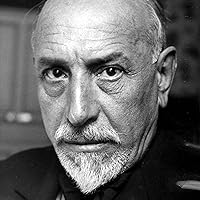
Luigi Pirandello
Luigi Pirandello
Author · 112 books

Luigi Pirandello; Agrigento (28 June 1867 – Rome 10 December 1936) was an Italian dramatist, novelist, poet, and short story writer whose greatest contributions were his plays. He was awarded the 1934 Nobel Prize in Literature for "his almost magical power to turn psychological analysis into good theatre. Pirandello's works include novels, hundreds of short stories, and about 40 plays, some of which are written in Sicilian. Pirandello's tragic farces are often seen as forerunners of the Theatre of the Absurd.

Francisco de Quevedo
Author · 22 books
Francisco Gómez de Quevedo y Santibáñez Villegas was a nobleman, politician and writer of the Spanish Golden Age. His style is categorized by what was called conceptismo, characterized by a rapid rhythm, directness, simple vocabulary, witty metaphors, and wordplay.
548 Market St PMB 65688, San Francisco California 94104-5401 USA
© 2026 Paratext Inc. All rights reserved