Margins
Lobo, Rag and Vixen book cover
Lobo, Rag and Vixen
1899
First Published
4.21
Average Rating
162
Number of Pages
Excerpt: ...for a safe rise, so he squatted low. The dog came within ten feet of him, and the stranger, coming across to Cuddy, passed at five feet, but he never moved till a chance came to slip behind the great trunk away from both. Then he safely rose and flew to the lonely glen by Taylor's Hill. One by one the deadly cruel gun had stricken his near ones down, till now, once more, he was alone. The Snow Moon slowly passed with many a narrow escape, and Redruff, now known to be the only survivor of his kind, was relentlessly pursued, and grew wilder every day. It seemed, at length, a waste of time to follow him with a gun, so when the snow was deepest, and food scarcest, Cuddy hatched a new plot. Right across the feeding-ground, almost the only good one now in the Stormy Moon, he set a row of snares. A cottontail rabbit, an old friend, cut several of these with his sharp teeth, but some remained, and Redruff, watching a far-off speck that might turn out a hawk, trod right in one of them, and in an instant was jerked into the air to dangle by one foot. Have the wild things no moral or legal rights? What right has man to inflict such long and fearful agony on a fellow-creature, simply because that creature does not speak his language? All that day, with growing, racking pains, poor Redruff hung and beat his great, strong wings in helpless struggles to be free. All day, all night, with growing torture, until he only longed for death. But no one came. The morning broke, the day wore on, and still he hung there, slowly dying; his very strength a curse. The second night crawled slowly down, and when, in the dawdling hours of darkness, a great Horned Owl, drawn by the feeble flutter of a dying wing, cut short the pain, the deed was wholly kind. The wind blew down the valley from the north. The snow-horses went racing over the wrinkled ice, over the Don Flats, and over the marsh toward the lake, white, for they were driven snow, but on them, scattered dark, were...

Avg Rating
4.21
Number of Ratings
29
5 STARS
48%
4 STARS
24%
3 STARS
28%
2 STARS
0%
1 STARS
0%
goodreads

Author

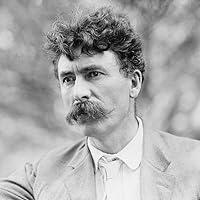
Ernest Thompson Seton
Author · 23 books

Ernest Thompson Seton was a Scots-Canadian (and naturalized U.S. citizen) who became a noted author, wildlife artist, founder of the Woodcraft Indians, and one of the founding pioneers of the Boy Scouts of America (BSA). Seton also heavily influenced Lord Baden-Powell, the founder of Scouting. His notable books related to Scouting include The Birch Bark Roll and The Boy Scout Handbook. He is responsible for the strong influence of American Indian culture in the BSA. He was born Ernest Evan Thompson in South Shields, County Durham (now part of South Tyneside, Tyne and Wear), England of Scottish parents and his family emigrated to Canada in 1866. As a youth, he retreated to the woods to draw and study animals as a way of avoiding his abusive father. He won a scholarship in art to the Royal Academy in London, England. He later rejected his father and changed his name to Ernest Thompson Seton. He believed that Seton had been an important name in his paternal line. He developed a fascination with wolves while working as a naturalist for Manitoba. He became successful as a writer, artist and naturalist, and moved to New York City to further his career. Seton later lived at Wyndygoul, an estate that he built in Cos Cob, a section of Greenwich, Connecticut. After experiencing vandalism by the local youth, Seton invited them to his estate for a weekend where he told stories of the American Indians and of nature. He formed the Woodcraft Indians in 1902 and invited the local youth to join. The stories became a series of articles written for the Ladies Home Journal and were eventually collected in the The Birch Bark Roll of the Woodcraft Indians in 1906. He was married twice. The first marriage was to Grace Gallatin in 1896. Their only daughter, Ann, was born in 1904 and died in 1990. Ann, who later changed her first name, became a best-selling author of historical and biographical novels as Anya Seton. According to her introduction to the novel Green Darkness, both of her parents were practicing Theosophists. Ernest and Grace divorced in 1935, and Ernest soon married Julia M. Buttree. Julia would write works by herself and with Ernest. They did not have any children, but did adopt an infant daughter, Beulah (Dee) Seton (later Dee Seton Barber), in 1938. Dee Seton Barber died in 2006.

548 Market St PMB 65688, San Francisco California 94104-5401 USA
© 2026 Paratext Inc. All rights reserved