


Margins
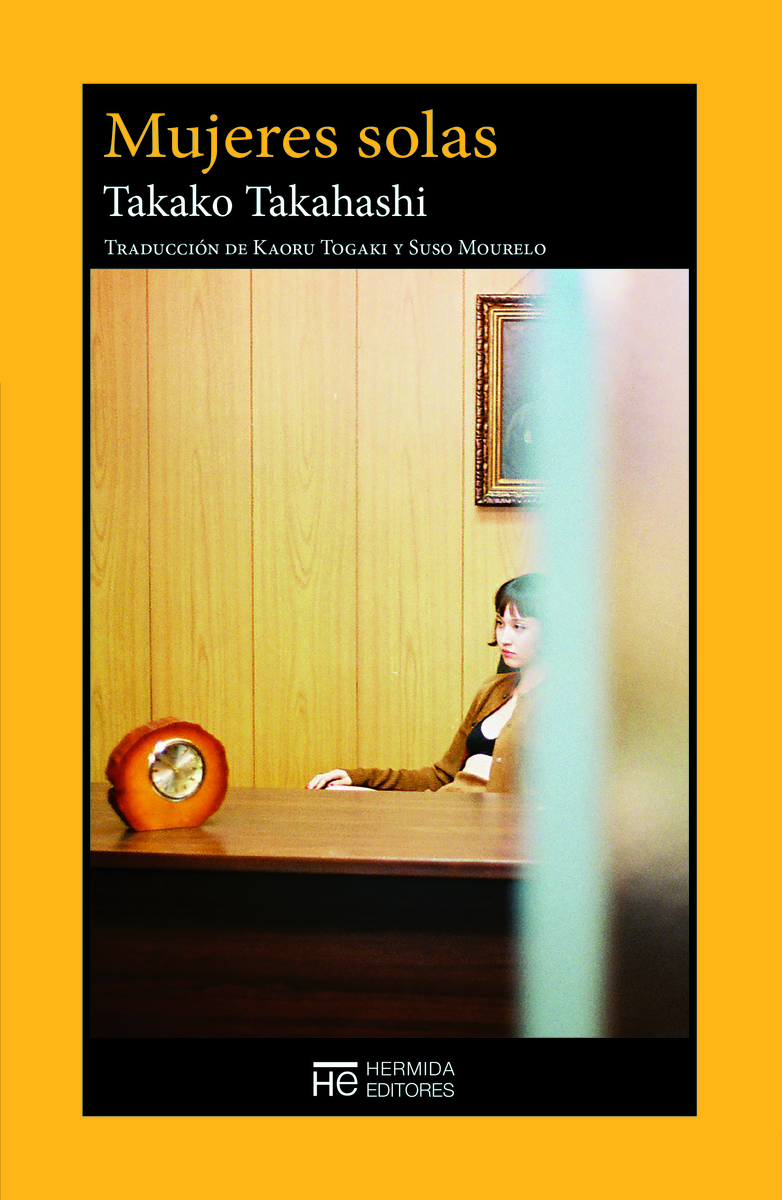
Lonely Woman book cover
Lonely Woman
2004
First Published
3.80
Average Rating
192
Number of Pages

Replete with madwomen, murderers, musicians, and mystics, "Lonely Woman" dramatically interweaves the lives of five women. It remains Takako Takahashi's most sustained and multifaceted fictional realization of her concept of "loneliness." Her fiction typically features a woman for whom dreams and fantasies, crime, madness, sexual deviance, or occult pursuits serve as a temporary release from her society's definitions of female identity. The combination of surrealist, feminist, and religious themes in Takahashi's work makes it unique among that of modern Japanese women writers. The five individually titled short stories that constitute "Lonely Woman" are linked by certain characters, themes, and plot elements. In the first story, "Lonely Woman," a series of arson incidents in her neighborhood causes a nihilistic young woman to become fascinated with the psychology of the person who perpetrated the crimes. Her fantasies of the euphoric pleasure of setting a fire heighten her awareness of her own violent tendencies. "The Oracle" portrays a young widow who becomes convinced, through several disturbing dreams, that her late husband was unfaithful to her. She devises a cruel, ritualistic act as a strategy for defusing her sense of helpless rage. In "Foxfire," a store clerk has a series of encounters with sly, seductive youngsters and is revitalized by her discovery of the criminal and sexual impulses that lurk beneath their innocent fa?ades. In "The Suspended Bridge," a bored housewife's passion is rekindled when a man with whom she once had a sadomasochistic relationship reenters her life. "Strange Affinities" recasts crime, madness, and "amour fou" as catalysts of a process of spiritual enlightenment: an old woman searches for an elusive man who seems to embody the bliss of self-renunciation.

Avg Rating
3.80
Number of Ratings
302
5 STARS
21%
4 STARS
45%
3 STARS
28%
2 STARS
4%
1 STARS
2%
goodreads

Author

Takako Takahashi
Author · 4 books

Takako Takahashi (高橋 たか子 Takahashi Takako?, March 2, 1932 – July 12, 2013) was a Japanese author. Her maiden name was Takako Okamoto (岡本和子 Okamoto Takako?) Takahashi was born in Kyoto, as the only child of well-to-do parents, with the maiden name of Okamoto. In 1954 she received her undergraduate degree from Kyoto University in French literature, with a senior thesis on Charles Baudelaire. Six months later she married fellow student Kazumi Takahashi, subsequently a well-known writer and ideological leader of the student protest movement. She supported him in the first two years of their marriage by a series of odd jobs, then returned to Kyoto University in 1956 to receive a master's degree in French literature in 1958 for a thesis on François Mauriac. From 1958-1965, Takahashi and her husband lived in Osaka, where she began a first novel in 1961 (“A Ruined Landscape”). Her husband won a major literary award in 1962, making his name and providing sufficient funds so that Takahashi could quit her job, work on her novel, and publish a translation of Mauriac's Thérèse Desqueyroux. In 1965 they moved to Kamakura, Kanagawa, when her husband obtained a teaching position at Meiji University; in 1967, when he became a professor at Kyoto University, she remained in Kamakura. When her husband fell ill with colon cancer in 1969, he returned to Kamakura where she took care of him. After her husband's early death in 1971, Takahashi began writing short stories and novels, as well as a memoir of her husband, and translations of French literature. In the 1970s she was both prolific and successful as an author, publishing four novels and eight collections of short stories. In 1972, she received the Tamura Yoshiko Literary Award for Sora no hate made (“To the end of the Sky”). She subsequently won the Women’s Literature Award in 1977 for a set of linked short stories titled Ronri Uman (“Lonely Woman”) and the Yomiuri Prize for Ikari no ko (“Child of Rage”) in 1985, and the Mainichi Art Award for Kirei na hito (“Pretty person”) in 2003. In 1975 Takahashi converted to Roman Catholicism and, in 1980, moved to France, where in 1985 she became a nun. After returning to Japan, she entered a Carmelite convent but left after one year, returning to Kyoto to take care of her mother. She continued to publish prolifically. (from Wikipedia)

548 Market St PMB 65688, San Francisco California 94104-5401 USA
© 2026 Paratext Inc. All rights reserved