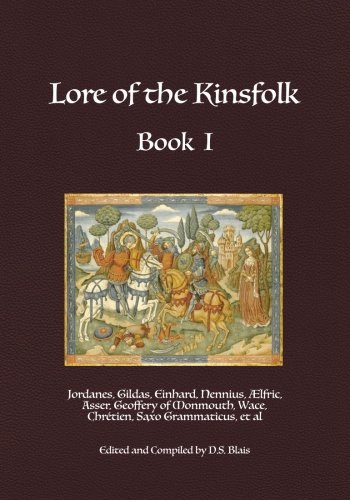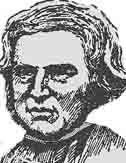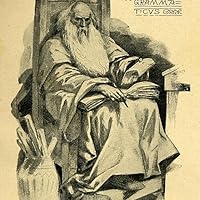



Lore of the Kinsfolk is a nine-volume anthology of literature that reflects the cultural soul and values of our "Germanic," "Nordic," and "Celtic" European ancestors. Encompassing 5,000,000 words of complete primary sources, these works allow us to "hear" the voices of our ancestors through their songs, sagas, epics, and chronicles. Until the availability of this compilation, an anthology such as this was lacking. To understand why, let us look at the "Great Books" and "Western Canon" such as the famed Great Books of the Western World. After eighteen massive volumes of classical works, not a single piece is included from the eight hundred years spanning Augustine to Aquinas! There are hundreds of pages of pointless astronomical tables from Kepler and Copernicus, but not a paragraph of the Nordic Sagas. What is the perspective of the scholar who chooses Adam Smith over Thomas Malory, Paradise Lost over the Song of Roland, and so on? The perspective of such a scholar is not at all original, but instead extends tastes which have their origin in the 14th century with the Renaissance and its disparagement of what Petrarch called the "Dark Ages," elevating the Greeks and Romans of antiquity while debasing his European ancestors as ignorant primitives. The Renaissance is, in truth, the reaction that Petrarch and other Northern Italians, informed by cynicism derived of pestilence and famine, initially fashioned in choosing the glittering ephemerality of wealthy and decadent past empires over the ancestral European outlook characterized as ultimately based on the intimate faith in Nature's inherent goodness and correctness, i.e. the harmonious expression of the divine in the Middle World. Chivalry cannot abide Capitalism, nor the contrary. To defeat the obstacle posed to trade, the merchant must disarm the knight; neuter the old concepts of masculinity and femininity; replace "person" with "consumer;" mock sacrifice, loyalty, and honor; and endlessly advertise the Self over the Folk, that is, the individual over their larger sense of belonging within Nature. The New Man of commerce, technology, and imperialism would spread the inticements of the Levantine moneylenders and their power-hungry collaborators into Belgium, Amsterdam, England, and throughout Europe, promoting his cosmopolitan oligarchical ethos everywhere he went. Fresh imperialism caught on fire, profitable colonies were established overseas, ruthless slavery came back into vogue, the cruel Jehovah replaced the compassionate Christ, and thereafter all "enlightened" people only looked with embarrassment and contempt upon those ridiculous old views of the past. In fact, the true nature of our ancestral character is shown by its honorableness, compassion, piety, idealism, humaneness, and vigor. As such, it reflects the best aspects of the continued soul of our European folk. The works in the Lore are not merely historical relics; they are a sacred heirloom which has been passed to you so that you may live as accords your natural being. And for you who hearken to the call of your forefathers, may their words cause your heart and mind to follow the wisdom of heroes over the wending path of time and fate. BOOK I Contents Jordanes: Origin of the Goths Gildas: On the Ruin of Britain Beowulf Einhard: Charlemagne Nennius: History of the Britons Ælfric: Homilies Asser: King Alfred Song of Roland Geoffrey of Monmouth: Kings of Britain Táin Bó Cúalnge Wace: Chronicle of the Norman Conquest Chrétien: Erec et Enide Chrétien: Cliges Chrétien: Yvain Chrétien: Lancelot Saxo Grammaticus: History of the Danes
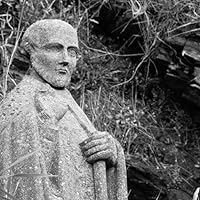
Authors

Geoffrey of Monmouth (Latin: Galfridus Monemutensis, Galfridus Arturus, Welsh: Gruffudd ap Arthur, Sieffre o Fynwy) (c. 1100 – c. 1155) was a Welsh cleric and one of the major figures in the development of British historiography and the popularity of tales of King Arthur. Much of his work is considered to be pseudo-history. He is best known for his chronicle Historia Regum Britanniae (History of the Kings of Britain); his document of quotations attributed to Merlin, Prophetiae Merlini (Prophecies of Merlin); and his poem Vita Merlini (Life of Merlin).

Asser (died c. 909) was a Welsh monk from St David's, Dyfed, who became Bishop of Sherborne in the 890s. About 885 he was asked by Alfred the Great to leave St David's and join the circle of learned men whom Alfred was recruiting for his court. After spending a year at Caerwent because of illness, Asser accepted. In 893 Asser wrote a biography of Alfred, called the Life of King Alfred. The manuscript survived to modern times in only one copy, which was part of the Cotton library. That copy was destroyed in a fire in 1731, but transcriptions that had been made earlier, together with material from Asser's work which was included by other early writers, have enabled the work to be reconstructed. The biography is the main source of information about Alfred's life and provides far more information about Alfred than is known about any other early English ruler. Asser assisted Alfred in his translation of Gregory the Great's Pastoral Care, and possibly with other works.

Gildas (Breton: Gweltaz; c. 500 – c. 570) - also known as Gildas the Wise or Gildas Sapiens - was a 6th-century British monk best known for his scathing religious polemic De Excidio et Conquestu Britanniae (On the Ruin and Conquest of Britain), which recounts the history of the Britons before and during the coming of the Saxons. He is one of the best-documented figures of the Christian church in the British Isles during the sub-Roman period, and was renowned for his Biblical knowledge and literary style. Gildas was born in what is now Scotland on the banks of the River Clyde, the son of a royal family. In his later life, he emigrated to Brittany where he founded a monastery known as St. Gildas de Rhuys.

Historian, born c. 770 in the district of the River Main in the eastern part of the Frankish Empire; d. 14 March, 840, at Seligenstadt. His earliest training he received at the monastery of Fulda, where he showed such exceptional promise that Abbot Baugulf sent him to the court of Charlemagne. His education was completed at the Palace School, where he was fortunate enough to count among his masters the great Alcuin, who bears witness to his remarkable talents in mathematics and architecture, and also to the fact that he was among the emperor's most trusted advisers. Charlemagne gave Einhard charge of his great public buildings, e.g. the construction of Aachen cathedral and the palaces of Aachen and Ingelheim. Charlemagne also availed himself of Einhard's tact and prudence to send him on various diplomatic missions. The most important of Einhard's works is the Vita Caroli Magni. This, the best biography of the whole period of the Middle Ages, written in close imitation of Suetonius, shows the emperor from the standpoint of the most intimate personal acquaintance with all sides of his character, and with a genuine attempt at truth of portrayal. The diction is in general elegant, though not polished. The annals of the Carolingian Empire, which have been handed down as Einhard's, are, in their present form, older materials worked over. Those for the years between 796 and 820 may date back to Einhard. In addition, we have from his hand the Translatio et Miracula SS. Marcellini et Petri, containing data which are important for the history of culture. The seventy-one letters, written by Einhard between 825 and 830 in a clear, simple style, constitute an important source for the history of Louis the Pious. (Source: The Catholic Encyclopedia)

Aelfric, noted Anglo-Saxon abbot, known as "Grammaticus" (955?-1020?), authored works, such as Catholic Homilies and Lives of the Saints, in Old English as well as a Latin grammar. Ælfric of Eynsham well wrote consummately and prolifically as hagiographer, biblical commentator, and writer of other genres. Peter Hunter Blair viewed this "man comparable both in the quantity of his writings and in the quality of his mind even with [authore:Bede] himself." According to Claudio Leonardi, he "represented the highest pinnacle of Benedictine reform and Anglo-Saxon literature." https://en.wikipedia.org/wiki/%C3%86l...

Jordanes- also referred as Jordanis or Jornandes- was a 6th century Roman bureaucrat, notarius or secretary to Gunthigis Baza, a magister militum. Of Alan origins, his grandfather Paria is believed to have been secretary to Candac, a leader of the Alans.
Wace (c. 1115 – c. 1183) was a Norman poet, who was born in Jersey and brought up in mainland Normandy (he tells us in the Roman de Rou that he was taken as a child to Caen), ending his career as Canon of Bayeux. Wace, dit aussi Guace ou Wistace était un poète normand, né à Jersey. Ses deux œuvres majeures sont le Roman de Brut et le Roman de Rou. Sometimes referred to as Robert Wace.