Margins
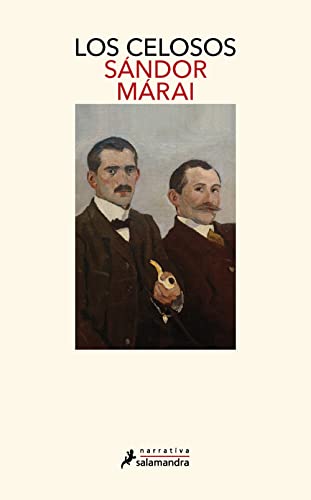
Los celosos book cover
Los celosos
2023
First Published
3.59
Average Rating
464
Number of Pages

Considerada Los Buddenbrook de la literatura húngara, Los celosos es una de las obras más ambiciosas de Sándor Márai. El patriarca de la dinastía Garren está en el lecho de muerte. Para los hermanos de la familia ha llegado la hora de volver a su ciudad natal y reunirse en el hogar de su infancia. Sin embargo, enseguida descubren que su único nexo de unión es la figura del padre y se preguntan entonces si su muerte significará el final de la familia. Con un formidable despliegue de recursos técnicos, Sándor Márai nos guía de forma magistral a través de los pensamientos y emociones de sus personajes y disecciona la complejidad de las relaciones familiares en el escenario político y social de la Europa de entreguerras, marcada por la desintegración del imperio austrohúngaro, que dejó al país sin parte de su territorio y a una clase social, la burguesía, condenada a la extinción. Reseñ «Uno de los momentos culminantes de la historia de la literatura húngara del siglo XX.» Deutsche Welle «En tiempos de desorden mundial se demuestra la atemporalidad del género novelesco y sus personajes, que fracasan ante su presente. La maestría estilística de este escritor húngaro, fallecido en 1989 en California, que se sumerge una y otra vez durante páginas y páginas en la melancólicavida interior de sus personajes, sigue estando fuera de toda duda ocho decenios después de su publicación.» Wilhelmshavener Zeitung «El estilo de Sándor Márai tiene una elegancia que asociamos a tiempos pasados. Pero estos tiempos no han acumulado polvo, esa es precisamente la elegancia de un gran escritor.» Frankfurter Neue Presse «Un título de una belleza despiadada, además de una metáfora que convierte la disolución de una cultura en un cataclismo universal.» La Opinión de Málaga
Avg Rating
3.59
Number of Ratings
29
5 STARS
17%
4 STARS
34%
3 STARS
38%
2 STARS
10%
1 STARS
0%
goodreads

Author

Sándor Márai
Sándor Márai
Author · 38 books

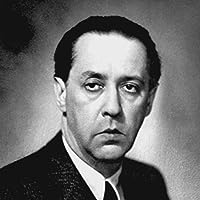
Sándor Márai (originally Sándor Károly Henrik Grosschmied de Mára) was a Hungarian writer and journalist. He was born in the city of Kassa in Austria-Hungary (now Košice in Slovakia) to an old family of Saxon origin who had mixed with magyars through the centuries. Through his father he was a relative of the Ország-family. In his early years, Márai travelled to and lived in Frankfurt, Berlin, and Paris and briefly considered writing in German, but eventually chose his mother language, Hungarian, for his writings. He settled in Krisztinaváros, Budapest, in 1928. In the 1930s, he gained prominence with a precise and clear realist style. He was the first person to write reviews of the work of Kafka. He wrote very enthusiastically about the Vienna Awards, in which Germany forced Czechoslovakia and Romania to give back part of the territories which Hungary lost in the Treaty of Trianon. Nevertheless, Márai was highly critical of the Nazis as such and was considered "profoundly antifascist," a dangerous position to take in wartime Hungary. Marai authored forty-six books, mostly novels, and was considered by literary critics to be one of Hungary's most influential representatives of middle class literature between the two world wars. His 1942 book Embers (Hungarian title: A gyertyák csonkig égnek, meaning "The Candles Burn Down to the Stump") expresses a nostalgia for the bygone multi-ethnic, multicultural society of the Austro-Hungarian Empire, reminiscent of the works of Joseph Roth. In 2006 an adaptation of this novel for the stage, written by Christopher Hampton, was performed in London. He also disliked the Communist regime that seized power after World War II, and left – or was driven away – in 1948. After living for some time in Italy, Márai settled in the city of San Diego, California, in the United States. He continued to write in his native language, but was not published in English until the mid-1990s. Márai's Memoir of Hungary (1944-1948) provides an interesting glimpse of post World War II Hungary under Soviet occupation. Like other memoirs by Hungarian writers and statesmen, it was first published in the West, because it could not be published in the Hungary of the post-1956 Kádár era. The English version of the memoir was published posthumously in 1996. After his wife died, Márai retreated more and more into isolation. He committed suicide by a gunshot to his head in San Diego in 1989. Largely forgotten outside of Hungary, his work (consisting of poems, novels, and diaries) has only been recently "rediscovered" and republished in French (starting in 1992), Polish, Catalan, Italian, English, German, Spanish, Portuguese, Czech, Danish, Icelandic, Korean, Dutch, and other languages too, and is now considered to be part of the European Twentieth Century literary canon.

548 Market St PMB 65688, San Francisco California 94104-5401 USA
© 2026 Paratext Inc. All rights reserved