Margins
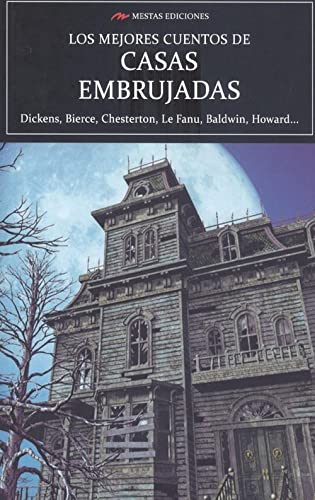
Los mejores cuentos de Casas Embrujadas book cover
Los mejores cuentos de Casas Embrujadas
2021
First Published
3.55
Average Rating
192
Number of Pages
Desde tiempos inmemoriales existe la creencia de que los fantasmas ―o diferentes criaturas sobrenaturales― tienen la capacidad de proyectar su presencia en casas, cementerios o cualquier otro lugar donde hayan quedado atrapados a raíz de un acontecimiento trágico. Ya en la antigüedad, Plutarco y Plinio el Joven escribieron sobre este tipo de sucesos; aunque no son un hecho aislado, ya que la historia está plagada de anécdotas de edificios acechados por todo tipo de seres fantasmales. Y todo ello mucho antes de que se convirtiesen en un género literario y cinematográfico de gran éxito… Hoy en día, novelas, series y películas nos han provocado terroríficas noches en vela. ¿Quién de nosotros no tiene grabada en su cabeza la figura de un triste y diabólico espectro arrastrando cadenas holográficas por las estancias de una lúgubre mansión? En la presente recopilación, una selección única en el mundo, disfrutarás de grandes relatos de autores imprescindibles en el ámbito del terror, como Ambrose Bierce, M.R. James, Charles Dickens o Sheridan Le Fanu.

Avg Rating
3.55
Number of Ratings
11
5 STARS
9%
4 STARS
36%
3 STARS
55%
2 STARS
0%
1 STARS
0%
goodreads

Authors

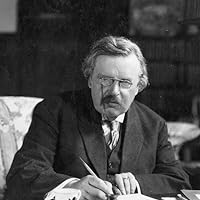
G.K. Chesterton
G.K. Chesterton
Author · 220 books

Gilbert Keith Chesterton was an English writer, philosopher, lay theologian, and literary and art critic. He was educated at St. Paul’s, and went to art school at University College London. In 1900, he was asked to contribute a few magazine articles on art criticism, and went on to become one of the most prolific writers of all time. He wrote a hundred books, contributions to 200 more, hundreds of poems, including the epic Ballad of the White Horse, five plays, five novels, and some two hundred short stories, including a popular series featuring the priest-detective, Father Brown. In spite of his literary accomplishments, he considered himself primarily a journalist. He wrote over 4000 newspaper essays, including 30 years worth of weekly columns for the Illustrated London News, and 13 years of weekly columns for the Daily News. He also edited his own newspaper, G.K.’s Weekly. Chesterton was equally at ease with literary and social criticism, history, politics, economics, philosophy, and theology.

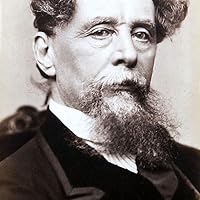
Charles Dickens
Charles Dickens
Author · 429 books

Charles John Huffam Dickens (1812-1870) was a writer and social critic who created some of the world's best-known fictional characters and is regarded as the greatest novelist of the Victorian era. His works enjoyed unprecedented popularity during his lifetime, and by the twentieth century critics and scholars had recognised him as a literary genius. His novels and short stories enjoy lasting popularity. Dickens left school to work in a factory when his father was incarcerated in a debtors' prison. Despite his lack of formal education, he edited a weekly journal for 20 years, wrote 15 novels, five novellas, hundreds of short stories and non-fiction articles, lectured and performed extensively, was an indefatigable letter writer, and campaigned vigorously for children's rights, education, and other social reforms. Dickens was regarded as the literary colossus of his age. His 1843 novella, A Christmas Carol, remains popular and continues to inspire adaptations in every artistic genre. Oliver Twist and Great Expectations are also frequently adapted, and, like many of his novels, evoke images of early Victorian London. His 1859 novel, A Tale of Two Cities, set in London and Paris, is his best-known work of historical fiction. Dickens' creative genius has been praised by fellow writers—from Leo Tolstoy to George Orwell and G. K. Chesterton—for its realism, comedy, prose style, unique characterisations, and social criticism. On the other hand, Oscar Wilde, Henry James, and Virginia Woolf complained of a lack of psychological depth, loose writing, and a vein of saccharine sentimentalism. The term Dickensian is used to describe something that is reminiscent of Dickens and his writings, such as poor social conditions or comically repulsive characters. On 8 June 1870, Dickens suffered another stroke at his home after a full day's work on Edwin Drood. He never regained consciousness, and the next day he died at Gad's Hill Place. Contrary to his wish to be buried at Rochester Cathedral "in an inexpensive, unostentatious, and strictly private manner," he was laid to rest in the Poets' Corner of Westminster Abbey. A printed epitaph circulated at the time of the funeral reads: "To the Memory of Charles Dickens (England's most popular author) who died at his residence, Higham, near Rochester, Kent, 9 June 1870, aged 58 years. He was a sympathiser with the poor, the suffering, and the oppressed; and by his death, one of England's greatest writers is lost to the world." His last words were: "On the ground", in response to his sister-in-law Georgina's request that he lie down. (from Wikipedia)

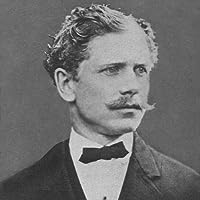
Ambrose Bierce
Ambrose Bierce
Author · 167 books

Ambrose Gwinnett Bierce (1842-1914) was an American editorialist, journalist, short story writer, fabulist and satirist. Today, he is best known for his short story, An Occurrence at Owl Creek Bridge and his satirical lexicon, The Devil's Dictionary. The sardonic view of human nature that informed his work – along with his vehemence as a critic, with his motto "nothing matters" – earned him the nickname "Bitter Bierce." Despite his reputation as a searing critic, however, Bierce was known to encourage younger writers, including poet George Sterling and fiction writer W. C. Morrow. Bierce employed a distinctive style of writing, especially in his stories. This style often embraces an abrupt beginning, dark imagery, vague references to time, limited descriptions, the theme of war, and impossible events. Bierce disappeared in December 1913 at the age of 71. He is believed to have traveled to Mexico to gain a firsthand perspective on that country's ongoing revolution. Despite an abundance of theories, Bierce's ultimate fate remains a mystery. He wrote in one of his final letters: "Good-bye. If you hear of my being stood up against a Mexican stone wall and shot to rags, please know that I think it is a pretty good way to depart this life. It beats old age, disease, or falling down the cellar stairs. To be a Gringo in Mexico—ah, that is euthanasia!"

548 Market St PMB 65688, San Francisco California 94104-5401 USA
© 2026 Paratext Inc. All rights reserved