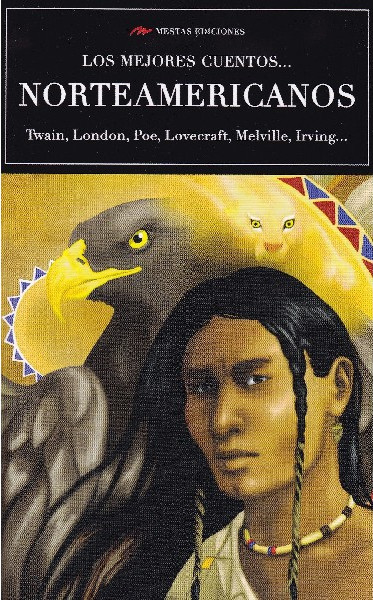



La obra de autores como Washington Irving, Edgar Allan Poe, Herman Melville, Nathaniel Hawthorne y Walt Whitman, entre otros, facilitó el nacimiento de la literatura norteamericana como tal, y fue saludada con entusiasmo por los ávidos lectores europeos, que poco a poco fueron descubriendo el potencial y la gran calidad que allí se estaba gestando. Es aceptado comúnmente que ese inicio de la literatura norteamericana se deriva de formas y estilos típicamente europeos, de los que se abastecían, imitando, por ejemplo, rasgos de la novela gótica al uso en aquellos años en Inglaterra. Mark Twain, Jack London, Poe, Lovecrafft, Henry James, O. Henry, Irving, Melville, Harland, Stockton, Ambrose Bierce, Stephen Crane, Nathaniel Hawthorne, Mauel Payno, Howard, Gutiérrez Nájera, Whitehead, Sui Sin Far... la calidad de los autores aquí seleccionados, así como las obras concienzudamente elegidas, nos ofrecerán una buena piedra de toque para valorar la calidad de las propuestas que desarrollaron, especialmente durante el ocaso del siglo XVIII, el siglo XIX y los albores del XX.
Authors

Such volumes as Cabbages and Kings (1904) and The Four Million (1906) collect short stories, noted for their often surprising endings, of American writer William Sydney Porter, who used the pen name O. Henry. His biography shows where he found inspiration for his characters. His era produced their voices and his language. Mother of three-year-old Porter died from tuberculosis. He left school at fifteen years of age and worked for five years in drugstore of his uncle and then for two years at a Texas sheep ranch. In 1884, he went to Austin, where he worked in a real estate office and a church choir and spent four years as a draftsman in the general land office. His wife and firstborn died, but daughter Margaret survived him. He failed to establish a small humorous weekly and afterward worked in poorly-run bank. When its accounts balanced not, people blamed and fired him. In Houston, he worked for a few years until, ordered to stand trial for embezzlement, he fled to New Orleans and thence Honduras. Two years later, he returned on account of illness of his wife. Apprehended, Porter served a few months more than three years in a penitentiary in Columbus, Ohio. During his incarceration, he composed ten short stories, including A Blackjack Bargainer , The Enchanted Kiss , and The Duplicity of Hargraves . In 1899, McClure's published Whistling Dick's Christmas Story and Georgia's Ruling . In Pittsburgh, Pennsylvania, he sent manuscripts to New York editors. In the spring of 1902, Ainslee's Magazine offered him a regular income if he moved to New York. In less than eight years, he became a bestselling author of collections of short stories. Cabbages and Kings came first in 1904 The Four Million, and The Trimmed Lamp and Heart of the West followed in 1907, and The Voice of the City in 1908, Roads of Destiny and Options in 1909, Strictly Business and Whirligigs in 1910 followed. Posthumously published collections include The Gentle Grafter about the swindler, Jeff Peters; Rolling Stones , Waifs and Strays , and in 1936, unsigned stories, followed. People rewarded other persons financially more. A Retrieved Reformation about the safe-cracker Jimmy Valentine got $250; six years later, $500 for dramatic rights, which gave over $100,000 royalties for playwright Paul Armstrong. Many stories have been made into films.

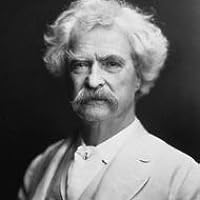
Librarian Note: There is more than one author by this name in the Goodreads database. Samuel Langhorne Clemens, better known by his pen name Mark Twain, was an American author and humorist. He is noted for his novels Adventures of Huckleberry Finn (1885), called "the Great American Novel", and The Adventures of Tom Sawyer (1876). Twain grew up in Hannibal, Missouri, which would later provide the setting for Huckleberry Finn and Tom Sawyer. He apprenticed with a printer. He also worked as a typesetter and contributed articles to his older brother Orion's newspaper. After toiling as a printer in various cities, he became a master riverboat pilot on the Mississippi River, before heading west to join Orion. He was a failure at gold mining, so he next turned to journalism. While a reporter, he wrote a humorous story, "The Celebrated Jumping Frog of Calaveras County," which proved to be very popular and brought him nationwide attention. His travelogues were also well-received. Twain had found his calling. He achieved great success as a writer and public speaker. His wit and satire earned praise from critics and peers, and he was a friend to presidents, artists, industrialists, and European royalty. However, he lacked financial acumen. Though he made a great deal of money from his writings and lectures, he squandered it on various ventures, in particular the Paige Compositor, and was forced to declare bankruptcy. With the help of Henry Huttleston Rogers, however, he eventually overcame his financial troubles. Twain worked hard to ensure that all of his creditors were paid in full, even though his bankruptcy had relieved him of the legal responsibility. Born during a visit by Halley's Comet, he died on its return. He was lauded as the "greatest American humorist of his age", and William Faulkner called Twain "the father of American literature". Excerpted from Wikipedia. AKA: Μαρκ Τουαίν (Greek)

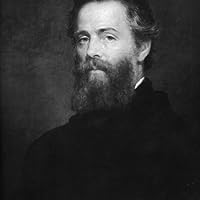
There is more than one author with this name Herman Melville was an American novelist, short story writer, essayist, and poet. His first two books gained much attention, though they were not bestsellers, and his popularity declined precipitously only a few years later. By the time of his death he had been almost completely forgotten, but his longest novel, Moby Dick—largely considered a failure during his lifetime, and most responsible for Melville's fall from favor with the reading public—was rediscovered in the 20th century as one of the chief literary masterpieces of both American and world literature.
See Sui Sin Far which was the pen name under which most of this author's book were published

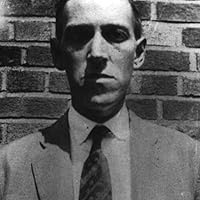
Howard Phillips Lovecraft, of Providence, Rhode Island, was an American author of horror, fantasy and science fiction. Lovecraft's major inspiration and invention was cosmic horror: life is incomprehensible to human minds and the universe is fundamentally alien. Those who genuinely reason, like his protagonists, gamble with sanity. Lovecraft has developed a cult following for his Cthulhu Mythos, a series of loosely interconnected fictions featuring a pantheon of human-nullifying entities, as well as the Necronomicon, a fictional grimoire of magical rites and forbidden lore. His works were deeply pessimistic and cynical, challenging the values of the Enlightenment, Romanticism and Christianity. Lovecraft's protagonists usually achieve the mirror-opposite of traditional gnosis and mysticism by momentarily glimpsing the horror of ultimate reality. Although Lovecraft's readership was limited during his life, his reputation has grown over the decades. He is now commonly regarded as one of the most influential horror writers of the 20th Century, exerting widespread and indirect influence, and frequently compared to Edgar Allan Poe. — Wikipedia

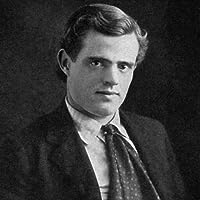
John Griffith Chaney (1876-1916), better known as Jack London, was an American novelist, journalist, and social activist. A pioneer of commercial fiction and American magazines, he was one of the first American authors to become an international celebrity and earn a large fortune from writing. He was also an innovator in the genre that would later become known as science fiction. His most famous works include The Call of the Wild and White Fang, both set in the Klondike Gold Rush, as well as the short stories, "To Build a Fire", "An Odyssey of the North", and "Love of Life". He also wrote about the South Pacific in stories such as "The Pearls of Parlay", and "The Heathen". London was part of the radical literary group, "The Crowd," in San Francisco and a passionate advocate of unionization, workers' rights, and socialism. He wrote several works dealing with these topics, such as his dystopian novel, The Iron Heel, his non-fiction exposé The People of the Abyss, War of the Classes, and Before Adam. London died November 22, 1916, in a sleeping porch in a cottage on his ranch. London's ashes were buried on his property, not far from the Wolf House. The grave is marked by a mossy boulder. The buildings and property were later preserved as Jack London State Historic Park, in Glen Ellen, California.

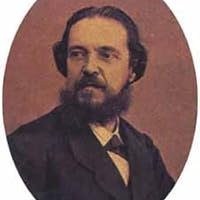
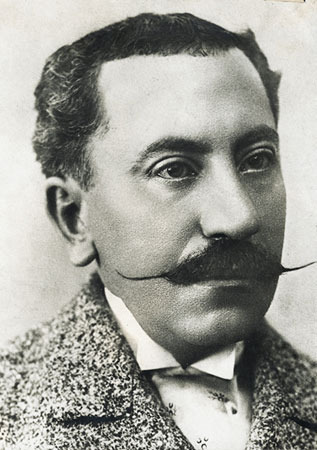
Escritor, poeta, periodista, cronista y político mexicano. Nació y vivió en la Ciudad de México. Utilizó múltiples seudónimos. El más popular de sus seudónimos fue: El duque Job. Precursor del modernismo en México. Perteneció a una familia de clase media. Inició su carrera literaria a los trece años. Escribió poesía, impresiones de teatro, crítica literaria y social, notas de viajes y relatos breves para niños. El único libro que vio publicado fue una antología de cuentos a la que llamó: Cuentos Frágiles (1883). Fue uno de los fundadores de la Revista Azul, órgano de difusión del modernismo en México. Gran parte de su obra apareció en diversos periódicos mexicanos bajo multitud de seudónimos: El cura de Jalatlaco, El duque Job, Puck, Junius, Recamier, Mr. Can-Can, Nemo, Omega... Se escudaba en esa diversidad para publicar distintas versiones de un mismo trabajo, cambiando la firma y jugando a adaptar el estilo del texto a cada seudónimo. Escribió poesía romántica y amorosa. Gustó de lo afrancesado y de lo clásico, como era habitual en los intelectuales mexicanos y la alta sociedad de su tiempo. Nunca salió de México, y en pocas ocasiones de su ciudad natal, pero sus influencias son europeas: Musset, Gautier, Baudelaire, Flaubert, Leopardi. Siempre anheló unir el espíritu francés y las formas españolas. Su madre, ferviente católica empeñada en que su hijo fuera sacerdote, le impuso la lectura de los místicos españoles del Siglo de Oro y la formación en el seminario, influencia que se vio compensada por la fuerte corriente positivista de la sociedad de la época que pugnaba en sentido contrario. Gutiérrez Nájera abandonó el seminario a los pocos años, y cambió a San Juan de la Cruz, Santa Teresa y Fray Luis de León, que no obstante siempre influirían en su obra, por los autores franceses del siglo y por la práctica cotidiana de la literatura en periódicos locales como El Federalista, La Libertad, El Cronista Mexicano o El Universal. En 1894 fundó, con Carlos Díaz Dufoo, La Revista Azul, publicación que lideró el modernismo mexicano durante dos años. A Manuel Gutiérrez Nájera se le define como "especie de sonrisa del alma" por la gracia sutil de su estilo, elegante, delicado y con ternura de sentimientos. En el fondo fue siempre poeta romántico. Entre sus obras poéticas más importantes se encuentran: La Duquesa Job, Hamlet a Ofelia, Odas Breves, La Serenata de Schubert y el afamado poema "Non omnis moriar" (No moriré del todo). Cultivó la prosa en cuentos y crónicas, a los que aportó una nueva forma. El libro de relatos Cuentos Frágiles fue el único que publicó en vida como tal, pero ordenó con distintos criterios sus entregas a periódicos y revistas: Cuentos del domingo, Cuentos vistos, Cuentos color de humo, Crónicas color de oro, Crónicas color de lluvia... lo que ha orientado los criterios de sus editores.

Henry James, OM (1843-1916), son of theologian Henry James Sr., brother of the philosopher and psychologist William James and diarist Alice James, was an American-born author, one of the founders and leaders of a school of realism in fiction. He spent much of his life in England and became a British subject shortly before his death. He is primarily known for a series of major novels in which he portrayed the encounter of America with Europe. His plots centered on personal relationships, the proper exercise of power in such relationships, and other moral questions. His method of writing from the point of view of a character within a tale allowed him to explore the phenomena of consciousness and perception, and his style in later works has been compared to impressionist painting. James insisted that writers in Great Britain and America should be allowed the greatest freedom possible in presenting their view of the world, as French authors were. His imaginative use of point of view, interior monologue and unreliable narrators in his own novels and tales brought a new depth and interest to realistic fiction, and foreshadowed the modernist work of the twentieth century. An extraordinarily productive writer, in addition to his voluminous works of fiction he published articles and books of travel writing, biography, autobiography, and criticism,and wrote plays, some of which were performed during his lifetime with moderate success. His theatrical work is thought to have profoundly influenced his later novels and tales.

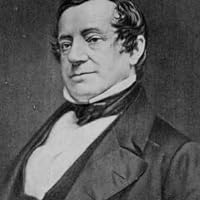
People remember American writer Washington Irving for the stories " Rip Van Winkle " and " The Legend of Sleepy Hollow ," contained in The Sketch Book (1820). This author, essayist, biographer and historian of the early 19th century wrote newspaper articles under the pseudonym Jonathan Oldstyle to begin his literary career at the age of nineteen years. In 1809, he published The History of New York under his most popular public persona, Diedrich Knickerbocker. Historical works of Irving include a five volume biography of George Washington (after whom he was named) as well as biographies of Oliver Goldsmith, Muhammad, and several histories, dealing with subjects, such as Christopher Columbus, the Moors, and the Alhambra, of 15th-century Spain. John Tyler, president, appointed Irving to serve as the first Spanish speaking United States minister to Spain from 1842 to 1846.

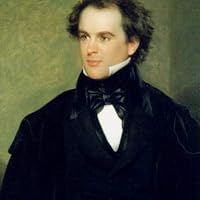
Nathaniel Hawthorne was a 19th century American novelist and short story writer. He is seen as a key figure in the development of American literature for his tales of the nation's colonial history. Shortly after graduating from Bowdoin College, Hathorne changed his name to Hawthorne. Hawthorne anonymously published his first work, a novel titled Fanshawe, in 1828. In 1837, he published Twice-Told Tales and became engaged to painter and illustrator Sophia Peabody the next year. He worked at a Custom House and joined a Transcendentalist Utopian community, before marrying Peabody in 1842. The couple moved to The Old Manse in Concord, Massachusetts, later moving to Salem, the Berkshires, then to The Wayside in Concord. The Scarlet Letter was published in 1850, followed by a succession of other novels. A political appointment took Hawthorne and family to Europe before returning to The Wayside in 1860. Hawthorne died on May 19, 1864, leaving behind his wife and their three children. Much of Hawthorne's writing centers around New England and many feature moral allegories with a Puritan inspiration. His work is considered part of the Romantic movement and includes novels, short stories, and a biography of his friend, the United States President Franklin Pierce.

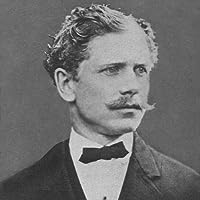
Ambrose Gwinnett Bierce (1842-1914) was an American editorialist, journalist, short story writer, fabulist and satirist. Today, he is best known for his short story, An Occurrence at Owl Creek Bridge and his satirical lexicon, The Devil's Dictionary. The sardonic view of human nature that informed his work – along with his vehemence as a critic, with his motto "nothing matters" – earned him the nickname "Bitter Bierce." Despite his reputation as a searing critic, however, Bierce was known to encourage younger writers, including poet George Sterling and fiction writer W. C. Morrow. Bierce employed a distinctive style of writing, especially in his stories. This style often embraces an abrupt beginning, dark imagery, vague references to time, limited descriptions, the theme of war, and impossible events. Bierce disappeared in December 1913 at the age of 71. He is believed to have traveled to Mexico to gain a firsthand perspective on that country's ongoing revolution. Despite an abundance of theories, Bierce's ultimate fate remains a mystery. He wrote in one of his final letters: "Good-bye. If you hear of my being stood up against a Mexican stone wall and shot to rags, please know that I think it is a pretty good way to depart this life. It beats old age, disease, or falling down the cellar stairs. To be a Gringo in Mexico—ah, that is euthanasia!"