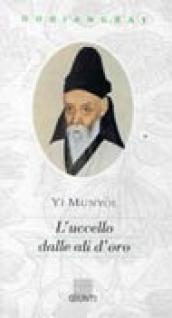



Qual è la vera essenza dell'Arte? È una domanda che affiora da ogni pagina di questo racconto ambientato nella Corea del XX secolo. Protagonista è Kojuk, maestro dell'arte orientale per eccellenza: la calligrafia. Secondo una leggenda, un'opera del grande calligrafo Yang Saon raffigurante l'ideogramma di "volare" si sarebbe librata in aria, svanendo nel nulla, il giorno in cui l'artista morì. Anche a questa storia s'ispira la vicenda di Kojuk, che della calligrafia è diventato sensibile interprete grazie a un maestro-tutore intransigente. La statura artistica e spirituale del vecchio Soktam influenzerà la lunga vita del discepolo: un percorso intenso e travagliato, scandito da successi e delusioni, in cui ogni evento privato si combina indissolubile con le esperienze dell'arte. Un finale di grande effetto farà emergere, negli ultimi istanti della vita di Kojuk, il rapporto profondo ma conflittuale fra maestro e discepolo.
Author

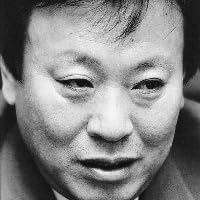
Yi Mun-yol (born May 18, 1948) is a South Korean writer. Yi Mun-yol was born in Seoul, South Korea in 1948, but the outbreak of the Korean War and his father's defection to North Korea forced his family to move about until they settled in Yeongyang, Gyeongsangbuk-do, the ancestral seat of his family. The fact that his father defected dramatically affected his life, as he was seen and treated as "the son of a political offender," and was "passed around among relatives[.] After dropping out of the College of Education of Seoul National University in 1970, Yi Mun-yol made his literary debut through the annual literary contests of the Daegu Maeil Newspaper in 1977, and the Dong-A Ilbo in 1979. On being awarded the prestigious "Today's Writer Award" for The Son of Man in 1979, Yi emerged as the most noteworthy writer of the time. The Son of Man explores the theme of the complex relationship between God and humanity in light of the finite nature of human existence inadvertently cast in infinite universe, through the eyes of the protagonist who is doubtful of the Christian Weltanschauung. From 1994 to 1997, he taught Korean language and literature at Sejong University. Since 1999, he has also served as the head of Buak Literary Center, a residential program for budding writers. He is currently a chair professor at Hankuk University of Foreign Studies. (from Wikipedia) Associated Names: * Yi Mun-Yol * 이문열 (Korean Profile)