


Margins
2023
First Published
4.00
Average Rating
152
Number of Pages

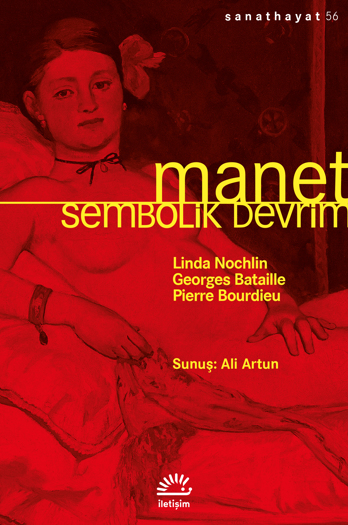
Batı sanatında akademizme ve yerleşik geleneğe karşı 19. yüzyıl ortalarında başlayan hareketin önderinin Manet olduğu konusunda herkes hemfikir. Bataille’a göre Manet çok büyük bir ressam olmakla kalmaz, “kendinden önceki ressamlarla bağını koparmış, bugün içinde yaşadığımız dönemi başlatmıştır”. Linda Nochlin avangardın Manet’yle başladığını söyler, zira çağdaş avangardizm anlayışımızın dayandığı ruhsal, toplumsal ve ontolojik yabancılaşmayı somutlaştıran ilk ressam Manet’dir. Bourdieu daha da ileri gider ve Manet’nin hayata geçirdiği bir “sembolik devrim”den bahseder: Kendi döneminin sanat dünyasında yarattığı infial sadece estetik değerleri altüst etmesinden değil, bunların dayandığı ahlâk kurallarıyla da alay etmesinden kaynaklanır. Manet, “Tanrı’nın kiliselerinde ve kralların saraylarında” nizama sokulmuş bir dünyanın yıkılışına iştirak eder. Bataille’ın deyişiyle: “Yeni bir dünyaya girmekteyizdir ve perde Olympia’yla açılır...”

Avg Rating
4.00
Number of Ratings
1
5 STARS
0%
4 STARS
100%
3 STARS
0%
2 STARS
0%
1 STARS
0%
goodreads

Authors

Linda Nochlin
Linda Nochlin
Author · 14 books

Linda Nochlin was an American art historian, university professor and writer. A prominent feminist art historian, she was best known as a proponent of the question "Why Have There Been No Great Women Artists?", in an essay of the same name published in 1971. Her critical attention has been drawn to investigating the ways in which gender affects the creation and apprehension of art, as evidenced by her 1994 essay "Issues of Gender in Cassatt and Eakins". Besides feminist art history, she was best known for her work on Realism, specifically on Gustave Courbet. Complementing her career as an academic, she served on the Art Advisory Council of the International Foundation for Art Research. In 2006, Nochlin received a Visionary Woman Award] from Moore College of Art & Design.

Pierre Bourdieu
Pierre Bourdieu
Author · 42 books

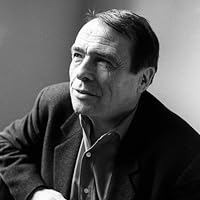
Bourdieu pioneered investigative frameworks and terminologies such as cultural, social, and symbolic capital, and the concepts of habitus, field or location, and symbolic violence to reveal the dynamics of power relations in social life. His work emphasized the role of practice and embodiment or forms in social dynamics and worldview construction, often in opposition to universalized Western philosophical traditions. He built upon the theories of Ludwig Wittgenstein, Maurice Merleau-Ponty, Edmund Husserl, Georges Canguilhem, Karl Marx, Gaston Bachelard, Max Weber, Émile Durkheim, Erwin Panofsky, and Marcel Mauss. A notable influence on Bourdieu was Blaise Pascal, after whom Bourdieu titled his Pascalian Meditations. Bourdieu rejected the idea of the intellectual "prophet", or the "total intellectual", as embodied by Sartre. His best known book is Distinction: A Social Critique of the Judgment of Taste, in which he argues that judgments of taste are related to social position. His argument is put forward by an original combination of social theory and data from surveys, photographs and interviews, in an attempt to reconcile difficulties such as how to understand the subject within objective structures. In the process, he tried to reconcile the influences of both external social structures and subjective experience on the individual (see structure and agency).

Georges Bataille
Georges Bataille
Author · 45 books
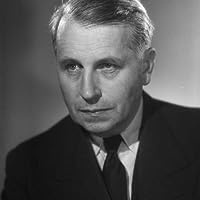
French essayist, philosophical theorist, and novelist, often called the "metaphysician of evil." Bataille was interested in sex, death, degradation, and the power and potential of the obscene. He rejected traditional literature and considered that the ultimate aim of all intellectual, artistic, or religious activity should be the annihilation of the rational individual in a violent, transcendental act of communion. Roland Barthes, Julia Kristeva, and Philippe Sollers have all written enthusiastically about his work.
548 Market St PMB 65688, San Francisco California 94104-5401 USA
© 2026 Paratext Inc. All rights reserved