Margins
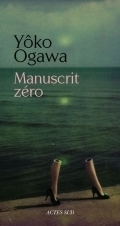
Manuscrit zéro book cover
Manuscrit zéro
2010
First Published
3.65
Average Rating
236
Number of Pages
Depuis 1995, les livres de Yôko Ogawa sont traduits en français. Nouvelles, romans courts, ou plus longs ces dernières années, nous ont peu à peu révélé les questionnements de la romancière japonaise et la singularité de son imaginaire comme autant de transpositions du réel. Aujourd'hui, telle une pause formelle et dans une langue beaucoup plus immédiate, Manuscrit zéro s'impose au coeur de son oeuvre. Alors que la romancière travaille à un nouveau projet, elle note au jour le jour ce qui compose son quotidien fictionnel. A moins qu'il ne s'agisse de l'inverse : notant chaque jour la multitude d'histoires qui peuplent son imaginaire, Yôko Ogawa tente de trouver dans cette forêt d'images la tonalité de son nouveau roman ; elle tisse et conjugue les influences et les figures qui soudain l'interpellent, qu'elles soient issues de l'instant ou des tourbillons de sa mémoire, de rencontres bien réelles ou d'émotions enfouies. Selon ce motif se glissent entre ces pages le murmure d'un torrent dans une forêt profonde où prolifèrent des mousses délicates et délicieuses, une maison d'enfance impossible à décrire, une fête d'école où il s'agit de se faire passer pour une mère d'élève. Un concours de pleurs d'enfants et l'étrange destinée d'un touriste en retard. Des histoires courtes qui s'enchaînent comme autant de composantes de l'oeuvre de Yôko Ogawa, des histoires qui forment une mosaïque temporelle au sein de laquelle les individus, les lieux ou les situations vont chavirer, chanceler, pour rejoindre sous sa plume le monde si singulier de ses personnages.
Avg Rating
3.65
Number of Ratings
55
5 STARS
25%
4 STARS
35%
3 STARS
27%
2 STARS
5%
1 STARS
7%
goodreads

Author

Yoko Ogawa
Yoko Ogawa
Author · 34 books

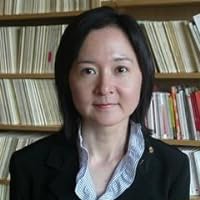
Yōko Ogawa (小川 洋子) was born in Okayama, Okayama Prefecture, graduated from Waseda University, and lives in Ashiya. Since 1988, she has published more than twenty works of fiction and nonfiction. Her novel The Professor and his Beloved Equation has been made into a movie. In 2006 she co-authored „An Introduction to the World's Most Elegant Mathematics“ with Masahiko Fujiwara, a mathematician, as a dialogue on the extraordinary beauty of numbers. A film in French, "L'Annulaire“ (The Ringfinger), directed by Diane Bertrand, starring Olga Kurylenko and Marc Barbé, was released in France in June 2005 and subsequently made the rounds of the international film festivals; the film, some of which is filmed in the Hamburg docks, is based in part on Ogawa's "Kusuriyubi no hyōhon“ (薬指の標本), translated into French as "L'Annulaire“ (by Rose-Marie Makino-Fayolle who has translated numerous works by Ogawa, as well as works by Akira Yoshimura and by Ranpo Edogawa, into French). Kenzaburō Ōe has said, 'Yōko Ogawa is able to give expression to the most subtle workings of human psychology in prose that is gentle yet penetrating.' The subtlety in part lies in the fact that Ogawa's characters often seem not to know why they are doing what they are doing. She works by accumulation of detail, a technique that is perhaps more successful in her shorter works; the slow pace of development in the longer works requires something of a deus ex machina to end them. The reader is presented with an acute description of what the protagonists, mostly but not always female, observe and feel and their somewhat alienated self-observations, some of which is a reflection of Japanese society and especially women's roles within in it. The tone of her works varies, across the works and sometimes within the longer works, from the surreal, through the grotesque and the—sometimes grotesquely—humorous, to the psychologically ambiguous and even disturbing.

548 Market St PMB 65688, San Francisco California 94104-5401 USA
© 2026 Paratext Inc. All rights reserved