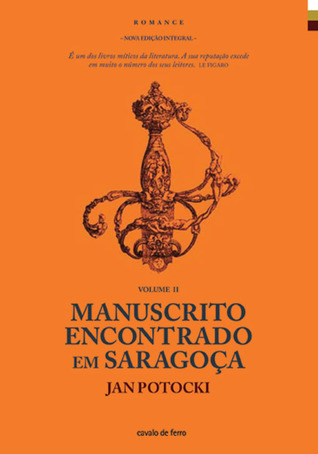
Chegado a Espanha para assumir o posto de capitão dos Guardas Valões, o jovem oficial Alphonse Van Worden vê-se arrastado para uma estranha aventura. A serra Morena, que de forma intrépida escolhe atravessar no seu caminho para Madrid, goza à época (início do século XVIII) de uma sinistra reputação. Lugar maldito, habitado apenas por bandoleiros e ciganos, esconderijo de malfeitores e de demónios capazes de assaltar de mil terrores o viajante mais audaz. Alphonse atravessará este reino fantástico sucumbindo aos terrores e encantos de forças ocultas que colocarão à prova as suas frágeis certezas sobre a realidade. Romance picaresco, conto fantástico, novela erótica, relato filosófico, livro que inclui todos os géneros narrativos, «Manuscrito encontrado em Saragoça» é considerado pela crítica uma obra-prima da literatura universal, comparável a Dom Quixote, Gulliver e O homem sem qualidades.
Author

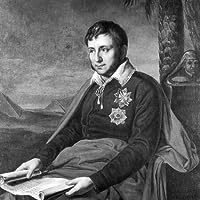
Jan Potocki was born into the Potocki family, an aristocratic family, that owned vast estates in Poland. He was educated in Geneva and Lausanne, served twice in the Polish Army as a captain of engineers, and spent some time on a galley as a novice Knight of Malta. He was probably a Freemason and had a strong interest in the occult. Potocki's colorful life took him across Europe, Asia and North Africa, where he embroiled himself in political intrigues, flirted with secret societies, contributed to the birth of ethnology—he was one of the first to study the precursors of the Slavic peoples from a linguistic and historical standpoint. In 1790 he became the first person in Poland to fly in a hot air balloon when he made an ascent over Warsaw with the aeronaut Jean-Pierre Blanchard, an exploit that earned him great public acclaim. He also established in 1788 in Warsaw a publishing house named Drukarnia Wolna (Free Press) as well as the city's first free reading room. Potocki's wealth enabled him to travel extensively about Europe, the Mediterranean and Asia, visiting Italy, Sicily, Malta, the Netherlands, Germany, France, England, Russia, Turkey, Spain, Tunisia, Morocco, Egypt, and even Mongolia. He was also one of the first travel writers of the modern era, penning lively accounts of many of his journeys, during which he also undertook extensive historical, linguistic and ethnographic studies. As well as his many scholarly and travel writings, he also wrote a play, a series of sketches and a novel. Potocki married twice and had five children. His first marriage ended in divorce, and both marriages were the subject of scandalous rumors. In 1812, disillusioned and in poor health, he retired to his estate at Uladowka in Podolia, suffering from "melancholia" (which today would probably be diagnosed as depression), and during the last few years of his life he completed his novel. Potocki committed suicide in December 1815 at the age of 54, though the exact date is uncertain—possibly November 20, December 2 or December 11. There are also several versions of the circumstances of his death; the best-known story is that he shot himself in the head with a silver bullet—fashioned from the strawberry-shaped knob of a sugar bowl given to him by his mother—which he first had blessed by his castle priest. One version of Potocki's suicide suggests that he gradually filed the knob off the lid, a little every morning. Potocki's most famous work is The Manuscript Found in Saragossa. Originally written in French as Manuscrit trouvé à Saragosse, it is a frame tale which he wrote to entertain his wife. On account of its rich interlocking structure and telescoping story sequences, the novel has drawn comparisons to such celebrated works as the Decameron and the Arabian Nights.