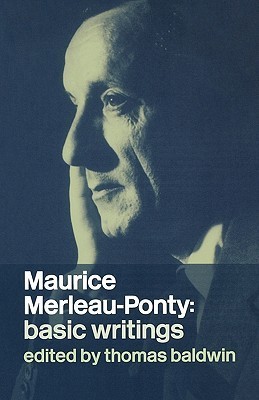
Merleau-Ponty was a pivotal figure in twentieth century French philosophy. He was responsible for bringing the phenomenological methods of the German philosophers - Husserl and Heidegger - to France and instigated a new wave of interest in this approach. His influence extended well beyond the boundaries of philosophy and can be seen in theories of politics, psychology, art and language. This is the first volume to bring together a comprehensive selection of Merleau-Ponty's writing. Sections from the following are included: The Primacy of Perception The Structure of Behaviour The Phenomenology of Perception The Prose of the World The Visible and the Invisible Sense and Non-Sense The Adventures of the Dialectic In a substantial critical introduction Thomas Baldwin provides a critical discussion of the main themes of Merleau-Ponty's philosophy, connecting it to subsequent philosophical debates and setting it in the context of the ideas of Bergson, Husserl, Heidegger and Sartre. Each text is also prefaced with an explanation which sets it in its context in Merleau-Ponty's work; and there are extensive suggestions for further reading to enable students to pursue the issues raised by Merleau-Ponty. Thus the book provides the ideal materials for students studying Merleau-Ponty for the first time.
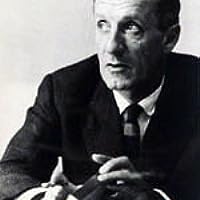
Author

French phenomenological philosopher, strongly influenced by Edmund Husserl and Martin Heidegger in addition to being closely associated with Jean-Paul Sartre and Simone de Beauvoir. At the core of Merleau-Ponty's philosophy is a sustained argument for the foundational role that perception plays in understanding the world as well as engaging with the world. Like the other major phenomenologists Merleau-Ponty expressed his philosophical insights in writings on art, literature, and politics; however Merleau-Ponty was the only major phenomenologist of the first half of the Twentieth Century to engage extensively with the sciences, and especially with descriptive psychology. Because of this engagement, his writings have become influential with the recent project of naturalizing phenomenology in which phenomenologists utilize the results of psychology and cognitive science. Merleau-Ponty was born in Rochefort-sur-Mer, Charente-Maritime. His father was killed in World War 1 when Merleau-Ponty was 3. After secondary schooling at the lycée Louis-le-Grand in Paris, Maurice Merleau-Ponty became a student at the École Normale Supérieure, where he studied alongside Sartre, Simone de Beauvoir, and Simone Weil. He passed the agrégation in philosophy in 1930. Merleau-Ponty first taught at Chartres, then became a tutor at the École Normale Supérieure, where he was awarded his doctorate on the basis of two important books: La structure du comportement (1942) and Phénoménologie de la Perception (1945). After teaching at the University of Lyon from 1945 to 1948, Merleau-Ponty lectured on child psychology and education at the Sorbonne from 1949 to 1952. He was awarded the Chair of Philosophy at the Collège de France from 1952 until his death in 1961, making him the youngest person to have been elected to a Chair. Besides his teaching, Merleau-Ponty was also political editor for Les Temps Modernes from the founding of the journal in October 1945 until December 1952. Aged 53, he died suddenly of a stroke in 1961, apparently while preparing for a class on Descartes. He was buried in Le Père Lachaise Cemetery in Paris.