Margins
Margins
Sign in
Margins
Subscribe to our newsletter
548 Market St PMB 65688, San Francisco California 94104-5401 USA
hello@margins.app
·
+1 (650) 223-5283
Privacy Policy
·
Terms of Use
© 2026 Paratext Inc. All rights reserved
📚 Men
📚
Men
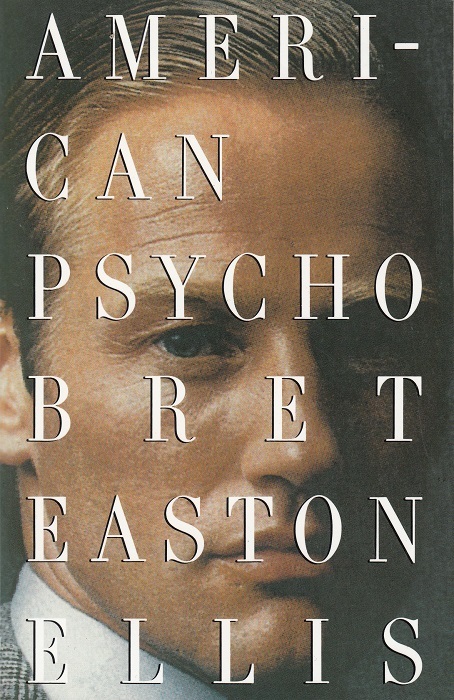
American Psycho
1991
Bret Easton Ellis
Patrick Bateman is twenty-six and he works on Wall Street, he is handsome, sophisticated, charming and intelligent. He is also a psychopath. Taking us to head-on collision with America's greatest dream—and its worst nightmare—American Psycho is bleak, bitter, black comedy about a world we all recognise but do not wish to confront.
White Nights
1848
Fyodor Dostoevsky
White Nights is a short story by Fyodor Dostoevsky that was published in 1848. Set in St. Petersburg, it is the story of a young man fighting his inner restlessness. A light and tender narrative, it delves into the torment and guilt of unrequited love. Both protagonists suffer from a deep sense of alienation that initially brings them together. A blend of romanticism and realism, the story appeals gently to the senses and feelings.
No Longer Human
1948
Osamu Dazai
Osamu Dazai's No Longer Human, this leading postwar Japanese writer's second novel, tells the poignant and fascinating story of a young man who is caught between the breakup of the traditions of a northern Japanese aristocratic family and the impact of Western ideas. In consequence, he feels himself "disqualified from being human" (a literal translation of the Japanese title). Donald Keene, who translated this and Dazai's first novel, The Setting Sun, has said of the author's work: "His world … suggests Chekhov or possibly postwar France, … but there is a Japanese sensibility in the choice and presentation of the material. A Dazai novel is at once immediately intelligible in Western terms and quite unlike any Western book." His writing is in some ways reminiscent of Rimbaud, while he himself has often been called a forerunner of Yukio Mishima. Cover painting by Noe Nojechowiz, from the collection of John and Barbara Duncan; design by Gertrude Huston
The Picture of Dorian Gray
1890
Oscar Wilde
Oscar Wilde’s only novel is the dreamlike story of a young man who sells his soul for eternal youth and beauty. In this celebrated work Wilde forged a devastating portrait of the effects of evil and debauchery on a young aesthete in late-19th-century England. Combining elements of the Gothic horror novel and decadent French fiction, the book centers on a striking premise: As Dorian Gray sinks into a life of crime and gross sensuality, his body retains perfect youth and vigor while his recently painted portrait grows day by day into a hideous record of evil, which he must keep hidden from the world. For over a century, this mesmerizing tale of horror and suspense has enjoyed wide popularity. It ranks as one of Wilde's most important creations and among the classic achievements of its kind.