Margins




548 Market St PMB 65688, San Francisco California 94104-5401 USA
© 2026 Paratext Inc. All rights reserved
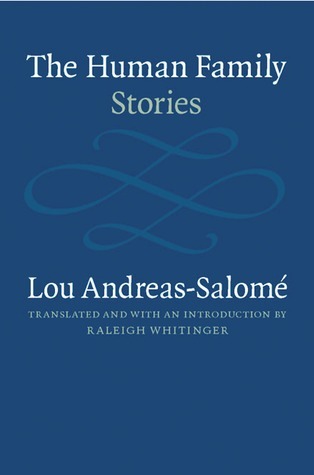
The Human Family is the first complete translation of the cycle of ten novellas that Lou Andreas-Salomé (1861–1937) wrote between 1895 and 1898. This collection contributes to the rediscovery of Andreas-Salomé’s significance as a thinker and writer, above all with regard to her literary contribution to modern feminism and the principles of women’s emancipation. Born in St. Petersburg to a German diplomat and his wife, Andreas-Salomé has always been a figure of interest because of her close relationships to influential thinkers such as Friedrich Nietzsche, Rainer Maria Rilke, and Sigmund Freud. Only since the mid-1980s, however, have her prose fiction and theoretical writings been reconsidered as important documents of emerging ideas and debates in twentieth-century feminism. The ten stories of The Human Family drive home her critical perspective on feminine stereotypes. They depict a wide variety of young women as they relate to men representing different degrees of enlightenment and tolerance, struggling to express a complete and independent feminine identity in the face of the confining but often seductive roles that convention and tradition impose on female potential. The Human Family provides a subtle and nuanced perspective on European feminist writing from the turn of the last century by a woman writer who was intimately involved with the literary mainstream of her time and whose theoretical and literary works played a significant role in feminist debates of the period, prefiguring present-day feminist discourse on essentialism and constructivism.