
More than twenty years ago, Jon Kabat-Zinn changed the way we thought about awareness in everyday life with his now-classic introduction to mindfulness, Wherever You Go, There You Are . He followed that up with 2005's Coming to Our Senses, the definitive book for our time on the connection between mindfulness and our well-being on every level, physical, cognitive, emotional, social, planetary, and spiritual. Now, Coming to Our Senses is being repackaged into 4 smaller books, each focusing on a different aspect of mindfulness, and each with a new foreword written by the author. In the fourth of these books, Mindfulness for All (which was originally published as Part VII and Part VIII of Coming to Our Senses ), Kabat-Zinn focuses on how mindfulness really can be a tool to transform the world—explaining how democracy thrives in a mindful context, and why mindfulness is a vital tool for both personal and global understanding and action in these tumultuous times. By "coming to our senses"—both literally and metaphorically—we can become more compassionate, more embodied, more aware human beings, and in the process, contribute to the healing of the body politic as well as our own lives in ways both little and big.
Author
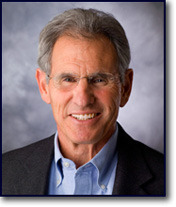
Jon Kabat-Zinn, Ph.D., is founding Executive Director of the Center for Mindfulness in Medicine, Health Care, and Society at the University of Massachusetts Medical School. He is also the founding director of its renowned Stress Reduction Clinic and Professor of Medicine emeritus at the University of Massachusetts Medical School. He teaches mindfulness and Mindfulness-Based Stress Reduction (MBSR) in various venues around the world. He received his Ph.D. in molecular biology from MIT in 1971 in the laboratory of Nobel Laureate, Salvador Luria. He is the author of numerous scientific papers on the clinical applications of mindfulness in medicine and health care, and of a number of books for the lay public: Full Catastrophe Living: Using the Wisdom of Your Body and Mind to Face Stress, Pain and Illness (Delta, 1991); Wherever You Go, There You Are: Mindfulness Meditation in Everyday Life (Hyperion, 1994); Coming to Our Senses: Healing Ourselves and the World Through Mindfulness (Hyperion, 2005); and Arriving at Your Own Door: 108 Lessons in Mindfulness (Hyperion, 2007). He is also co-author, with his wife Myla, of Everyday Blessings: The Inner Work of Mindful Parenting (Hyperion, 1997); and with Williams, Teasdale, and Segal, of The Mindful Way Through Depression: Freeing Yourself from Chronic Unhappiness (Guilford, 2007). Overall, his books have been translated into over 30 languages. His major research interests have focused on mind/body interactions for healing, clinical applications of mindfulness meditation training, the effects of MBSR on the brain, on the immune system, and on healthy emotional expression while under stress; on healing (skin clearing rates) in people with psoriasis; on patients undergoing bone marrow transplantation; with prison inmates and staff; in multicultural settings; and on stress in various corporate settings and work environments. His work in the Stress Reduction Clinic was featured in Bill Moyers’ PBS Special, “Healing and the Mind” and in the book of the same title, as well as on Good Morning America, the Oprah Winfrey Show, and NPR. It has contributed to a growing movement of mindfulness into mainstream institutions such as medicine, and psychology, health care and hospitals, schools, corporations, the legal profession, prisons, and professional sports. He has trained groups of CEOs, judges, members of the clergy, and Olympic athletes (the 1984 Olympic Men’s Rowing Team) and congressional staff in mindfulness. The Stress Reduction Clinic has served as the model for mindfulness-based clinical intervention programs at over 200 medical centers and clinics nation-wide and abroad. Dr. Kabat-Zinn has received numerous awards over the span of his career. He is a founding fellow of the Fetzer Institute, and a fellow of the Society of Behavioral Medicine. He received the Interface Foundation Career Achievement Award, and the New York Open Center’s Tenth Year Anniversary Achievement in Medicine and Health Award (1994); the Art, Science, and Soul of Healing Award from the Institute for Health and Healing, California Pacific Medical Center in San Francisco (1998); the 2nd Annual Trailblazer Award for “pioneering work in the field of integrative medicine” from the Scripps Center for Integrative Medicine in La Jolla, California (2001); the Distinguished Friend Award from the Association for Behavioral and Cognitive Therapies (2005), and an Inaugural Pioneer in Integrative Medicine Award from the Bravewell Philanthropic Collaborative for Integrative Medicine (2007). He is the founding convener of the Consortium of Academic Health Centers for Integrative Medicine, and serves on the Board of the Mind and Life Institute, a group that organizes dialogues between the Dalai Lama and Western scientists to promote deeper understanding of different ways of knowing and probing the nature of mind, emotions, and reality. He was co-program chair of the 2005 Mind and Life Dialogue: The Clinical Appl