Margins
Margins
Sign in
Margins
Subscribe to our newsletter
548 Market St PMB 65688, San Francisco California 94104-5401 USA
hello@margins.app
·
+1 (650) 223-5283
Privacy Policy
·
Terms of Use
© 2026 Paratext Inc. All rights reserved
📚 Modern classics
📚
Modern classics
Midnight's Children
1981
Salman Rushdie
Saleem Sinai is born at the stroke of midnight on August 15, 1947, the very moment of India’s independence. Greeted by fireworks displays, cheering crowds, and Prime Minister Nehru himself, Saleem grows up to learn the ominous consequences of this coincidence. His every act is mirrored and magnified in events that sway the course of national affairs; his health and well-being are inextricably bound to those of his nation; his life is inseparable, at times indistinguishable, from the history of his country. Perhaps most remarkable are the telepathic powers linking him with India’s 1,000 other “midnight’s children,” all born in that initial hour and endowed with magical gifts. This novel is at once a fascinating family saga and an astonishing evocation of a vast land and its people–a brilliant incarnation of the universal human comedy. Twenty-five years after its publication, Midnight’ s Children stands apart as both an epochal work of fiction and a brilliant performance by one of the great literary voices of our time.
1984
1949
George Orwell
The year 1984 has come and gone, but George Orwell's prophetic, nightmarish vision in 1949 of the world we were becoming is timelier than ever. 1984 is still the great modern classic of "negative utopia"—a startlingly original and haunting novel that creates an imaginary world that is completely convincing, from the first sentence to the last four words. No one can deny the novel's hold on the imaginations of whole generations, or the power of its admonitions—a power that seems to grow, not lessen, with the passage of time.
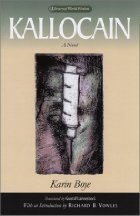
Kallocain
1940
Karin Boye
This is a novel of the future, profoundly sinister in its vision of a drab terror. Ironic and detached, the author shows us the totalitarian World-state through the eyes of a product of that state, scientist Leo Kall. Kall has invented a drug, kallocain, which denies the privacy of thought and is the final step towards the transmutation of the individual human being into a "happy, healthy cell in the state organism." For, says Leo, "from thoughts and feelings, words and actions are born. How then could these thoughts and feelings belong to the individual? Doesn't the whole fellow-soldier belong to the state? To whom should his thoughts and feelings belong then, if not to the state?" As the first-person record of Leo Kall, scientist, fellow-soldier too late disillusioned to undo his previous actions, Kallocain achieves a chilling power and veracity that place it among the finest novels to emerge from the strife-torn Europe of the twentieth century.
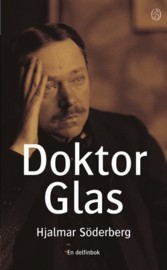
Doctor Glas
1905
Hjalmar Soderberg
A masterpiece of enduring power, Doctor Glas confronts a chilling moral quandary with gripping intensity. With an introduction by Margaret Atwood. Stark, brooding, and enormously controversial when first published in 1905, this astonishing novel juxtaposes impressions of fin-de-siècle Stockholm against the psychological landscape of a man besieged by obsession. Lonely and introspective, Doctor Glas has long felt an instinctive hostility toward the odious local minister. So when the minister’s beautiful wife complains of her husband’s oppressive sexual attentions, Doctor Glas finds himself contemplating murder. "Imagine the classic nineteenth-century drama featuring a tyrannical older man, his hapless daughter or young wife, and her caddish suitor, as in Balzac's Eugénie Grandet and Henry James' Washington Square, this time conjured up by a sensibility akin to Strindberg's and Ingmar Bergman's—and you begin to have an idea of the force and candor of this searing masterwork of Nothern European literature. The retrieval of Doctor Glas in English is a bracing gift to hungry readers." —Susan Sontag
Norrtullsligan
1908
Elin Wagne
Med rapp dialog, galghumor och svärta skildras fyra unga kvinnors liv i förra sekelskiftets Stockholm. Norrtullsligan handlar om kontoristerna Elisabeth, Baby, Eva och Emmys vänskap, yrkesliv och förälskelser. I deras delade rum på Norrtullsgatan spirar upproret och längtan efter ett annat sätt att leva. // Norrtullsligan utkom första gången 1908 och var Elin Wägners debutroman och stora genombrott. Den här utgåvan har förord av Annika Lantz och efterord av Boel Hackman.
Den allvarsamma leken
1912
Hjalmar Soderberg
Sweden at the turn of the previous century. Arvid, an ambitious and well-educated young man, meets Lydia, the daughter of a landscape painter, during an idyllic summer vacation and falls in love. Lydia, however, has other suitors, and Astrid is frightened of being tied down by his emotions. Trapped inside loveless marriages of convenience, they struggle in later years to rekindle the promise of their romance with bitter and tragic results. Hjalmar Soderberg, born in Stockholm, in 1869, was one Scandinavia's leading modernist writers. The Serious Game is Sweden's most celebrated and enduring love story.
I Who Have Never Known Men
1995
Jacqueline Harpman
"As far back as I can recall, I have been in the bunker." A young woman is kept in a cage underground with thirty-nine other females, guarded by armed men who never speak; her crimes unremembered... if indeed there were crimes. The youngest of forty—a child with no name and no past—she survives for some purpose long forgotten in a world ravaged and wasted. In this reality where intimacy is forbidden—in the unrelenting sameness of the artificial days and nights—she knows nothing of books and time, of needs and feelings. Then everything changes... and nothing changes. A young woman who has never known men—a child who knows of no history before the bars and restraints—must now reinvent herself, piece by piece, in a place she has never been... and in the face of the most challenging and terrifying of unknowns: freedom.