Margins
Margins
Sign in
Margins
Subscribe to our newsletter
548 Market St PMB 65688, San Francisco California 94104-5401 USA
hello@margins.app
·
+1 (650) 223-5283
Privacy Policy
·
Terms of Use
© 2026 Paratext Inc. All rights reserved
📚 Modern Library Top 100
📚
Modern Library Top 100
I, Claudius
1934
Robert Graves
Into the 'autobiography' of Clau-Clau-Claudius, the pitiful stammerer who was destined to become Emperor in spite of himself, Graves packs the everlasting intrigues, the depravity, the bloody purges and mounting cruelty of the reigns of Augustus and Tiberius, soon to culminate in the deified insanity of Caligula. I, Claudius and its sequel, Claudius the God, are among the most celebrated, as well the most gripping historical novels ever written. Cover illustration: Brian Pike
A Portrait of the Artist as a Young Man
1916
James Joyce
The portrayal of Stephen Dedalus' Dublin childhood and youth, his quest for identity through art and his gradual emancipation from the claims of family, religion and Ireland itself, is also an oblique self-portrait of the young James Joyce and a universal testament to the artist's 'eternal imagination'. Both an insight into Joyce's life and childhood, and a unique work of modernist fiction, A Portrait of the Artist as a Young Man is a novel of sexual awakening, religious rebellion and the essential search for voice and meaning that every nascent artist must face in order to blossom fully into themselves.
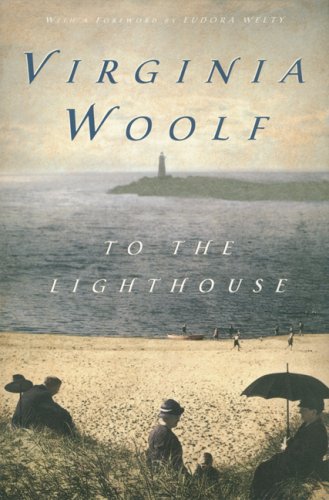
To the Lighthouse
1927
Virginia Woolf
The serene and maternal Mrs. Ramsay, the tragic yet absurd Mr. Ramsay, and their children and assorted guests are on holiday on the Isle of Skye. From the seemingly trivial postponement of a visit to a nearby lighthouse, Woolf constructs a remarkable, moving examination of the complex tensions and allegiances of family life and the conflict between men and women. As time winds its way through their lives, the Ramsays face, alone and simultaneously, the greatest of human challenges and its greatest triumph—the human capacity for change.
Under the Volcano
1947
Malcolm Lowry
Geoffrey Firmin, a former British consul, has come to Quauhnahuac, Mexico. His debilitating malaise is drinking, an activity that has overshadowed his life. On the most fateful day of the consul's life—the Day of the Dead—his wife, Yvonne, arrives in Quauhnahuac, inspired by a vision of life together away from Mexico and the circumstances that have driven their relationship to the brink of collapse. She is determined to rescue Firmin and their failing marriage, but her mission is further complicated by the presence of Hugh, the consul's half brother, and Jacques, a childhood friend. The events of this one significant day unfold against an unforgettable backdrop of a Mexico at once magical and diabolical. Under the Volcano remains one of literature's most powerful and lyrical statements on the human condition, and a brilliant portrayal of one man's constant struggle against the elemental forces that threaten to destroy him.
Darkness at Noon
1940
Arthur Koestler
Darkness at Noon is a fictional portrayal of the nightmare politics of our time. Its hero is an aging revolutionary, imprisoned and psychologically tortured by the Party to which he has dedicated his life. As the pressure to confess preposterous crimes increases, he relives a career that embodies the terrible ironies and human betrayals of a totalitarian movement masking itself as an instrument of deliverance. Almost unbearably vivid in its depiction of one man's solitary agony, it asks questions about ends and means that have relevance not only for the past but for the perilous present. It is —- as the Times Literary Supplement has declared —- "A remarkable book, a grimly fascinating interpretation of the logic of the Russian Revolution, indeed of all revolutionary dictatorships, and at the same time a tense and subtly intellectualized drama." Darkness at Noon (from the German: Sonnenfinsternis) is a novel by the Hungarian-born British novelist Arthur Koestler, first published in 1940. His best-known work tells the tale of Rubashov, a Bolshevik 1917 revolutionary who is cast out, imprisoned and tried for treason by the Soviet government he'd helped create.
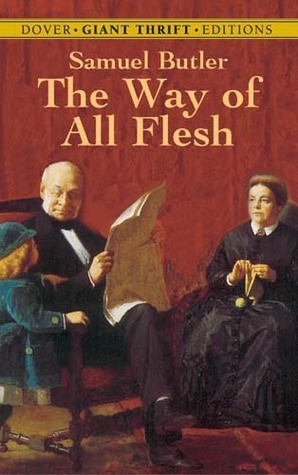
The Way of All Flesh
1903
Samuel Butler
Written between 1873 and 1884 and published posthumously in 1903, The Way of All Flesh is regarded by some as the first twentieth-century novel. Samuel Butler's autobiographical account of a harsh upbringing and troubled adulthood shines an iconoclastic light on the hypocrisy of a Victorian clerical family's domestic life. It also foreshadows the crumbling of nineteenth-century bourgeois ideals in the aftermath of the First World War, as well as the ways in which succeeding generations have questioned conventional values. Hailed by George Bernard Shaw as "one of the summits of human achievement," this chronicle of the life and loves of Ernest Pontifex spans four generations, focusing chiefly on the relationship between Ernest and his father, Theobald. Written in the wake of Darwin's Origin of Species, it reflects the dawning consciousness of heredity and environment as determinants of character. Along the way, it offers a powerfully satirical indictment of Victorian England's major institutions—the family, the church, and the rigidly hierarchical class structure.
Slaughterhouse-Five
1969
Kurt Vonnegut
Selected by the Modern Library as one of the 100 best novels of all time, Slaughterhouse-Five, an American classic, is one of the world's great antiwar books. Centering on the infamous firebombing of Dresden, Billy Pilgrim's odyssey through time reflects the mythic journey of our own fractured lives as we search for meaning in what we fear most.
Invisible Man
1952
Ralph Ellison
First published in 1952 and immediately hailed as a masterpiece, Invisible Man is one of those rare novels that have changed the shape of American literature. For not only does Ralph Ellison's nightmare journey across the racial divide tell unparalleled truths about the nature of bigotry and its effects on the minds of both victims and perpetrators, it gives us an entirely new model of what a novel can be. As he journeys from the Deep South to the streets and basements of Harlem, from a horrifying "battle royal" where black men are reduced to fighting animals, to a Communist rally where they are elevated to the status of trophies, Ralph Ellison's nameless protagonist ushers readers into a parallel universe that throws our own into harsh and even hilarious relief. Suspenseful and sardonic, narrated in a voice that takes in the symphonic range of the American language, black and white, Invisible Man is one of the most audacious and dazzling novels of our century.
Native Son
1940
Richard Wright
Right from the start, Bigger Thomas had been headed for jail. It could have been for assault or petty larceny; by chance, it was for murder and rape. Native Son tells the story of this young black man caught in a downward spiral after he kills a young white woman in a brief moment of panic. Set in Chicago in the 1930s, Wright's powerful novel is an unsparing reflection on the poverty and feelings of hopelessness experienced by people in inner cities across the country and of what it means to be black in America.
Henderson the Rain King
1959
Saul Bellow
A middle-age American millionaire goes to Africa in search of a more meaningful life and receives the adoration of an African tribe that believes he has a gift for rainmaking.
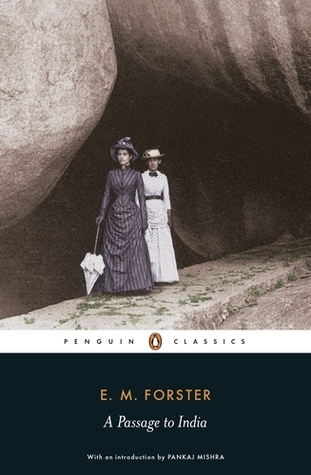
A Passage to India
1924
E.M. Forster
When Adela Quested and her elderly companion Mrs Moore arrive in the Indian town of Chandrapore, they quickly feel trapped by its insular and prejudiced 'Anglo-Indian' community. Determined to escape the parochial English enclave and explore the 'real India', they seek the guidance of the charming and mercurial Dr Aziz, a cultivated Indian Muslim. But a mysterious incident occurs while they are exploring the Marabar caves with Aziz, and the well-respected doctor soon finds himself at the centre of a scandal that rouses violent passions among both the British and their Indian subjects. A masterful portrait of a society in the grip of imperialism, A Passage to India compellingly depicts the fate of individuals caught between the great political and cultural conflicts of the modern world. In his introduction, Pankaj Mishra outlines Forster's complex engagement with Indian society and culture. This edition reproduces the Abinger text and notes, and also includes four of Forster's essays on India, a chronology and further reading.