Margins
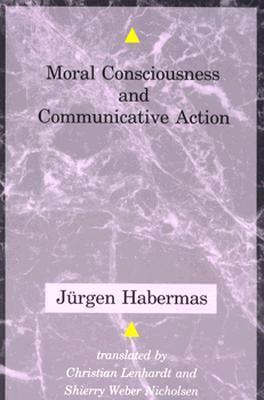
Moral Consciousness and Communicative Action book cover
Moral Consciousness and Communicative Action
1983
First Published
3.94
Average Rating
244
Number of Pages
This long-awaited book sets out the implications of Habermas' theory of communicative action for moral theory. "Discourse ethics" attempts to reconstruct a moral point of view from which normative claims can be impartially judged. The theory of justice it develops replaces Kant's categorical imperative with a procedure of justification based on reasoned agreement among participants in practical discourse. Habermas connects communicative ethics to the theory of social action via an examination of research in the social psychology of moral and interpersonal development. He aims to show that our basic moral intuitions spring from something deeper and more universal than contingent features of our tradition, namely from normative presuppositions of social interaction that belong to the repertoire of competent agents in any society.

Avg Rating
3.94
Number of Ratings
162
5 STARS
33%
4 STARS
37%
3 STARS
23%
2 STARS
6%
1 STARS
1%
goodreads

Author

Jurgen Habermas
Jurgen Habermas
Author · 40 books
Jürgen Habermas is a German sociologist and philosopher in the tradition of critical theory and American pragmatism. He is perhaps best known for his work on the concept of the public sphere, the topic of his first book entitled The Structural Transformation of the Public Sphere. His work focuses on the foundations of social theory and epistemology, the analysis of advanced capitalistic societies and democracy, the rule of law in a critical social-evolutionary context, and contemporary politics—particularly German politics. Habermas' theoretical system is devoted to revealing the possibility of reason, emancipation, and rational-critical communication latent in modern institutions and in the human capacity to deliberate and pursue rational interests.
548 Market St PMB 65688, San Francisco California 94104-5401 USA
© 2026 Paratext Inc. All rights reserved