Margins
Mord's Morde - Große Kriminalfälle berühmter Meisterdetektive book cover
Mord's Morde - Große Kriminalfälle berühmter Meisterdetektive
1986
First Published
4.00
Average Rating
350
Number of Pages

"The Royal Society of Private Detectives", der renommierte Nobelclub in London, dessen Mitglieder kein größeres Vergnügen kennen, als ihren Scharfsinn an komplizierten kriminalistischen Problemen zu üben, hat die Meisterdetektive der Krimi-Weltliteratur unter die Lupe genommen und dabei jene Mordsgenies ausgewählt, deren kleine graue Zellen noch immer besser funktionieren als die ihrer lebenden Kollegen. Denn jedes der bedeutenden Vorbilder hat seine extraordinäre Art. Deshalb ist es immer ein Mordsvergnügen, diesen grundverschiedenen, aber stets genialen Geistespfaden zu folgen und jedesmal verblüfft und begeistert zugleich ans Ziel zu gelangen.
Avg Rating
4.00
Number of Ratings
1
5 STARS
0%
4 STARS
100%
3 STARS
0%
2 STARS
0%
1 STARS
0%
goodreads

Authors

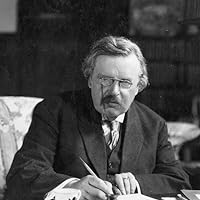
G.K. Chesterton
G.K. Chesterton
Author · 220 books

Gilbert Keith Chesterton was an English writer, philosopher, lay theologian, and literary and art critic. He was educated at St. Paul’s, and went to art school at University College London. In 1900, he was asked to contribute a few magazine articles on art criticism, and went on to become one of the most prolific writers of all time. He wrote a hundred books, contributions to 200 more, hundreds of poems, including the epic Ballad of the White Horse, five plays, five novels, and some two hundred short stories, including a popular series featuring the priest-detective, Father Brown. In spite of his literary accomplishments, he considered himself primarily a journalist. He wrote over 4000 newspaper essays, including 30 years worth of weekly columns for the Illustrated London News, and 13 years of weekly columns for the Daily News. He also edited his own newspaper, G.K.’s Weekly. Chesterton was equally at ease with literary and social criticism, history, politics, economics, philosophy, and theology.

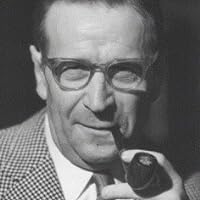
Georges Simenon
Georges Simenon
Author · 273 books

Georges Joseph Christian Simenon (1903 – 1989) was a Belgian writer. A prolific author who published nearly 500 novels and numerous short works, Simenon is best known as the creator of the fictional detective Jules Maigret. Although he never resided in Belgium after 1922, he remained a Belgian citizen throughout his life. Simenon was one of the most prolific writers of the twentieth century, capable of writing 60 to 80 pages per day. His oeuvre includes nearly 200 novels, over 150 novellas, several autobiographical works, numerous articles, and scores of pulp novels written under more than two dozen pseudonyms. Altogether, about 550 million copies of his works have been printed. He is best known, however, for his 75 novels and 28 short stories featuring Commissaire Maigret. The first novel in the series, Pietr-le-Letton, appeared in 1931; the last one, Maigret et M. Charles, was published in 1972. The Maigret novels were translated into all major languages and several of them were turned into films and radio plays. Two television series (1960-63 and 1992-93) have been made in Great Britain. During his "American" period, Simenon reached the height of his creative powers, and several novels of those years were inspired by the context in which they were written (Trois chambres à Manhattan (1946), Maigret à New York (1947), Maigret se fâche (1947)). Simenon also wrote a large number of "psychological novels", such as La neige était sale (1948) or Le fils (1957), as well as several autobiographical works, in particular Je me souviens (1945), Pedigree (1948), Mémoires intimes (1981). In 1966, Simenon was given the MWA's highest honor, the Grand Master Award. In 2005 he was nominated for the title of De Grootste Belg (The Greatest Belgian). In the Flemish version he ended 77th place. In the Walloon version he ended 10th place.

Arthur Conan Doyle
Arthur Conan Doyle
Author · 780 books

Sir Arthur Ignatius Conan Doyle was born the third of ten siblings on 22 May 1859 in Edinburgh, Scotland. His father, Charles Altamont Doyle, a talented illustrator, was born in England of Irish descent, and his mother, born Mary Foley, was Irish. They were married in 1855. Although he is now referred to as "Conan Doyle", the origin of this compound surname (if that is how he meant it to be understood) is uncertain. His baptism record in the registry of St Mary's Cathedral in Edinburgh gives 'Arthur Ignatius Conan' as his Christian name, and simply 'Doyle' as his surname. It also names Michael Conan as his godfather. At the age of nine Conan Doyle was sent to the Roman Catholic Jesuit preparatory school, Hodder Place, Stonyhurst. He then went on to Stonyhurst College, leaving in 1875. From 1876 to 1881 he studied medicine at the University of Edinburgh. This required that he provide periodic medical assistance in the towns of Aston (now a district of Birmingham) and Sheffield. While studying, Conan Doyle began writing short stories. His first published story appeared in "Chambers' Edinburgh Journal" before he was 20. Following his graduation, he was employed as a ship's doctor on the SS Mayumba during a voyage to the West African coast. He completed his doctorate on the subject of tabes dorsalis in 1885. In 1885 Conan Doyle married Louisa (or Louise) Hawkins, known as "Touie". She suffered from tuberculosis and died on 4 July 1906. The following year he married Jean Elizabeth Leckie, whom he had first met and fallen in love with in 1897. Due to his sense of loyalty he had maintained a purely platonic relationship with Jean while his first wife was alive. Jean died in London on 27 June 1940. Conan Doyle fathered five children. Two with his first wife—Mary Louise (28 January 1889 – 12 June 1976), and Arthur Alleyne Kingsley, known as Kingsley (15 November 1892 – 28 October 1918). With his second wife he had three children—Denis Percy Stewart (17 March 1909 – 9 March 1955), second husband in 1936 of Georgian Princess Nina Mdivani (circa 1910 – 19 February 1987; former sister-in-law of Barbara Hutton); Adrian Malcolm (19 November 1910–3 June 1970) and Jean Lena Annette (21 December 1912–18 November 1997). Conan Doyle was found clutching his chest in the hall of Windlesham, his house in Crowborough, East Sussex, on 7 July 1930. He had died of a heart attack at age 71. His last words were directed toward his wife: "You are wonderful." The epitaph on his gravestone in the churchyard at Minstead in the New Forest, Hampshire, reads: STEEL TRUE BLADE STRAIGHT ARTHUR CONAN DOYLE KNIGHT PATRIOT, PHYSICIAN & MAN OF LETTERS Conan Doyle's house, Undershaw, located in Hindhead, south of London, where he had lived for a decade, had been a hotel and restaurant between 1924 and 2004. It now stands empty while conservationists and Conan Doyle fans fight to preserve it. A statue honours Conan Doyle at Crowborough Cross in Crowborough, where Conan Doyle lived for 23 years. There is also a statue of Sherlock Holmes in Picardy Place, Edinburgh, close to the house where Conan Doyle was born. Series: * Sherlock Holmes

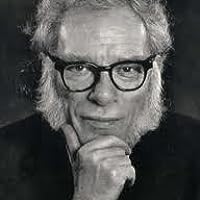
Isaac Asimov
Isaac Asimov
Author · 510 books

Isaac Asimov was a Russian-born, American author, a professor of biochemistry, and a highly successful writer, best known for his works of science fiction and for his popular science books. Professor Asimov is generally considered one of the most prolific writers of all time, having written or edited more than 500 books and an estimated 90,000 letters and postcards. He has works published in nine of the ten major categories of the Dewey Decimal System (lacking only an entry in the 100s category of Philosophy). Asimov is widely considered a master of the science-fiction genre and, along with Robert A. Heinlein and Arthur C. Clarke, was considered one of the "Big Three" science-fiction writers during his lifetime. Asimov's most famous work is the Foundation Series; his other major series are the Galactic Empire series and the Robot series, both of which he later tied into the same fictional universe as the Foundation Series to create a unified "future history" for his stories much like those pioneered by Robert A. Heinlein and previously produced by Cordwainer Smith and Poul Anderson. He penned numerous short stories, among them "Nightfall", which in 1964 was voted by the Science Fiction Writers of America the best short science fiction story of all time, a title many still honor. He also wrote mysteries and fantasy, as well as a great amount of nonfiction. Asimov wrote the Lucky Starr series of juvenile science-fiction novels using the pen name Paul French. Most of Asimov's popularized science books explain scientific concepts in a historical way, going as far back as possible to a time when the science in question was at its simplest stage. He often provides nationalities, birth dates, and death dates for the scientists he mentions, as well as etymologies and pronunciation guides for technical terms. Examples include his Guide to Science, the three volume set Understanding Physics, and Asimov's Chronology of Science and Discovery. Asimov was a long-time member and Vice President of Mensa International, albeit reluctantly; he described some members of that organization as "brain-proud and aggressive about their IQs" He took more joy in being president of the American Humanist Association. The asteroid 5020 Asimov, the magazine Asimov's Science Fiction, a Brooklyn, NY elementary school, and two different Isaac Asimov Awards are named in his honor.

Agatha Christie
Agatha Christie
Author · 741 books

Agatha Christie is the top-selling author of all time, with a legacy spanning 66 crime novels, 14 plays, and six romance novels under a pseudonym. Her works have sold over two billion copies globally, translated into at least 103 languages, making her the most translated author. She introduced the world to iconic characters Hercule Poirot and Miss Jane Marple, and wrote *The Mousetrap*, the record-holding longest-running play in modern theater. The youngest in the Miller family, her experience as a nurse during WWI and later roles in pharmacies during both World Wars deeply influenced her mystery novels, often featuring poisons. Christie’s writing career launched in 1920 with *The Mysterious Affair at Styles*. Her life was as captivating as her fiction, notably her 1926 disappearance after her first husband’s affair became public, sparking a nationwide search. Christie's second marriage to archaeologist Max Mallowan enriched her life and work, with travels and homes like the Greenway Estate and Abney Hall providing settings for several novels. Her marriage to Mallowan lasted until her death in 1976. Christie's contributions to literature earned her the title Commander of the Order of the British Empire, solidifying her place in literary history.

Rex Stout
Rex Stout
Author · 106 books

Rex Todhunter Stout (1886 – 1975) was an American crime writer, best known as the creator of the larger-than-life fictional detective Nero Wolfe, described by reviewer Will Cuppy as "that Falstaff of detectives." Wolfe's assistant Archie Goodwin recorded the cases of the detective genius from 1934 (Fer-de-Lance) to 1975 (A Family Affair). The Nero Wolfe corpus was nominated Best Mystery Series of the Century at Bouchercon 2000, the world's largest mystery convention, and Rex Stout was nominated Best Mystery Writer of the Century.

Ed McBain
Ed McBain
Author · 97 books

"Ed McBain" is one of the pen names of American author and screenwriter Salvatore Albert Lombino (1926-2005), who legally adopted the name Evan Hunter in 1952. While successful and well known as Evan Hunter, he was even better known as Ed McBain, a name he used for most of his crime fiction, beginning in 1956. He also used the pen names John Abbott, Curt Cannon, Hunt Collins, Ezra Hannon, Dean Hudson, Evan Hunter, and Richard Marsten.

548 Market St PMB 65688, San Francisco California 94104-5401 USA
© 2026 Paratext Inc. All rights reserved