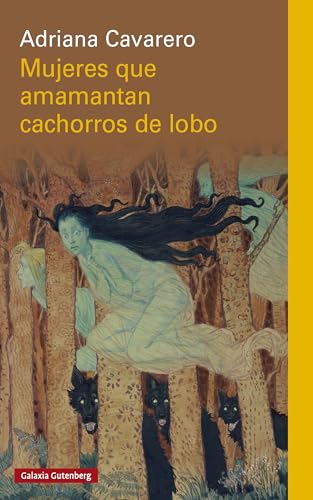
Mujeres que amamantan cachorros de lobo
2023
First Published
3.86
Average Rating
259
Number of Pages
¿Qué significa ser madre? ¿Qué significa pensar el cuerpo como materia viva que, en el parto, se abre y se desgarra? Devolviendo el concepto de "vida" a su dimensión visceral, Adriana Cavarero desafía la indiferencia de la filosofía hacia el cuerpo materno y explora sus lados oscuros y perturbadores, marginados por una tradición que favorece representaciones idílicas y luminosas. Para ello, recurre a la literatura analizando la maternidad en libros de autoras como Annie Ernaux, Elena Ferrante o Clarice Lispector, además de al pensamiento filosófico y a la tradición trágica griega, con incursiones en la antropología, la biología y la teoría crítica feminista. Cavarero, pues, se centra en la parte carnal de la experiencia maternal, en la que el cuerpo femenino se hace cómplice del proceso procreativo de la naturaleza, permitiéndole regenerarse cada vez. El origen de la vida está precisamente en el cuerpo de la mujer que se desgarra para generarnos. De ahí la necesidad de arrojar luz sobre esta verdad cruda y material, devolviendo a la maternidad una profundidad que no se limita a ser feliz o trágica, sino que es también, y sobre todo, ambivalente. Cavarero rechaza así cualquier discurso tranquilizador para desvelar el lado oscuro y "tremendo" del embarazo como verdad esencial de la condición humana.

Avg Rating
3.86
Number of Ratings
22
5 STARS
18%
4 STARS
50%
3 STARS
32%
2 STARS
0%
1 STARS
0%
goodreads
Author

Adriana Cavarero
Author · 10 books
Adriana Cavarero teaches philosophy of politics at the University of Verona, Italy, and is a visiting professor at New York University. Her field of research includes classical, modern and contemporary thought, with a special focus on the political significance of philosophy. Two main concerns shape her approach to the Western philosophical tradition. First, the 'thought of sexual difference', a theoretical perspective that enables the deconstruction of Western textuality from a feminist standpoint. Second, the thought of Hannah Arendt, reinterpreted in its most innovative categories: birth, uniqueness, action and narration. The result is an inquiry that foregrounds the individual and unique existence of the human being, as related to body and gender. Cavarero resists both the solitary abstraction of the philosophical Subject, and the volatile fragmentation of the postmodern subject, in the name of the living uniqueness of a self being generated through plural relationships with other human beings, and the acceptance of the constraints of individuality and the body.