


Part of Series
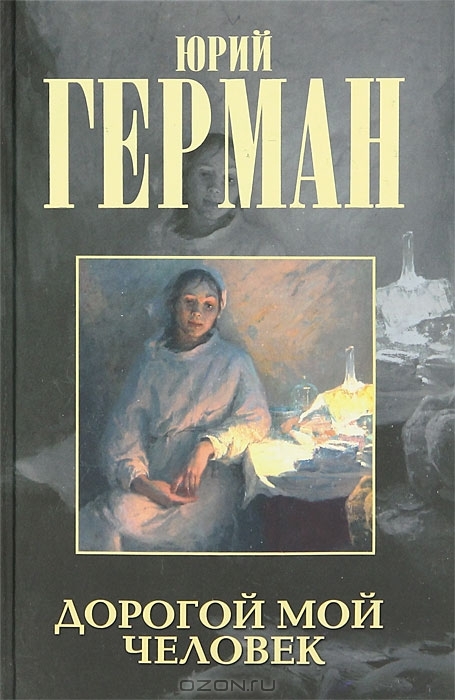
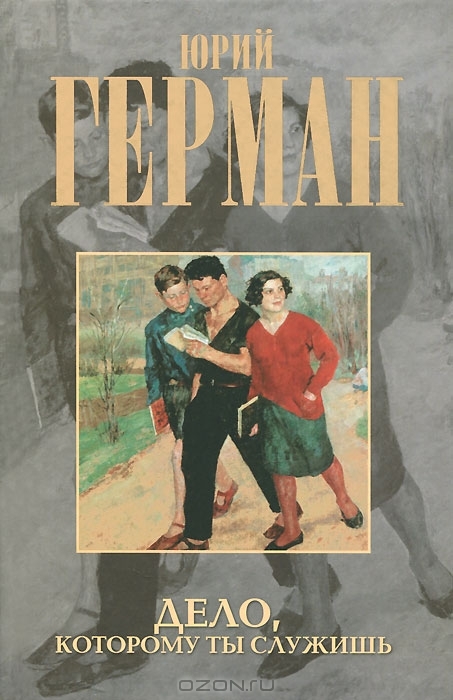
Jurij Pavloviĉ German (1910–1967) estis klasikulo de la rusa sovetia literaturo. Li distingiĝis, unuflanke, per honesteco kaj sincereco, kaj aliflanke, per skrupula atento al detaloj de ĉiutaga vivo. Li multe laboris ankaŭ en kinarto kiel scenaristo. Oni opinias lin unu el la plej maldekstraj verkistoj de la sovetia epoko. La trilogio «La afero, al kiu vi servas» rakontas pri vivo de sovetia intelektularo en 1930-aj — 1950-aj jaroj, ne prisilentante ankaŭ la «tiklajn» aferojn de Stalinaj reprezalioj. Kelkaj herooj de la trilogio havas realajn prototipojn, kiujn persone konis la aŭtoro. Eventoj de la dua romano de la trilogio «La afero, al kiu vi servas» — «Kara mia homo» — okazas dum jaroj de la Granda Patruja milito. Dum la tuta milito la aŭtoro servis kiel milita korespondanto en la Norda Floto kaj priskribas en tiu ĉi romano sian personan sperton kaj observojn. Multaj epizodoj de la libro estis kreitaj surbaze de veraj faktoj (interalie la historio de la brita aviadisto, priskribo de la konvojoj). En la dua romano la protagonisto kirurgo Ustimenko trafas en partizanan taĉmenon, poste en frontan hospitalon, kie li operaciadas dum tutaj diurnoj... Grava vundo, renkontiĝoj kaj disiĝoj, perfido kaj fideleco—kio ajn okazu ĉirkaŭe, sed la protagonisto plu plej alte taksas la «aferon, al kiu li servas».
Author

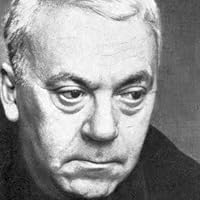
Yuri Pavlovich German (Russian: Ю́рий Па́влович Ге́рман) (April 4 [O.S. March 22] 1910 – January 16, 1967) was a Soviet Russian writer, playwright, screenwriter, and journalist. German was born in Riga (then part of the Russian Empire) and accompanied his father, an artillery officer, during the Civil War. He graduated from high school in Kursk and studied at the Technical School of Performing Arts in Leningrad in 1929. At age 17, he wrote the novel Rafael iz parikmakherskoi (Raphael of the barbershop), published in 1928, but did not consider himself a professional writer until he published the novel Vstuplenie (Entry), which met with the approval of Maxim Gorky, in 1931. In 1936, together with director Sergei Gerasimov, he wrote the screenplay for the movie Semero smelykh (The courageous seven), about researchers in the Arctic; among his other screenplays were Pirogov (1947) and Belinsky (1951), both directed by Grigori Kozintsev, and Delo Rumyantseva (The Rumyantsev case, 1955), directed by Iosif Kheifits. During World War II German was a war correspondent for TASS and the Soviet Information Bureau with the Northern Fleet. He spent the entire war in the north; from Arkhangelsk he often flew to Murmansk or Kandalaksha, living in the Arctic for months on end, traveling to the front, visiting forward positions, and spending time on the warships of the Northern Fleet. During this time he wrote essays and articles for TASS, and still found time for short stories and novels. During the war he wrote the short novels Bi kheppi! (Be happy!), Attestat (The certificate), Studyonoe more (The frozen sea), and Daleko na Severe (The far north) and the plays Za zdorov'e togo, kto v puti (To the health of the man on the road) and Beloe more (White Sea). He was a member of the Communist Party from 1958. After the war he wrote a historical novel about the era of Peter the Great, Rossiya molodaya (Young Russia, 1952). From his novels and short stories his son Aleksei German made the films Proverka na dorogakh (Trial on the road, or road check, from the novel Operatsiya "S Novym godom") and Moi drug Ivan Lapshin (My Friend Ivan Lapshin), and Semyon Aranovich made the film Torpedonostsy (Torpedo bombers). German died in Leningrad and was buried at the Bogoslovskoe Cemetery. AKA: Юрий Герман (Russian) Jurijs Germans (Latvian)