


Margins
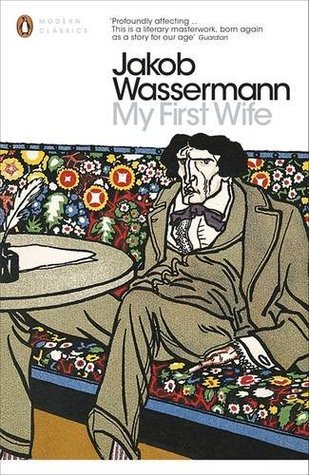
My Marriage book cover
My Marriage
1932
First Published
3.47
Average Rating
494
Number of Pages

My First Wife is Jakob Wassermann's intense, powerful account of a marriage - and its ruinous collapse - translated by the award-winning translator of Alone in Berlin, Michael Hofmann. It is the story of Alexander Herzog, a young writer, who goes to Vienna to escape his debts and a failed love affair. There he is pursued by book-loving Ganna: giddy, girlish, clumsy, eccentric and wild. Dazzled and unnerved by her devotion to him, and attracted to the large dowry offered by her wealthy father, he thinks he can mould Ganna into what he wants. But no-one can control her troubling passions. As their marriage starts to self-destruct, Herzog will discover that Ganna has resources and determination of which he had no idea - and that he can never escape her. Posthumously published in 1934 and based on the author Jakob Wassermann's own ruinous marriage, My First Wife bears the unmistakable aura of true and bitter experience. It is a tragic masterpiece that unfolds in shocking detail. Now this story of rare intensity and drama is brought to English readers in a powerful new translation by Michael Hofmann. Reviews: 'Like something out of Chekhov - it's all there, the ennui, the preening etiquette, the intellectual posturing ... painfully heartfelt ... My First Wife is a devastating indictment of the choices we make out of convenience against our hearts and instincts, and the tragedies that ensue' Independent 'You won't find a more agonising, fascinating literary account of a marriage hitting the rocks' Mail Online
Avg Rating
3.47
Number of Ratings
196
5 STARS
14%
4 STARS
36%
3 STARS
38%
2 STARS
10%
1 STARS
3%
goodreads

Author

Jakob Wassermann
Jakob Wassermann
Author · 11 books

Jakob Wassermann (1873 – 1934) was a German writer and novelist of Jewish descent. Born in Fürth, he was the son of a shopkeeper and lost his mother at an early age. He showed literary interest early and published various pieces in small newspapers. Because his father was reluctant to support his literary ambitions, he began a short-lived apprenticeship with a businessman in Vienna after graduation. He completed his military service in Nuremberg. Afterward, he stayed in southern Germany and in Switzerland. In 1894 he moved to Munich. Here he worked as a secretary and later as a copy editor at the paper Simplicissimus. Around this time he also became acquainted with other writers Rainer Maria Rilke, Hugo von Hofmannsthal, and Thomas Mann. In 1896 he released his first novel, Melusine. Interestingly, his last name (Wassermann) means "water-man" in German; a "Melusine" (or "Melusina") is a figure of European legends and folklore, a feminine spirit of fresh waters in sacred springs and rivers. From 1898 he was a theater critic in Vienna. In 1901 he married Julie Speyer, whom he divorced in 1915. Three years later he was married again to Marta Karlweis. After 1906, he lived alternatively in Vienna or at Altaussee in der Steiermark where he died in 1934 after a severe illness. In 1926, he was elected to the Prussian Academy of Art. He resigned in 1933, narrowly avoiding an expulsion by the Nazis. In the same year, his books were banned in Germany owing to his Jewish ancestry. Wassermann's work includes poetry, essays, novels, and short stories. His most important works are considered the novel Der Fall Maurizius (1928) and the autobiography, My Life as German and Jew (Mein Weg als Deutscher und Jude) (1921), in which he discussed the tense relationship between his German and Jewish identities.

548 Market St PMB 65688, San Francisco California 94104-5401 USA
© 2026 Paratext Inc. All rights reserved