Margins




548 Market St PMB 65688, San Francisco California 94104-5401 USA
© 2026 Paratext Inc. All rights reserved
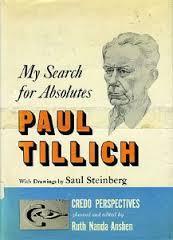
My Search for Absolutes is a unique autobiography of the mind - and, at the same time, the result of a unique collaboration. Here is the intellectual autobiography of Paul Tillich, whose lifelong search for the truth, the reality and the meaning of God lies a the very root of the ecumenical and existential revolution of our times. In My Search for Absolutes he explores, on a personal level, the sources of his ideas, the relationship of his life to his thought, the emergence of his beliefs ... He discusses, within the framework of a life, such central questions as "The Absolute and the Relative in Man's Encounter with Reality," " The Absolute and the Relative in Moral Decisions," and "Man's Search for Ultimate Meaning." By itself, My Search for Absolutes would be a book of great distinction and importance, the last major work by a prothean figure. But, more than this, it is the result of a rare synthesis between philosopher-theologian and artist. For Paul Tillich and Saul Steinberg were close friends and enthusiastic admirers of each other's work. Hence Ruth Nanda Anshen, Editor of Credo Perspectives, invited Steinberg to make drawings analogically relevant to Tillich's theology. Steinberg's ideas, in line, reflect a view of the universe and of man in key with Paul Tillich's own thought, and contribute a further dimension of understanding to My Search for Absolutes.