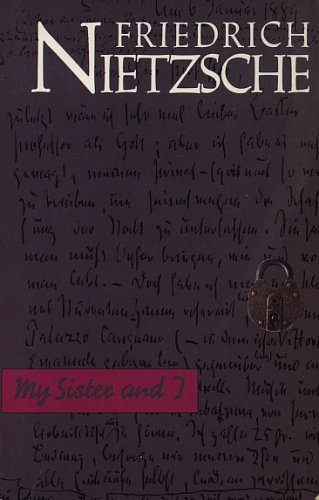
My Sister and I
1951
First Published
3.58
Average Rating
256
Number of Pages
The revised and updated edition of Nietzsche's disputed final work, including textual research supporting its authenticity and translations of his final correspondence. Reportedly written in the mental institution at Jena following his celebrated mental collapse in Turin, and smuggled out by a fellow inmate to avoid the tyrannical eye of his sister (with whom he confesses to an incestuous relationship), My Sister and I is a reflective counterpoint to the megalomania and stridency of Ecce Homo.

Avg Rating
3.58
Number of Ratings
120
5 STARS
27%
4 STARS
28%
3 STARS
28%
2 STARS
13%
1 STARS
5%
goodreads
Author

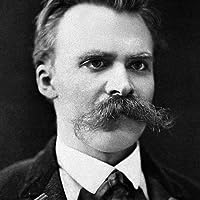
Friedrich Nietzsche
Author · 110 books
Friedrich Wilhelm Nietzsche (Ph.D., Philology, Leipzig University, 1869) was a German philosopher of the late 19th century who challenged the foundations of Christianity and traditional morality. He was interested in the enhancement of individual and cultural health, and believed in life, creativity, power, and the realities of the world we live in, rather than those situated in a world beyond. Central to his philosophy is the idea of “life-affirmation,” which involves a questioning of all doctrines that drain life's expansive energies, however socially prevalent those views might be. Often referred to as one of the first existentialist philosophers along with Søren Kierkegaard (1813–1855). From the Stanford Encyclopedia of Philosophy