Mystics and "idealist" have always propounded the idea that the world is an illusion. Now quantum physics is putting forward theories that reinforce this belief. Until recently, the empirical approach of physicists such as Newton has taught us that the world exists with or without human consciousness to observe it. But we can never be totally objective about reality. The human mind, with all its preconceived notions, and prejudices, always intrudes, even in the most scientific of experiments, making true objectivity impossible to achieve. The new physics state that reality is combination of the laws of the physical world, quantifiable and un-equivocable, and the subjective viewpoint of the observer. This "omnijective view" of the universe challenges all our most deeply held scientific beliefs and could radically change the way we view reality in the future. As our constructs are amended to this shift in approach, we can anticipate monumental changes in Western thought.
Author
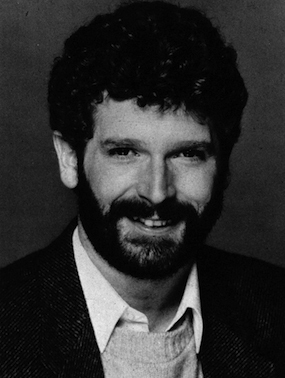
Michael Talbot was born in Grand Rapids, Michigan in 1953. As a young man, he moved to New York City, where he pursued a career as a freelance writer, publishing articles in Omni, The Village Voice, and others, often exploring the confluence between science and the spiritual. Talbot published his first novel, The Delicate Dependency: A Novel of the Vampire Life as an Avon paperback original in 1982; though never reprinted, it is regarded a classic of the genre, frequently appearing on lists of the best vampire novels ever written, and secondhand copies have long been expensive and hard to find. His other horror titles, both cult classics, are The Bog (1986) and Night Things (1988). But despite the popularity of his fiction among horror fans, it was for his nonfiction that Talbot was best known, much of it focusing on new age concepts, mysticism, and the paranormal. Arguably his most famous and most significant is The Holographic Universe (1991), which examines the increasingly accepted theory that the entire universe is a hologram; the book remains in print and highly discussed today. Michael Talbot died of leukemia in 1992 at age 38.