Margins
Myth and Christianity book cover
Myth and Christianity
An Inquiry into the Possibility of Religion Without Myth
1958
First Published
3.25
Average Rating
116
Number of Pages
Two of the most brilliant German thinkers of the twentieth century were Karl Jaspers and Rudolf Bultmann. Jaspers, the philosopher, and Bultmann, the theologian, were both influenced by the philosophy of Martin Heidegger and the rise of the existentialist movement. Late in their careers they interacted on the subject of Bultmann's attempt to divest Christianity of its mythical components and make sense of it in more modern terms. This work is a compilation of articles by Jaspers and Bultmann that formed a running debate originally published in various scholarly journals. The first half of the book is Jaspers' lengthy and critical analysis of Bultmann's interpretation of Christianity, in which Jaspers essentially rejects the premise that Christianity or any other religion can or should be understood without its mythical framework. Jaspers charges that Bultmann has radically misunderstood the nature of myth and that myth is an irreplaceable form of symbolic communication.In the second part, Bultmann defends his approach, suggesting that Jaspers has not really understood his intent or meaning. Contemporary people today, schooled in the scientific tradition, are likely to reject the biblical texts because of their miraculous claims and supernatural content. Bultmann insists that the scholarly, scientific study of the Bible is a legitimate way to reveal its true message, apart from all the supernatural trappings. Finally, in response, Jaspers accepts some of Bultmann's clarifications but takes him to task on the subject of "justification by faith," which he feels Bultmann defines too narrowly and too exclusively.This stimulating work by two penetrating minds will give anyone interested in perennial philosophical and theological questions much to ponder.

Avg Rating
3.25
Number of Ratings
24
5 STARS
17%
4 STARS
21%
3 STARS
42%
2 STARS
13%
1 STARS
8%
goodreads

Author

Karl Jaspers
Karl Jaspers
Author · 27 books

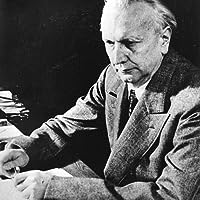
Jaspers was born in Oldenburg in 1883 to a mother from a local farming community, and a jurist father. He showed an early interest in philosophy, but his father's experience with the legal system undoubtedly influenced his decision to study law at university. It soon became clear that Jaspers did not particularly enjoy law, and he switched to studying medicine in 1902. Jaspers graduated from medical school in 1909 and began work at a psychiatric hospital in Heidelberg where Emil Kraepelin had worked some years earlier. Jaspers became dissatisfied with the way the medical community of the time approached the study of mental illness and set himself the task of improving the psychiatric approach. In 1913 Jaspers gained a temporary post as a psychology teacher at Heidelberg University. The post later became permanent, and Jaspers never returned to clinical practice. At the age of 40 Jaspers turned from psychology to philosophy, expanding on themes he had developed in his psychiatric works. He became a renowned philosopher, well respected in Germany and Europe. In 1948 Jaspers moved to the University of Basel in Switzerland. He remained prominent in the philosophical community until his death in Basel in 1969. Jaspers' dissatisfaction with the popular understanding of mental illness led him to question both the diagnostic criteria and the methods of clinical psychiatry. He published a revolutionary paper in 1910 in which he addressed the problem of whether paranoia was an aspect of personality or the result of biological changes. Whilst not broaching new ideas, this article introduced a new method of study. Jaspers studied several patients in detail, giving biographical information on the people concerned as well as providing notes on how the patients themselves felt about their symptoms. This has become known as the biographical method and now forms the mainstay of modern psychiatric practice. Jaspers set about writing his views on mental illness in a book which he published in 1913 as General Psychopathology. The two volumes which make up this work have become a classic in the psychiatric literature and many modern diagnostic criteria stem from ideas contained within them. Of particular importance, Jaspers believed that psychiatrists should diagnose symptoms (particularly of psychosis) by their form rather than by their content. For example, in diagnosing a hallucination, the fact that a person experiences visual phenomena when no sensory stimuli account for it (form) assumes more importance than what the patient sees (content). Jaspers felt that psychiatrists could also diagnose delusions in the same way. He argued that clinicians should not consider a belief delusional based on the content of the belief, but only based on the way in which a patient holds such a belief (see delusion for further discussion). Jaspers also distinguished between primary and secondary delusions. He defined primary delusions as autochthonous meaning arising without apparent cause, appearing incomprehensible in terms of normal mental processes. (This is a distinctly different use of the term autochthonous than its usual medical or sociological meaning of indigenous.) Secondary delusions, on the other hand, he classified as influenced by the person's background, current situation or mental state. Jaspers considered primary delusions as ultimately 'un-understandable,' as he believed no coherent reasoning process existed behind their formation. This view has caused some controversy, and the likes of R. D. Laing and Richard Bentall have criticised it, stressing that taking this stance can lead therapists into the complacency of assuming that because they do not understand a patient, the patient is deluded and further investigation on the part of the therapist will have no effect. Most commentators associate Jaspers with the philosophy of existentialism, in part because he draws largely upon the existentialist roots of Nietzsche and Kierk

548 Market St PMB 65688, San Francisco California 94104-5401 USA
© 2026 Paratext Inc. All rights reserved