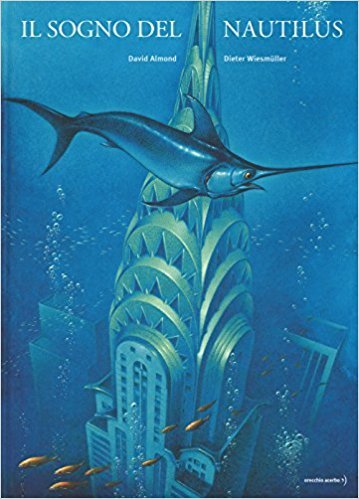



Was wäre, wenn die ganze Welt unter Wasser stünde? Wenn die Zivilisation verschwunden wäre und stattdessen Delfine, Mondfische und Blauwale durch leere Städte schwimmen würden? In einem ganz besonderen Gedankenexperiment lassen Dieter Wiesmüller und David Almond die Menschheit versinken und Meeresbewohner über uns sinnieren. Die Freiheitsstatue in New York, Michelangelos David in Rom genauso wie die Londoner Tower Bridge: Baudenkmäler verraten die Geheimnisse unserer Menschheit. Brücken, die einst von Menschen überquert wurden, dienen nun Delfinen als Spielwiese. Wo sich früher Leute an Brunnen versammelt haben, tummeln sich nun Mondfische und Blauwale. Am Anblick der Statuen, von Menschenhand erschaffen, erfreuen sich jetzt Haifische und Seemuscheln. Was werden sie über die Menschen erzählen in ihren Liedern und Legenden, in ihren Unterwasserträumen? Die Künstler regen in ihrem atemberaubenden Buchkunstwerk zum Philosophieren über eine blau-grüne Zukunft nach unserer Zeit an. Die berühmtesten Monumente der Menschheit aus faszinierend neuer Perspektive!
Author

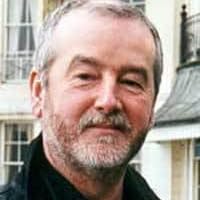
David Almond is a British children's writer who has penned several novels, each one to critical acclaim. He was born and raised in Felling and Newcastle in post-industrial North East England and educated at the University of East Anglia. When he was young, he found his love of writing when some short stories of his were published in a local magazine. He started out as an author of adult fiction before finding his niche writing literature for young adults. His first children's novel, Skellig (1998), set in Newcastle, won the Whitbread Children's Novel of the Year Award and also the Carnegie Medal. His subsequent novels are: Kit's Wilderness (1999), Heaven Eyes (2000), Secret Heart (2001), The Fire Eaters (2003) and Clay (2005). His first play aimed at adolescents, Wild Girl, Wild Boy, toured in 2001 and was published in 2002. His works are highly philosophical and thus appeal to children and adults alike. Recurring themes throughout include the complex relationships between apparent opposites (such as life and death, reality and fiction, past and future); forms of education; growing up and adapting to change; the nature of 'the self'. He has been greatly influenced by the works of the English Romantic poet William Blake. He is an author often suggested on National Curriculum reading lists in the United Kingdom and has attracted the attention of academics who specialise in the study of children's literature. Almond currently lives with his family in Northumberland, England. Awards: Hans Christian Andersen Award for Writing (2010).