


Margins
2024
First Published
3.70
Average Rating
280
Number of Pages

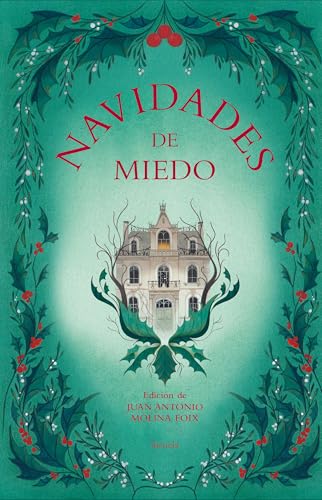
La creencia en fantasmas es, probablemente, tan vieja como la propia humanidad y el gusto por la narración oral. Resulta natural entonces que ambas se combinaran a la perfección durante el crudo y amenazador invierno, cuando la muerte estaba más presente que nunca, propiciando de este modo que los cuentos de espectros y aparecidos se consolidaran en tales fechas como una popular tradición. Diseñados para enmascarar las cosas que más nos asustan y aligerar la carga de nuestros pensamientos, el atractivo secreto de estos relatos—de las horribles criaturas que creamos, de los fantasmas que nos acechan y los demonios que operan en nuestras mentes—es que, si bien las historias en sí son ficciones, los peligros subyacentes que evocan y la emoción que sentimos al enfrentarlos son absolutamente reales. Así pues, acurrucados junto a la chimenea y en un ambiente netamente festivo, esta terrorífica antología nos invita a redescubrir esa milenaria experiencia, magnética y sugestiva mezcla de divertimento y escalofrío. Charles Dickens, Nathaniel Hawthorne, J. H. Riddell, Sheridan Le Fanu, Guy de Maupassant, Antón Chéjov, Benito Pérez Galdós, Arthur Conan Doyle, J. M. Barrie, J. K. Bangs, B. M. Croker, Thomas Hardy, Edith Nesbit, G. K. Chesterton, Algernon Blackwood, Emilia Pardo Bazán, M. R. James y Arthur Machen
Avg Rating
3.70
Number of Ratings
20
5 STARS
10%
4 STARS
55%
3 STARS
30%
2 STARS
5%
1 STARS
0%
goodreads

Authors

Benito Perez Galdos
Benito Perez Galdos
Author · 80 books

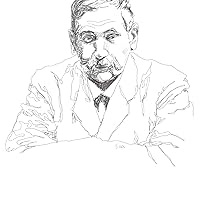
People know Spanish writer Benito Pérez Galdós especially for his Episodios Nacionales (1873-1912), a series of 46 historical novels. Benito Pérez Galdós was a Spanish realist novelist. Some authorities consider him second only to Cervantes in stature as a Spanish novelist. He was the leading literary figure in 19th century Spain. Galdós was a prolific writer, publishing 31 novels, 46 Episodios Nacionales (National Episodes), 23 plays, and the equivalent of 20 volumes of shorter fiction, journalism and other writings. He remains popular in Spain, and galdosistas (Galdós researchers) considered him Spain's equal to Dickens, Balzac and Tolstoy. As recently as 1950, few of his works were available translated to English, although he has slowly become popular in the Anglophone world. While his plays are generally considered to be less successful than his novels, Realidad (1892) is important in the history of realism in the Spanish theatre.

Nathaniel Hawthorne
Nathaniel Hawthorne
Author · 195 books

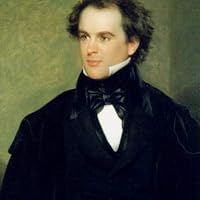
Nathaniel Hawthorne was a 19th century American novelist and short story writer. He is seen as a key figure in the development of American literature for his tales of the nation's colonial history. Shortly after graduating from Bowdoin College, Hathorne changed his name to Hawthorne. Hawthorne anonymously published his first work, a novel titled Fanshawe, in 1828. In 1837, he published Twice-Told Tales and became engaged to painter and illustrator Sophia Peabody the next year. He worked at a Custom House and joined a Transcendentalist Utopian community, before marrying Peabody in 1842. The couple moved to The Old Manse in Concord, Massachusetts, later moving to Salem, the Berkshires, then to The Wayside in Concord. The Scarlet Letter was published in 1850, followed by a succession of other novels. A political appointment took Hawthorne and family to Europe before returning to The Wayside in 1860. Hawthorne died on May 19, 1864, leaving behind his wife and their three children. Much of Hawthorne's writing centers around New England and many feature moral allegories with a Puritan inspiration. His work is considered part of the Romantic movement and includes novels, short stories, and a biography of his friend, the United States President Franklin Pierce.

Emilia Pardo Bazán
Emilia Pardo Bazán
Author · 56 books

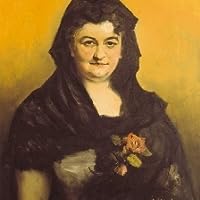
Emilia Pardo Bazán was a Galician author and scholar from Galicia. She is known for bringing naturalism to Spanish literature, for her detailed descriptions of reality, and for her role in feminist literature of her era. Her first novel, Pascual López (1879), is a simple exercise in fantasy of no remarkable promise, though it contains good descriptive passages of romance. It was followed by a more striking story, Un viaje de novios (1881), in which a discreet attempt was made to introduce into Spain the methods of French realism. The book caused a sensation among the literary cliques, and this sensation was increased by the appearance of another naturalistic tale, La tribuna (1885), wherein the influence of Émile Zola is unmistakable. Meanwhile, the writer's reply to her critics was issued under the title of La cuestion palpitante (1883), a clever piece of rhetoric, but of no special value as regards criticism or dialectics. The best of Emilia Pardo Bazán's work is embodied in Los pazos de Ulloa (1886), the painfully exact history of a decadent aristocratic family. A sequel, with the significant title of La madre naturaleza (1887), marks a further advance in the path of naturalism. She was also a journalist, essayist and critic. She died in Madrid.

Charles Dickens
Charles Dickens
Author · 429 books

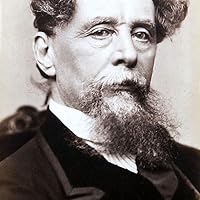
Charles John Huffam Dickens (1812-1870) was a writer and social critic who created some of the world's best-known fictional characters and is regarded as the greatest novelist of the Victorian era. His works enjoyed unprecedented popularity during his lifetime, and by the twentieth century critics and scholars had recognised him as a literary genius. His novels and short stories enjoy lasting popularity. Dickens left school to work in a factory when his father was incarcerated in a debtors' prison. Despite his lack of formal education, he edited a weekly journal for 20 years, wrote 15 novels, five novellas, hundreds of short stories and non-fiction articles, lectured and performed extensively, was an indefatigable letter writer, and campaigned vigorously for children's rights, education, and other social reforms. Dickens was regarded as the literary colossus of his age. His 1843 novella, A Christmas Carol, remains popular and continues to inspire adaptations in every artistic genre. Oliver Twist and Great Expectations are also frequently adapted, and, like many of his novels, evoke images of early Victorian London. His 1859 novel, A Tale of Two Cities, set in London and Paris, is his best-known work of historical fiction. Dickens' creative genius has been praised by fellow writers—from Leo Tolstoy to George Orwell and G. K. Chesterton—for its realism, comedy, prose style, unique characterisations, and social criticism. On the other hand, Oscar Wilde, Henry James, and Virginia Woolf complained of a lack of psychological depth, loose writing, and a vein of saccharine sentimentalism. The term Dickensian is used to describe something that is reminiscent of Dickens and his writings, such as poor social conditions or comically repulsive characters. On 8 June 1870, Dickens suffered another stroke at his home after a full day's work on Edwin Drood. He never regained consciousness, and the next day he died at Gad's Hill Place. Contrary to his wish to be buried at Rochester Cathedral "in an inexpensive, unostentatious, and strictly private manner," he was laid to rest in the Poets' Corner of Westminster Abbey. A printed epitaph circulated at the time of the funeral reads: "To the Memory of Charles Dickens (England's most popular author) who died at his residence, Higham, near Rochester, Kent, 9 June 1870, aged 58 years. He was a sympathiser with the poor, the suffering, and the oppressed; and by his death, one of England's greatest writers is lost to the world." His last words were: "On the ground", in response to his sister-in-law Georgina's request that he lie down. (from Wikipedia)

Guy de Maupassant
Guy de Maupassant
Author · 292 books
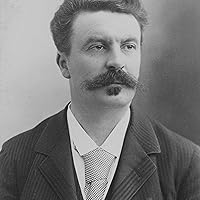
Henri René Albert Guy de Maupassant was a popular 19th-century French writer. He is one of the fathers of the modern short story. A protege of Flaubert, Maupassant's short stories are characterized by their economy of style and their efficient effortless dénouement. He also wrote six short novels. A number of his stories often denote the futility of war and the innocent civilians who get crushed in it - many are set during the Franco-Prussian War of the 1870s.
548 Market St PMB 65688, San Francisco California 94104-5401 USA
© 2026 Paratext Inc. All rights reserved