Books in series

#1
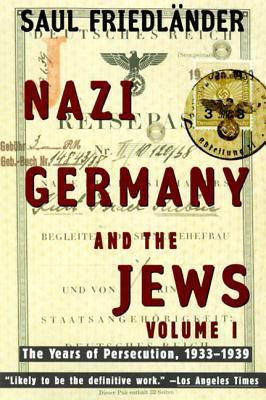
Nazi Germany and the Jews, Volume 1
The Years of Persecution, 1933-1939
1997
A great historian crowns a lifetime of thought and research by answering a question that has haunted us for more than 50 years: How did one of the most industrially and culturally advanced nations in the world embark on and continue along the path leading to one of the most enormous criminal enterprises in history, the extermination of Europe's Jews?
Giving considerable emphasis to a wealth of new archival findings, Saul Friedlander restores the voices of Jews who, after the 1933 Nazi accession to power, were engulfed in an increasingly horrifying reality. We hear from the persecutors themselves: the leaders of the Nazi party, the members of the Protestant and Catholic hierarchies, the university elites, and the heads of the business community. Most telling of all, perhaps, are the testimonies of ordinary German citizens, who in the main acquiesced to increasing waves of dismissals, segregation, humiliation, impoverishment, expulsion, and violence.

#1
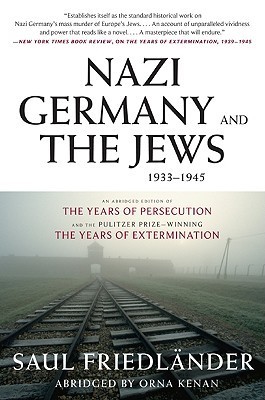
Nazi Germany and the Jews, 1933-1945
1736
Nazi Germany and the Jews, 1933-1945 is an abridged edition of Saul Friedländer's definitive Pulitzer Prize-winning two-volume history of the Holocaust: The Years of Persecution, 1933-1939 and The Years of Extermination, 1939-1945.
The book's first part, dealing with the National Socialist campaign of oppression, restores the voices of Jews who were engulfed in an increasingly horrifying reality following the Nazi accession to power. Friedländer also provides the accounts of the persecutors themselves—and, perhaps most telling of all, the testimonies of ordinary German citizens who, in general, stood silent and unmoved by the increasing waves of segregation, humiliation, impoverishment, and violence.
The second part covers the German extermination policies that resulted in the murder of six million European Jews—an official program that depended upon the cooperation of local authorities and police departments, the passivity of the populations, and the willingness of the victims to submit in desperate hope of surviving long enough to escape the German vise.
A monumental, multifaceted study now contained in a single volume, Saul Friedländer's Nazi Germany and the Jews, 1933-1945 is an essential study of a dark and complex history.

#2
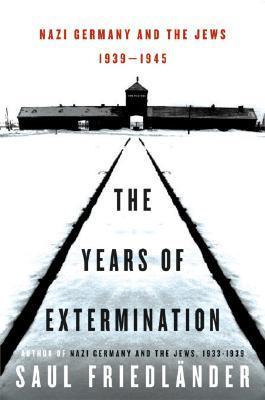
The Years of Extermination
Nazi Germany and the Jews, 1939-1945
2007
With The Years of Extermination, Saul Friedländer completes his major historical work on Nazi Germany and the Jews. The book describes and interprets the persecution and murder of the Jews throughout occupied Europe. The enactment of German extermination policies and measures depended on the cooperation of local authorities, the assistance of police forces, and the passivity of the populations, primarily of their political and spiritual elites. This implementation depended as well on the victims’ readiness to submit to orders, often with the hope of attenuating them or of surviving long enough to escape the German vise.This multifaceted study—at all levels and in different places—enhances the perception of the magnitude, complexity, and interrelatedness of the many components of this history. Based on a vast array of documents and an overwhelming choir of voices—mainly from diaries, letters, and memoirs—Saul Friedländer avoids domesticating the memory of these unprecedented and horrific events. The convergence of these various aspects gives a unique quality to The Years of Extermination. In this work, the history of the Holocaust has found its definitive representation.
Acclaim for Nazi Germany and the Jews: The Years of Persecution, 1933-1939:
"This will be the standard work for many years to come" –Daniel Johnson, The Times
"There have been many books about Nazism's persecution of the Jews, but none as magisterial or comprehensive as this" –Richard Evans, Sunday Telegraph
"The merits of this work are many; it is easily the best book of a distinguished historian. It is based on a great variety of sources, published and unpublished, and the judgement of the author cannot be faulted on any major issue...This is a very good, very important book. It needed to be written before the last historians disappear who, because of the date and place of their birth and their personal experience, know certain things in their bones about the period of the Holocaust." –Walter Lacquer, Los Angeles Times
"Saul Friedlander is the most astute, sophisticated and stylish historian of the Holocaust working in any language today." –Michael Burleigh

Author

Saul Friedlander
Author · 11 books
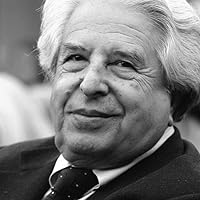
Saul Friedländer (Hebrew: שאול פרידלנדר; born October 11, 1932) is an Israeli/French historian and a professor emeritus of history at UCLA.