Margins
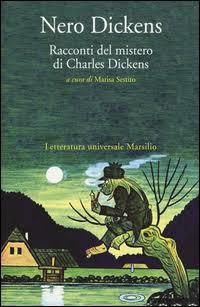
Nero Dickens book cover
Nero Dickens
2016
First Published
3.78
Average Rating
206
Number of Pages
Seppur non manchino spettri e stregate visioni, non è il soprannaturale di per sé il segno forte di questi racconti di Dickens, ma piuttosto il mistero di passioni devastanti e maniacali ossessioni, oscuri ed enigmatici presagi di un destino incombente o torturanti memorie di un passato lontano. E ancora, mistero di parole che tornano implacabili a scandire i tempi della vita e i percorsi del racconto, mistero di sguardi e gesti indecifrabili - coprirsi gli occhi con un braccio, seguire compulsivamente con la mano le fibre di una stuoia -, di strani anomali personaggi e di ambigue storie in cui si sfuma il confine tra realtà e allucinazione, ragione e follia, vita e morte. Storie tanto più inquietanti quanto più calate in quel contesto, e linguaggio, "realistico", di cui Dickens è maestro insuperabile, che puntualmente viene smantellato nelle sue labili, illusorie certezze. Alla forza immaginativa di questo contrasto contribuisce il particolare genere di molti dei testi qui presentati, che sono brevi narrazioni in sé compiute inserite nei romanzi (Il Circolo Pickivick, La piccola Dorrit, Un racconto dì due città), con la funzione di spezzare il flusso del reale e, quasi inavvertitamente, passare il testimone da personaggi realistici, comici o convenzionali, a cupe, spettrali figure della pazzi, assassini, padri maledetti e crudeli, spose dementi e disperate. Unico racconto autonomo a tutti gli effetti è lo splendido "Linea secondaria nr. I", "Il casellante", da molti considerato il più bello di il tetro buco nero della galleria ferroviaria sul quale balugina a tratti una tetra luce rossa a segnalare un pericolo sconosciuto e palpabile, fantasmatico e reale, può ben essere assunto a immagine-simbolo dello spazio in cui si muovono questi racconti, e in cui vertiginosamente si confondono le nostre luci e le nostre ombre.

Avg Rating
3.78
Number of Ratings
9
5 STARS
22%
4 STARS
44%
3 STARS
22%
2 STARS
11%
1 STARS
0%
goodreads

Author

Charles Dickens
Charles Dickens
Author · 429 books

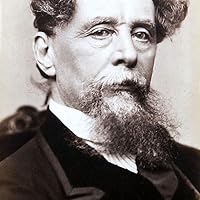
Charles John Huffam Dickens (1812-1870) was a writer and social critic who created some of the world's best-known fictional characters and is regarded as the greatest novelist of the Victorian era. His works enjoyed unprecedented popularity during his lifetime, and by the twentieth century critics and scholars had recognised him as a literary genius. His novels and short stories enjoy lasting popularity. Dickens left school to work in a factory when his father was incarcerated in a debtors' prison. Despite his lack of formal education, he edited a weekly journal for 20 years, wrote 15 novels, five novellas, hundreds of short stories and non-fiction articles, lectured and performed extensively, was an indefatigable letter writer, and campaigned vigorously for children's rights, education, and other social reforms. Dickens was regarded as the literary colossus of his age. His 1843 novella, A Christmas Carol, remains popular and continues to inspire adaptations in every artistic genre. Oliver Twist and Great Expectations are also frequently adapted, and, like many of his novels, evoke images of early Victorian London. His 1859 novel, A Tale of Two Cities, set in London and Paris, is his best-known work of historical fiction. Dickens' creative genius has been praised by fellow writers—from Leo Tolstoy to George Orwell and G. K. Chesterton—for its realism, comedy, prose style, unique characterisations, and social criticism. On the other hand, Oscar Wilde, Henry James, and Virginia Woolf complained of a lack of psychological depth, loose writing, and a vein of saccharine sentimentalism. The term Dickensian is used to describe something that is reminiscent of Dickens and his writings, such as poor social conditions or comically repulsive characters. On 8 June 1870, Dickens suffered another stroke at his home after a full day's work on Edwin Drood. He never regained consciousness, and the next day he died at Gad's Hill Place. Contrary to his wish to be buried at Rochester Cathedral "in an inexpensive, unostentatious, and strictly private manner," he was laid to rest in the Poets' Corner of Westminster Abbey. A printed epitaph circulated at the time of the funeral reads: "To the Memory of Charles Dickens (England's most popular author) who died at his residence, Higham, near Rochester, Kent, 9 June 1870, aged 58 years. He was a sympathiser with the poor, the suffering, and the oppressed; and by his death, one of England's greatest writers is lost to the world." His last words were: "On the ground", in response to his sister-in-law Georgina's request that he lie down. (from Wikipedia)

548 Market St PMB 65688, San Francisco California 94104-5401 USA
© 2026 Paratext Inc. All rights reserved