Margins
New Anthropologies of Europe book cover 1
New Anthropologies of Europe book cover 2
New Anthropologies of Europe book cover 3
New Anthropologies of Europe
Series · 15
books · 2004-2021

Books in series

Locating Bourdieu book cover
#2

Locating Bourdieu

2004

Reed-Danahay (anthropology, U. of Texas at Arlington) uses an ethnographic approach to offer new insights into the work of the influential social critic and activist Pierre Bourdieu. Incorporating Bourdieu's reflections on his life and career into her analysis, Reed-Danahay locates Bourdieu in the French milieu and in current discussions of Europe and its colonial legacy. She addresses Bourdieu's major themes and ideas and discovers implications of his work for understanding emotions, social space and personal narrative. Annotation ©2004 Book News, Inc., Portland, OR
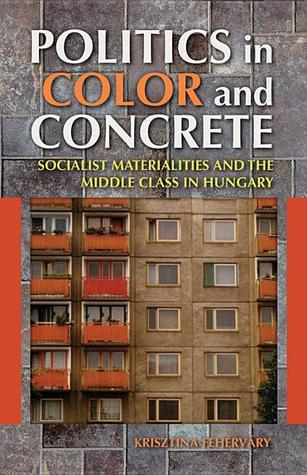
Politics in Color and Concrete book cover
#22

Politics in Color and Concrete

Socialist Materialities and the Middle Class in Hungary

2013

Material culture in Eastern Europe under state socialism is remembered as uniformly gray, shabby, and monotonous―the worst of postwar modernist architecture and design. Politics in Color and Concrete revisits this history by exploring domestic space in Hungary from the 1950s through the 1990s and reconstructs the multi-textured and politicized aesthetics of daily life through the objects, spaces, and colors that made up this lived environment. Krisztina Féherváry shows that contemporary standards of living and ideas about normalcy have roots in late socialist consumer culture and are not merely products of postsocialist transitions or neoliberalism. This engaging study decenters conventional perspectives on consumer capitalism, home ownership, and citizenship in the new Europe.
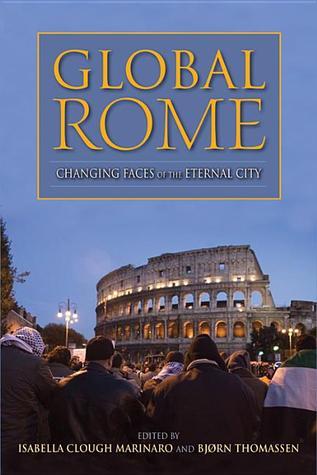
Global Rome book cover
#23

Global Rome

Changing Faces of the Eternal City

2014

Is 21st-century Rome a global city? Is it part of Europe's core or periphery? This volume examines the "real city" beyond Rome's historical center, exploring the diversity and challenges of life in neighborhoods affected by immigration, neoliberalism, formal urban planning, and grassroots social movements. The contributors engage with themes of contemporary urban studies–the global city, the self-made city, alternative modernities, capital cities and nations, urban change from below, and sustainability. Global Rome serves as a provocative introduction to the Eternal City and makes an original contribution to interdisciplinary scholarship.
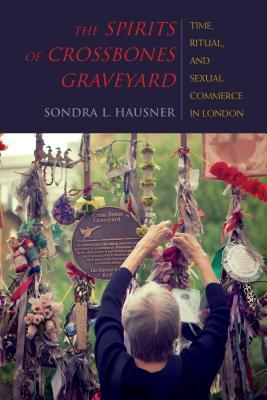
The Spirits of Crossbones Graveyard book cover
#25

The Spirits of Crossbones Graveyard

Time, Ritual, and Sexual Commerce in London

2016

Every month, a ragtag group of Londoners gather in the site known as Crossbones Graveyard to commemorate the souls of medieval prostitutes believed to be buried there―the "Winchester Geese," women who were under the protection of the Church but denied Christian burial. In the Borough of Southwark, not far from Shakespeare's Globe, is a pilgrimage site for self-identified misfits, nonconformists, and contemporary sex workers who leave memorials to the outcast dead. Ceremonies combining raucous humor and eclectic spirituality are led by a local playwright, John Constable, also known as John Crow. His interpretation of the history of the site has struck a chord with many who feel alienated in present-day London. Sondra L. Hausner offers a nuanced ethnography of Crossbones that tacks between past and present to look at the historical practices of sex work, the relation of the Church to these professions, and their representation in the present. She draws on anthropological approaches to ritual and time to understand the forms of spiritual healing conveyed by the Crossbones rites. She shows that ritual is a way of creating the present by mobilizing the stories of the past for contemporary purposes.
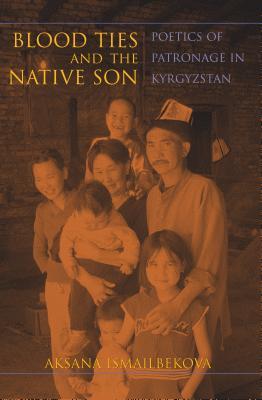
Blood Ties and the Native Son book cover
#27

Blood Ties and the Native Son

Poetics of Patronage in Kyrgyzstan

2017

A pioneering study of kinship, patronage, and politics in Central Asia, Blood Ties and the Native Son tells the story of the rise and fall of a man called Rahim, an influential and powerful patron in rural northern Kyrgyzstan, and of how his relations with clients and kin shaped the economic and social life of the region. Many observers of politics in post-Soviet Central Asia have assumed that corruption, nepotism, and patron-client relations would forestall democratization. Looking at the intersection of kinship ties with political patronage, Aksana Ismailbekova finds instead that this intertwining has in fact enabled democratization―both kinship and patronage develop apace with democracy, although patronage relations may stymie individual political opinion and action.
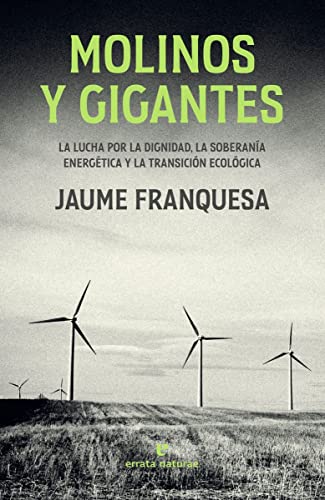
Molinos y gigantes book cover
#28

Molinos y gigantes

La lucha por la dignidad, la soberanía energética y la transición ecológica

2018

La cuestión de la energía se halla más que nunca en el corazón del debate público y la agenda política. Sabemos que la transición energética es inevitable porque es el único modo que tenemos de luchar contra el cambio climático, pero ésta no es un mero asunto técnico que deba dejarse en manos de empresas y tecnócratas, sino una cuestión política que requiere de amplio debate, participación ciudadana y luchas populares. Porque transiciones puede haber muchas: por ejemplo, las que busquen un enésimo enriquecimiento de los gigantes del oligopolio eléctrico o las que aspiren a la democratización de los recursos y la protección de la naturaleza. Así, «Molinos y gigantes» es, en primer lugar, una invitación a conocer la historia política y económica que hay detrás del sector eléctrico español, desde los acuerdos personales del caudillo con el presidente ultracatólico de Hidrola (actual Iberdrola) hasta la liberalización del sector decretada por el Gobierno de Aznar y la imbricación posterior de las energías renovables en los sucesivos booms del ladrillo. En segundo lugar, este libro realiza una lectura crítica del modelo que caracteriza el desarrollo eólico en el Estado español, dominado por grandes empresas, con un enfoque extractivo, concentrado en zonas rurales donde produce una importante degradación de la vida de sus habitantes, sin apenas preocupaciones medioambientales y falto de mecanismos de participación democrática. Para ello, Jaume Franquesa—en la línea de autores como David Graeber o James C. Scott—toma como zona de estudio el sur de Cataluña, la región más nuclearizada de España y entre las de mayor densidad de parques eólicos, donde ha vivido durante años y recogido los testimonios de sus vecinos, que llevan décadas luchando por defender su tierra y sus raíces frente al gran oligopolio eléctrico, y nos recuerdan: «Renovables sí, pero así no». En definitiva, la transición energética sólo será real si garantiza un mundo rural vivo y la dignidad de sus habitantes.

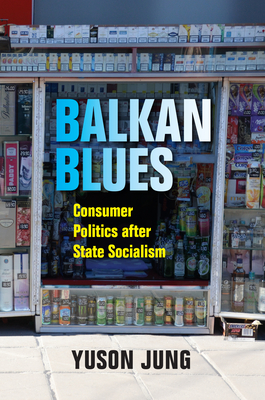
Balkan Blues book cover
#29

Balkan Blues

Consumer Politics After State Socialism

2019

An exploration of how a state transitions from the collectivized production and distribution of socialism to the consumer-focused culture of capitalism. In Balkan Blues, Yuson Jung considers the state as an economic agent in upholding rights and responsibilities in the shift to a global market. Taking Bulgaria as her focus, Jung shows how impoverished Bulgarians developed a consumer-oriented society and how the concept of "need' adapted in surprising ways to accommodate this new culture. Different legal frameworks arose to ensure the rights of vulnerable or deceived consumers. Consumer advocacy NGOs and government officers scrambled to navigate unfamiliar EU-imposed models for consumer affairs departments. All of these changes involved issues of responsibility, accountability, and civic engagement, which brought Bulgarians new ways of viewing both their identities and their sense of agency. Yet these opportunities also raised questions of inequality, injustice, and social stratification. Jung's study provides a compelling argument for reconsidering of the role of the state in the construction of twenty-first-century consumer cultures. "A good contribution to post-socialist and Balkan studies, showing well that the concept of post-socialism can still be useful not only in the context of Central and Eastern Europe, but also in the Balkans. The book is based on long-term, deep ethnography and is well written . . . I recommend it to anyone who wants to try to understand social, political, and economic differences in Europe and everyday practices related to the (imaginaries of the) state." —Karolina Bielenin-Lenczowska, Ethnologia Polona
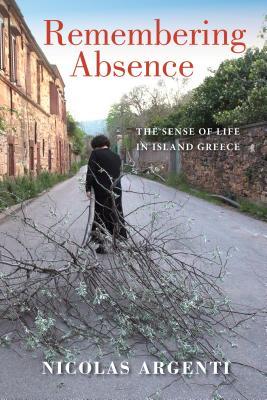
Remembering Absence book cover
#30

Remembering Absence

The Sense of Life in Island Greece

2019

Drawing on research conducted on Chios during the sovereign debt crisis that struck Greece in 2010, Nicolas Argenti follows the lives of individuals who symbolize the transformations affecting this Aegean island. As witnesses to the crisis speak of their lives, however, their current anxieties and frustrations are expressed in terms of past crises that have shaped the dramatic history of Chios, including the German occupation in World War II and the ensuing famine, the exchange of populations between Greece and Turkey of 1922–23, and the Massacres of 1822 that decimated the island at the outset of the Greek War of Independence. The complex temporality that emerges in these accounts is ensconced in a cultural context of commemorative ritual, ecstatic visions, an annual rocket war, and other embodied practices that contribute to forms of memory production that question the assumptions of the trauma discourse, revealing the islanders of Chios to be active in forging their place in time in a manner that blurs the boundaries between historiography, memory, religion, and myth. A member of the Chiot diaspora, Argenti makes use of unpublished correspondence from survivors of the Massacres of 1822 and their descendants and reflects on oral family histories and silences in which the island represents an enigmatic but palpable absence. As he explores the ways in which a body of memory and a cultural experience of temporality came to be dislocated and shared between two populations, his return to Chios marks an encounter in which the traditional roles of ethnographer and participant come to be dispersed and intertwined.
#32

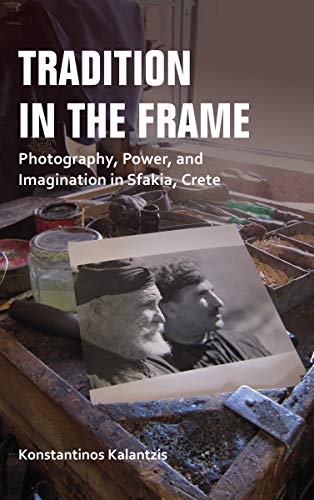
Tradition in the Frame

Photography, Power, and Imagination in Sfakia, Crete

2019

Sfakians on the island of Crete are known for their distinctive dress and appearance, fierce ruggedness, and devotion to traditional ways. Konstantinos Kalantzis explores how Sfakians live with the burdens and pleasures of maintaining these expectations of exoticism for themselves, for their fellow Greeks, and for tourists. Sfakian performance of masculine tradition has become even more meaningful for Greeks looking to reimagine their nation’s global standing in the wake of stringent financial regulation, and for non-Greek tourists yearning for rootedness and escape from the post-industrial north. Through fine-grained ethnography that pays special attention to photography, Tradition in the Frame explores the ambivalence of a society expected to conform to outsiders’ perception of the traditional even as it strives to enact its own vision of tradition. From the bodily reenactment of historical photographs to the unpredictable, emotionally-charged uses of postcards and commercial labels, the book unpacks the question of power and asymmetry but also uncovers other political possibilities that are nested in visual culture and experiences of tradition and the past. Kalantzis explores the crossroads of cultural performance and social imagination where the frame is both empowerment and subjection.
Feminism, Violence, and Representation in Modern Italy book cover
#33

Feminism, Violence, and Representation in Modern Italy

"We Are Witnesses, Not Victims"

2019

Can the way a word is used give legitimacy to a political movement? Feminism, Violence, and Representation in Modern Italy traces the use of the word "femminicidio" (or "femicide") as a tool to mobilize Italian feminists, particularly the Union of Women in Italy (UDI). Based on nearly two years of fieldwork among feminist activists, Giovanna Parmigiani takes a broad look at the many ways in which violence inflects the lives of women in Italy. From unchallenged gendered grammar rules to the representation of women as victims, Parmigiani examines the devaluing of women's contribution to their communities through the words and experiences of the women she interviews. She describes the first uses of the word "femminicidio" as a political term used by and within feminist circles and traces its spread to ultimate legitimization and national relevance. The word redefined women as a political subject by building an imagined community of potentially violated women. In doing so, it challenged Italians to consider the status of women in Italian society, and to make this status a matter of public debate. It also problematized the connection between women and tropes of women as objects of suffering and victimhood. Parmigiani considers this exchange within the context of Italian Catholic heritage, a precarious economy, and long-held notions of honor and shame. Parmigiani provides a careful and searing consideration of the ways in which representations of violence and the politics of this representation are shaping the future of women in Italy and beyond.
Socialist Heritage book cover
#34

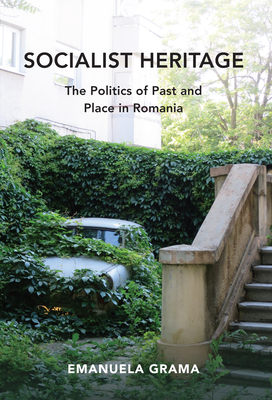
Socialist Heritage

The Politics of Past and Place in Romania

2019

Focusing on Romania from 1945 to 2016, Socialist Heritage explores the socialist state's attempt to create its own heritage, as well as the legacy of that project. Contrary to arguments that the socialist regimes of Central and Eastern Europe aimed to erase the pre-war history of the socialist cities, Emanuela Grama shows that the communist state in Romania sought to exploit the past for its own benefit. The book traces the transformation of a central district of Bucharest, the Old Town, from a socially and ethnically diverse place in the early 20th century, into an epitome of national history under socialism, and then, starting in the 2000s, into the historic center of a European capital. Under socialism, politicians and professionals used the district's historic buildings, especially the ruins of a medieval palace discovered in the 1950s, to emphasize the city's Romanian past and erase its ethnically diverse history. Since the collapse of socialism, the cultural and economic value of the Old Town has become highly contested. Bucharest's middle class has regarded the district as a site of tempting transgressions. Its poor residents have decried their semi-decrepit homes, while entrepreneurs and politicians have viewed it as a source of easy money. Such arguments point to recent negotiations about the meanings of class, political participation, and ethnic and economic belonging in today's Romania. Grama's rich historical and ethnographic research reveals the fundamentally dual nature of every search for an idealized past relies on strategies of differentiation that can lead to further marginalization and exclusion.
"Can You Run Away from Sorrow?" book cover
#35

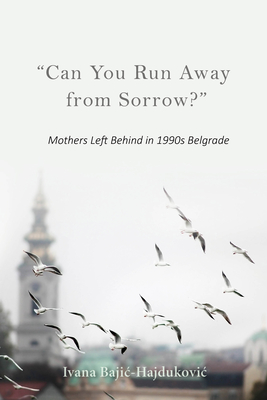
"Can You Run Away from Sorrow?"

Mothers Left Behind in 1990s Belgrade

2020

How does emigration affect those left behind? The fall of Yugoslavia in the 1990s led citizens to look for a better, more stable life elsewhere. For the older generations, however, this wasn't an option. In this powerful and moving work, Ivana Bajic-Hajdukovic reveals the impact that waves of emigration from Serbia had on family relationships and, in particular, on elderly mothers who stayed. With nowhere to go, and any savings given to their children to help establish new lives, these seniors faced the crumbling country, waves of refugees from Croatia and Bosnia-Herzegovina, NATO bombing, the failing economy, and the trial and ouster of Slobodan Milosevic. "Can You Run Away from Sorrow?" poignantly depicts the intimacy of family relationships sustained through these turbulent times in Serbia and through the next generation's search for a new life. Bajic-Hajdukovic explores transformations in family intimacy during everyday life practices―in people's homes, in their food and cooking practices, in their childcare, and even in remittances and the exchange of gifts. "Can You Run Away from Sorrow?" illustrates not only the tremendous sacrifice of parents, but also their profound sense of loss―of their families, their country, their stability and dignity, and most importantly, of their own identity and hope for what they thought their future would be.
Płeć, przyjemność i przemoc. Kształtowanie wiedzy eksperckiej o seksualności w Polsce book cover
#36

Płeć, przyjemność i przemoc. Kształtowanie wiedzy eksperckiej o seksualności w Polsce

2014

Autorka dokonuje analizy dyskursu eksperckiego ostatnich czterdziestu lat w dziedzinie seksuologii, starając się odpowiedzieć na postawione przez siebie pytania: Jaką trzeba być kobietą, jakim trzeba być mężczyzną, żeby osiągnąć przyjemność seksualną? Jakie warunki musi spełnić ofiara przemocy, żeby móc liczyć na sprawiedliwość w sądzie? Jaką rolę w transformacji ról płciowych odegrał feminizm i jakie znaczenie ma holistyczna tradycja polskiej seksuologii?
Contested Antiquity book cover
#37

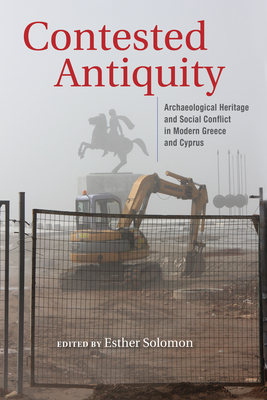
Contested Antiquity

Archaeological Heritage and Social Conflict in Modern Greece and Cyprus

2021

While the archaeological legacies of Greece and Cyprus are often considered to represent some of the highest values of Western civilization―democracy, progress, aesthetic harmony, and rationalism―this much adored and heavily touristed heritage can quickly become the stage for clashes over identity and memory. In Contested Antiquity, Esther Solomon curates explorations of how those who safeguard cultural heritage are confronted with the best ways to represent this heritage responsibly. How should visitors be introduced to an ancient Byzantine fortification that still holds the grim reminders of the cruel prison it was used as until the 1980s? How can foreign archaeological institutes engage with another nation's heritage in a meaningful way? What role do locals have in determining what is sacred, and can this sense of the sacred extend beyond buildings to the surrounding land? Together, the essays featured in Contested Antiquity offer fresh insights into the ways ancient heritage is negotiated for modern times.
Movement of the People book cover
#38

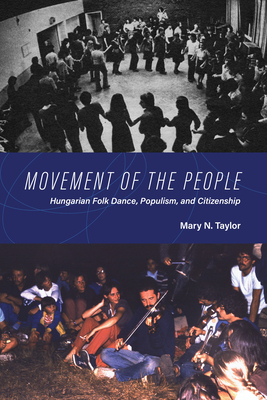
Movement of the People

Hungarian Folk Dance, Populism, and Citizenship

2021

Since 1990, thousands of Hungarians have vacationed at summer camps devoted to Hungarian folk dance in the Transylvanian villages of neighboring Romania. This folk tourism and connected everyday practices of folk dance revival take place against the backdrop of an increasingly nationalist political environment in Hungary. In Movement of the People, Mary N. Taylor takes readers inside the folk revival movement known as dancehouse ( táncház ) that sustains myriad events where folk dance is central and championed by international enthusiasts and UNESCO. Contextualizing táncház in a deeper history of populism and nationalism, Taylor examines the movement's emergence in 1970s socialist institutions, its transformation through the postsocialist period, and its recent recognition by UNESCO as a best practice of heritage preservation. Approaching the populist and popular practices of folk revival as a form of national cultivation, Movement of the People interrogates the everyday practices, relationships, institutional contexts, and ideologies that contribute to the making of Hungary's future, as well as its past.

Authors

548 Market St PMB 65688, San Francisco California 94104-5401 USA
© 2025 Paratext Inc. All rights reserved