Margins
Margins
548 Market St PMB 65688, San Francisco California 94104-5401 USA
hello@margins.app
·
+1 (650) 223-5283
Privacy Policy
·
Terms of Use
© 2026 Paratext Inc. All rights reserved
New Testament Theology
New Testament Theology
Series · 5 books · 1993-1999
By
Karl P. Donfried
,
I. Howard Marshall
,
James D.G. Dunn
, and more
Books in series
#5
The Theology of the Shorter Pauline Letters
1993
This book breaks new ground in offering an exposition of the theological message of the Shorter Pauline Letters. Karl P. Donfried puts 1 and 2 Thessalonians in their cultural context, and identifies a number of key themes in these letters, such as the notion of election. I. Howard Marshall's study of Philippians brings out especially the understanding of the theological basis of the Christian life that underlies the letter, while his discussion of Philemon emphasizes how the main theme of the letter is the relation between the gospel and Christian ethics.
#6
The Theology of Paul's Letter to the Galatians
1993
Recent research into the character of Judaism in the first century has given scholars a new perspective on Paul. Nowhere is this new perspective more important than in the case of Paul's letter to the Galatians, a letter that shaped the character of the Christian religion in its early years and that remains a foundation document of Christianity. This study, the first to benefit from the new perspective on Paul, explains more clearly than ever the issues that confronted Paul and the powerful theological arguments he brought to bear in response.
#7
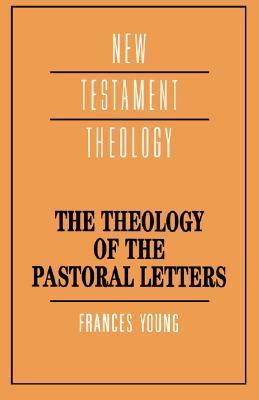
Theology of the Pastoral Letters
1994
The Pastoral Letters have often been marginalised in modern New Testament studies. Regarded as not authentically Pauline, not very theological, and mostly evidence of the church settling down in the world, their patriarchal orientation has more recently futher alienated readers. Yet it was these little letters which mediated Paul to the Patristic church, and then provided scriptural material for debate about church order and ministry from the Reformation to the present. This study attempts to re-read the Pastorals in their original setting, revising many of the standard scholarly assessments in the light of recent work (especially developments in sociological study of the New Testament), and exploring the development of a tradition which proves to be theological in its fundamental structure and in its mode of addressing practical and organisational issues. The letters are then related to the very different context of the modern world.
#11
Theology of Acts of the Apostles
1996
Who are the people of God? Luke's purposes in Acts are to identify the Church, to establish the legitimacy of its gospel and to demonstrate that God was an active force in history. He shows that the communities of Jewish and Gentile Christians are the true heirs of God's promises to Israel. This is a theological interpretation of the history of the Church within history: Luke is an artist, a narrator rather than a systematic theologian, but he writes about the roles of God, Christ and the Holy Spirit and of the Church.
#12
Theology of 1st Letter Corinthians
1999
This study shows that the common view of 1 Corinthians as mainly about "ethics" and therefore of little importance for "theology" needs correcting. Many other studies of the letter focus mainly on the details of the Corinthian situation and the moral teachings Paul conveyed to his congregation. While not ignoring these, Furnish's primary aim is to explore and clarify the theological orientation of 1 Corinthians, and what it can contribute to an understanding of Paul as a theologian. Furnish concludes that 1 Corinthians is important for both ethics and theology.
Authors
Karl P. Donfried
Author · 3 books
I. Howard Marshall
Author · 21 books
James D.G. Dunn
Author · 25 books
Frances Margaret Young
Author · 1 book
Jervell
Author · 1 book
Furnish
Author · 1 book