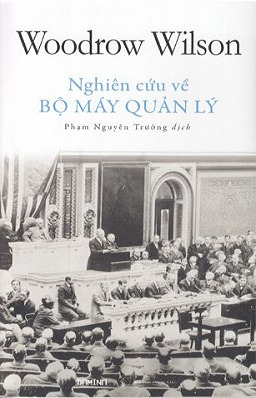
" Tôi cho rằng người ta không bao giờ nghiên cứu một bộ môn khoa học mà người ta không cần biết. Vì vậy, chính sự kiện là ở nước ta, khoa học về quản lý hành chính được đưa vào các khóa học đại học, chứng tỏ rằng đất nước cần biết nhiều hơn về quản lý hành chính. Tuy nhiên, không cần phải nói rằng chúng ta không nhìn vào các chương trình giảng dạy đại học để chứng minh sự kiện này. Hầu như tất cả chúng ta đều cho rằng đương nhiên là phong trào mà hiện nay được gọi là cải cách dịch vụ dân sự - sau khi hoàn thành mục tiêu đầu tiên của nó - phải gia tăng nổ lực nhằm cải thiện không chỉ là nhân sự mà còn là cải thiện tổ chức và phương pháp hoạt dộng chỉ đứng sau như cầu đào tạo nhân sự trong các cơ quan đó mà thôi. Đây là đối tượng của công tác nghiên cứu quản lý hành chính nhằm khám phá, trước hết, điều gì chính phủ làm là phù hợp và thành công, và sau nữa, làm sao chính phủ có thể làm những việc phù hợp đó với hiệu quả cao nhất và ít tốn kém nhất, cả về tiền bạc hoặc công sức. Rõ ràng là cần nhiều hiểu biết hơn về cả hai vấn đề này, và chỉ có nghiên cứu một cách cẩn thận mới có thể có được hiếu biết cần thiết. Tuy nhiên, trước khi tham gia vào nghiên cứu như vậy, cần phải: I. Xem xét những việc mà người khác đã làm về đề tài này; nghĩa là xem xét lịch sử của công trình nghiên cứu. II. Xác lập rõ chủ đề của nó III. Xác định phương pháp nghiên cứu hiểu quả nhất và những khái niệm chính trị rõ ràng nhất trong quá trình nghiên cứu. Không hiểu và không giải quyết xong những vấn đề này, chúng ta sẽ như người đi mà không có bản đồ và la bàn."
Author
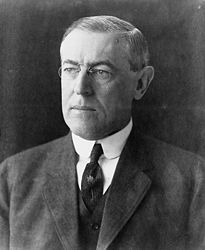
Thomas Woodrow Wilson (1856-1924) was the twenty-eighth President of the United States. A devout Presbyterian and leading intellectual of the Progressive Era, he served as President of Princeton University and then became the Governor of New Jersey in 1910. With Theodore Roosevelt and William Howard Taft dividing the Republican Party vote, Wilson was elected President as a Democrat in 1912. He proved highly successful in leading a Democratic Congress to pass major legislation that included the Federal Trade Commission, the Clayton Antitrust Act, the Underwood Tariff, the Federal Farm Loan Act and most notably the Federal Reserve System. Wilson was a proponent of segregation during his presidency. Narrowly re-elected in 1916, his second term centered on World War I. He tried to maintain U.S. neutrality, but when the German Empire began unrestricted submarine warfare he wrote several admonishing notes to Germany, and eventually asked Congress to declare war on the Central Powers. He focused on diplomacy and financial considerations, leaving the waging of the war primarily in the hands of the military establishment. On the home front he began the first effective draft in 1917, raised billions through Liberty loans, imposed an income tax, set up the War Industries Board, promoted labor union growth, supervised agriculture and food production through the Lever Act, took over control of the railroads, and suppressed anti-war movements. He paid surprisingly little attention to military affairs, but provided the funding and food supplies that helped the Americans in the war and hastened Allied victory in 1918. In the late stages of the war he took personal control of negotiations with Germany, especially with the Fourteen Points and the armistice. He went to Paris in 1919 to create the League of Nations and shape the Treaty of Versailles, with special attention on creating new nations out of defunct empires. Largely for his efforts to form the League, he was awarded the Nobel Peace Prize in 1919. Wilson collapsed with a debilitating stroke in 1919, as the home front saw massive strikes and race riots, and wartime prosperity turn into postwar depression. He refused to compromise with the Republicans who controlled Congress after 1918, effectively destroying any chance for ratification of the Versailles Treaty. The League of Nations was established anyway, but the U.S. never joined. Wilson's idealistic internationalism, calling for the U.S. to enter the world arena to fight for democracy, progressiveness, and liberalism, has been a highly controversial position in American foreign policy, serving as a model for "idealists" to emulate or "realists" to reject for the following century.